Google's announcement of a staggering $40 billion investment in Anthropic is far more than a corporate transaction; it is a declaration of "total war" in the generative AI sector. As we navigate April 2026, this move signals the end of the experimental phase and the dawn of an era where compute and capital are the only true currencies of power. Anthropic, founded by former OpenAI executives with a focus on AI "safety" and "ethics," now finds itself at the heart of Google's strategy to reclaim its throne.
The Dual-Track Strategy
Why would Google, which already possesses the formidable Gemini model, choose to invest such an astronomical sum in a perceived competitor? The answer lies in the strategy of diversification. While Gemini remains Google's flagship product for consumers and search services, Anthropic’s Claude offers an alternative architecture that is highly regarded in the enterprise and scientific sectors. Google isn't just buying shares; it is buying insurance. By backing the strongest alternative to OpenAI, Google ensures that regardless of which model architecture eventually dominates, it will hold the keys to the underlying infrastructure.
Furthermore, the deal stipulates that Anthropic will exclusively utilize Google Cloud infrastructure and next-generation TPU (Tensor Processing Units). This creates a closed-loop financial system: the billions Google invests flow back into its own coffers through cloud service fees, while simultaneously depriving Microsoft and Amazon of a critical high-volume client.
Ethics and Constitutional AI
Anthropic gained fame for its "Constitutional AI" approach—a method of training models to self-regulate based on a set of ethical principles without the need for constant human oversight. In a world increasingly concerned about model hallucinations and disinformation, Google is betting that "safe" AI will be the most commercially viable product of the future.
- The investment accelerates research into AI alignment with human values.
- It provides a counterbalance to OpenAI's increasingly opaque development process.
- It enables Anthropic to scale its operations in Europe, adhering to the stringent requirements of the EU AI Act.
Competition and Antitrust Dilemmas
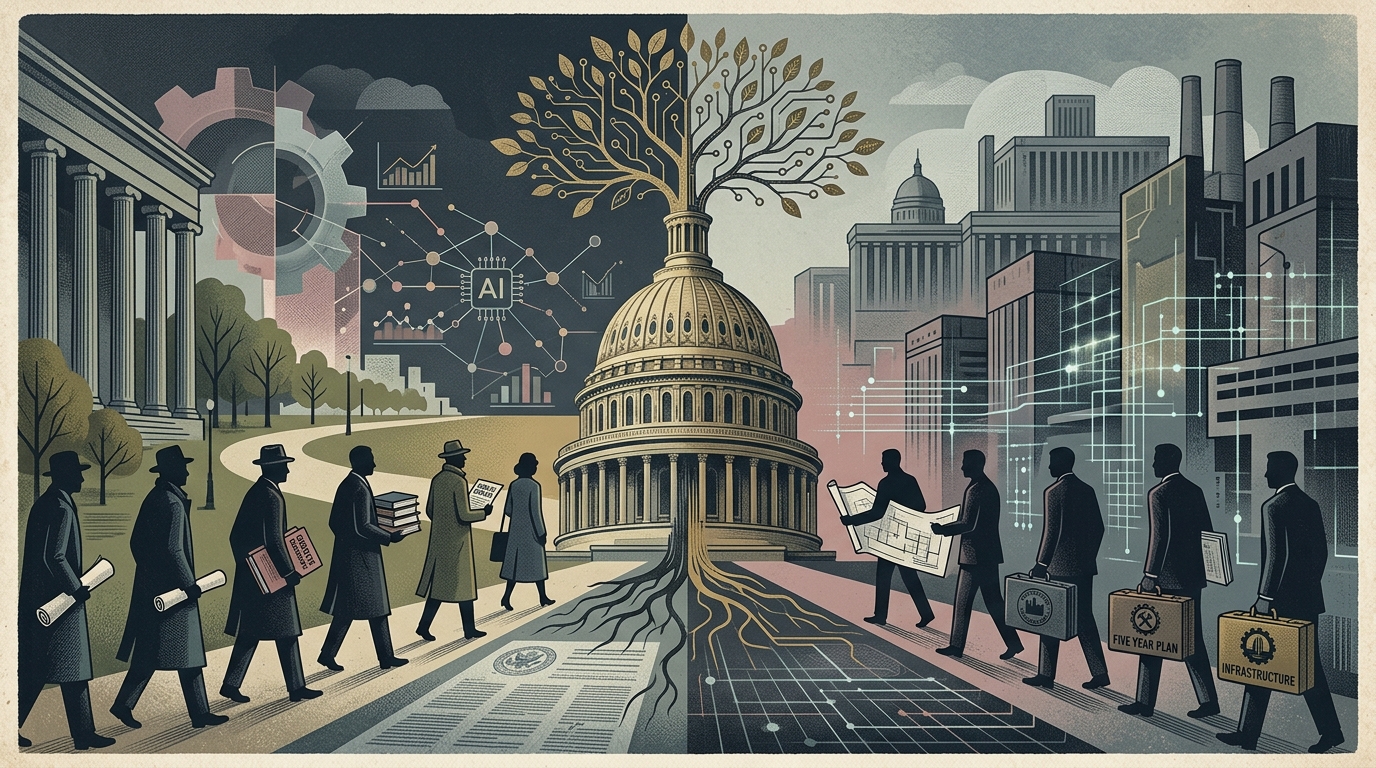
This move has not escaped the notice of regulators in the US and the EU. With Google now wielding significant influence over Anthropic, serious questions arise regarding power concentration. If the AI market ends up controlled by two or three massive blocs (Microsoft/OpenAI, Google/Anthropic, Meta), the risk to independent innovation is palpable. For startups globally, the choice of which ecosystem to build upon is becoming a geopolitical decision as much as a technical one.
"It is no longer about who has the best algorithm, but who has the largest factories for data and energy," notes a senior market analyst.
The $40 billion investment is the clearest sign yet that Google views AI as an existential imperative. After a period of perceived hesitation, the search giant is demonstrating that it is willing to spend every available resource to ensure it is not left on the wrong side of history.