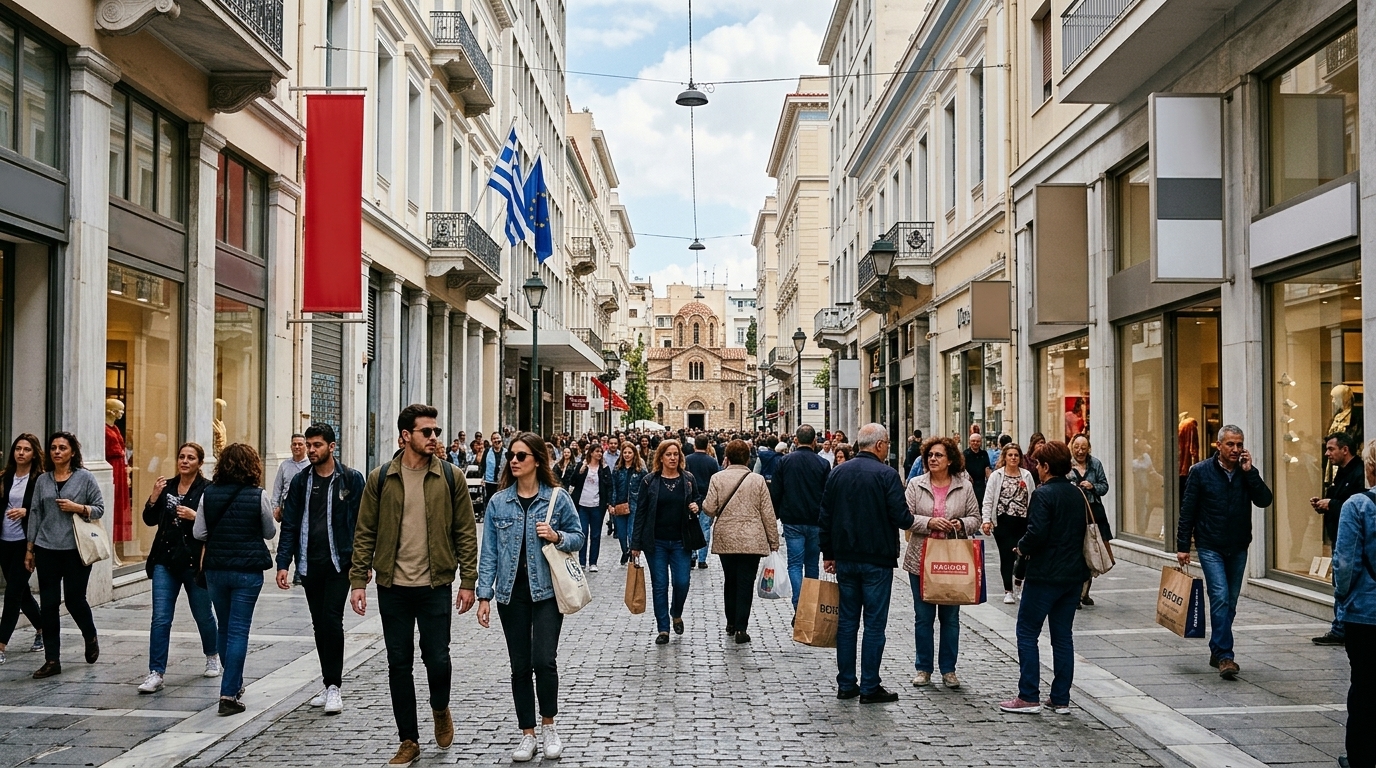
The Greek economy in 2025 appears to be closing a long cycle of internal devaluation and fiscal adjustment, as ELSTAT data reveals that total household disposable income reached 167 billion euros. This figure, the highest in the last 17 years, is not merely a statistical victory but a reflection of the momentum the country has built after regaining investment grade status and establishing growth rates consistently higher than the Eurozone average.
The Anatomy of Growth: What is Driving the Increase?
The rise in disposable income during 2025 is multi-faceted. According to analysts, three main pillars supported this development. First, the continued reduction in unemployment, which is now moving steadily in single digits, leading to an increase in overall employment and, consequently, wage income. Second, successive increases in the minimum wage, which also pulled up the average pay scales in the private sector. Third, the significant contribution of tourism revenues, which recorded a new historical record in 2025, diffusing liquidity across broader segments of society, particularly in the regions.
However, the increase in nominal income does not always automatically translate into an improved standard of living. The "shadow" of inflation, though receding compared to the previous two years, continues to erode purchasing power. Food costs and, most importantly, housing costs remain the two major "thorns" preventing citizens from feeling the prosperity described by macroeconomic indicators.
Consumption and Savings: A Fragile Balance
In tandem with income, consumption in 2025 also showed an upward trend. Greek consumers seem to be regaining their confidence, spending more not only on basic goods but also on leisure services and travel. Domestic demand remains the engine of GDP, bolstered by credit expansion that began to unfreeze after years of stagnation.
- Spending on catering and tourism increased by 6.5% compared to 2024.
- A shift towards higher quality consumer products, despite high prices.
- Strengthening of electronic transactions, helping to curb tax evasion.
The big question remains savings. Despite the increase in income, the savings rate in Greece remains one of the lowest in Europe. Households are using the extra income to cover accumulated needs from the past or to cope with current high prices, leaving little room for creating a safety cushion.
The Housing Challenge and the Future
As we head into 2026, the government and social partners are called upon to manage the paradox of "poor growth." While €167 billion is an impressive number, the distribution of this wealth shows inequalities. The cost of renting and buying a home in major cities has skyrocketed, in many cases absorbing more than 40% of the disposable income of an average household.
"The increase in disposable income is the necessary condition, but not the sufficient one for social welfare. Without price control on basic goods and housing, the numbers will remain a dead letter for the middle class," notes an economic analyst from the Bank of Greece.
In conclusion, 2025 is a year of confirmation for the resilience of the Greek economy. The challenge now shifts from simple survival and fiscal discipline to the qualitative upgrading of citizens' lives. Maintaining the growth trajectory will depend on the continuation of reforms, the absorption of Recovery Fund resources, and, above all, the state's ability to ensure that prosperity concerns the many and not just the few.