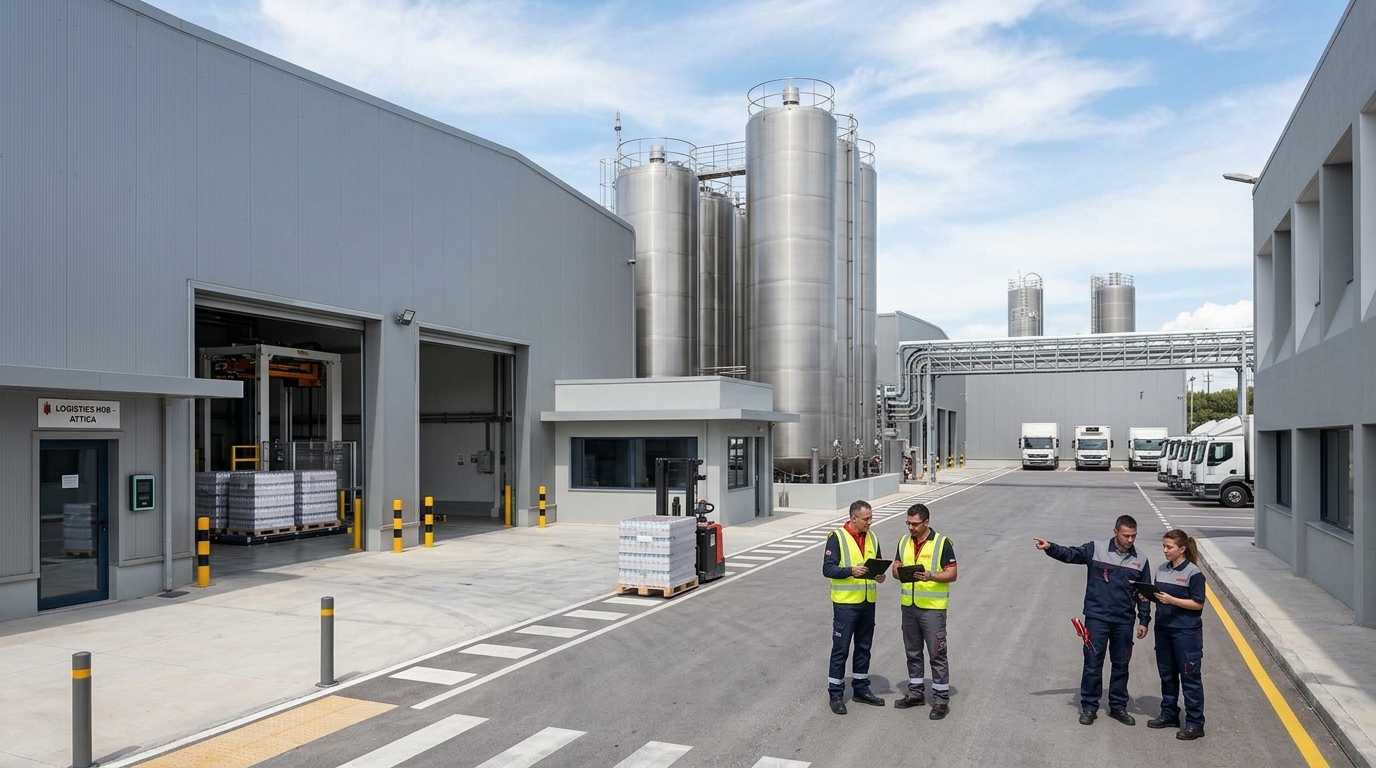
In a move that underscores its confidence in the prospects of the Greek economy, Coca-Cola HBC (Hellenic) is proceeding with a landmark investment of 31 million euros. The project involves the construction of a state-of-the-art distribution and logistics center in Attica, which is expected to serve as the central pillar of the company's supply chain for the entire Southeastern European region. This move is not merely an infrastructure expansion but a strategic shift toward the complete digitalization and automation of product movement processes.
Strategic Planning and the Importance of Attica
The choice of Attica for the new center is no coincidence. The region serves as Greece's most critical transportation hub, offering direct access to the Port of Piraeus, Athens International Airport, and the national highway network. Coca-Cola HBC aims to optimize delivery times and drastically reduce operational costs by integrating cutting-edge technologies that allow for the management of massive volumes of goods with minimal human error.
According to company executives, the new center will be equipped with AI systems for demand forecasting and automated inventory replenishment. "We are not just building a warehouse; we are building a digital brain that will coordinate production with consumption in real-time," said a source close to the management. This investment complements the existing "Mega Plant" in Schimatari, creating an integrated production and distribution ecosystem.
Economic Impact and Employment
The 31-million-euro investment is expected to have a significant multiplier effect on the local economy. Beyond the jobs created during the construction phase, the new logistics center will require specialized personnel in IT, supply chain management, and the maintenance of automated systems. Coca-Cola HBC estimates that the new structure will enhance the competitiveness of Greek products in international markets, as an improved supply chain allows for more flexible exports.
"Greece remains a strategic pillar for our group. With this investment, we are safeguarding our future growth and confirming our commitment to creating value in the country," a company spokesperson stated.
Furthermore, this investment sends a strong signal to the international investment community. At a time when Europe faces challenges in the energy and inflation sectors, the persistence of a giant like Coca-Cola HBC in investing in Greece demonstrates the stability the country has regained. Domestic suppliers and transport companies are also expected to benefit from the increased volume of work generated by the new infrastructure.
Sustainability and the Green Transition
One of the most notable features of the new project is its commitment to the principles of sustainable development. The logistics center has been designed with zero-emission specifications, using photovoltaic systems to cover its energy needs and water recycling systems. The use of electric vehicles for urban distributions starting from the center is also part of the company's long-term plan to reduce its carbon footprint.
- Use of Renewable Energy Sources (RES) at a rate exceeding 80%.
- Automated storage systems that reduce energy consumption by 30%.
- Distribution fleet with low or zero CO2 emissions.
In conclusion, Coca-Cola HBC's new investment in Attica is a model project that combines technological innovation with economic growth and environmental responsibility. As Greece seeks to become a transit hub for the wider region, initiatives of this kind lay the foundations for a modern and competitive economy.