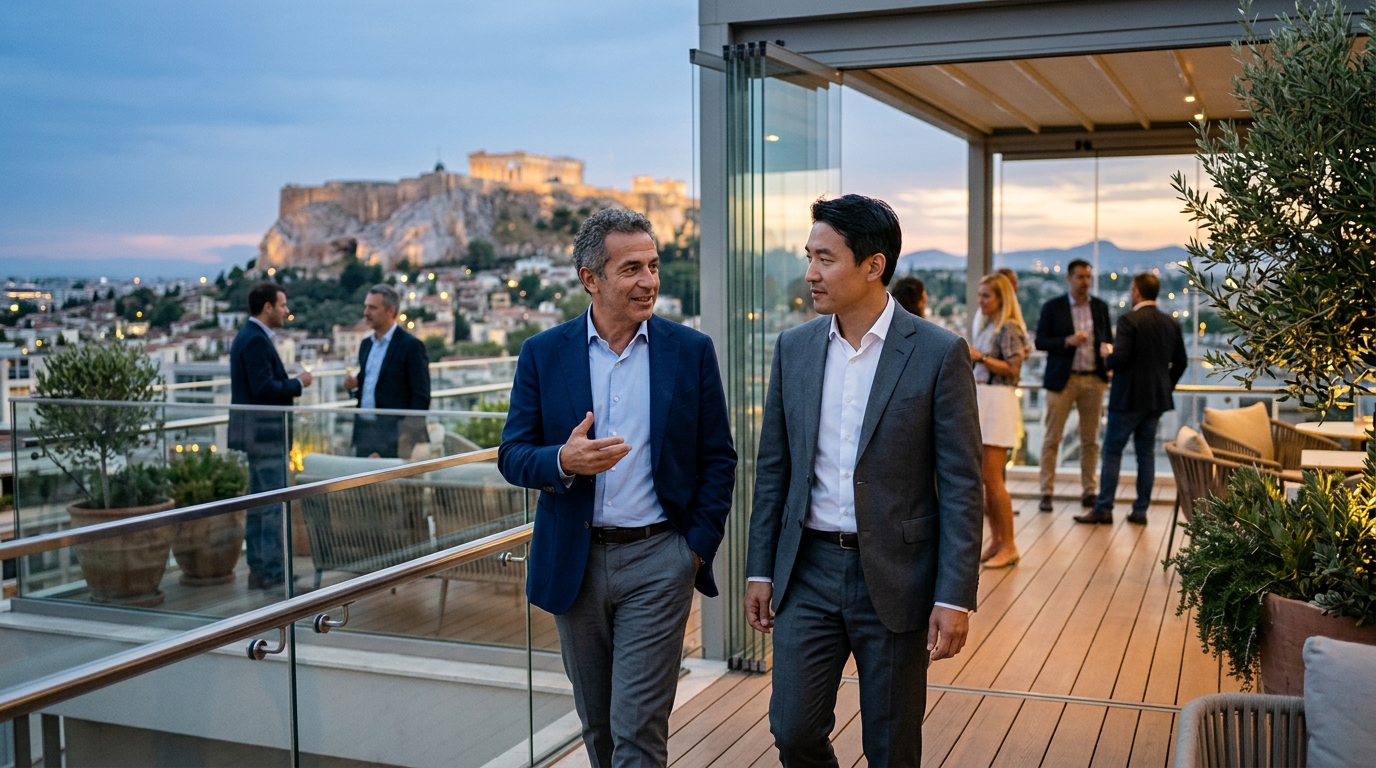
The atmosphere at the Delphi Economic Forum was already charged, but Alexis Tsipras's appearance transformed the annual gathering of elites into a theater of major political developments. With the phrase "I am returning because there is no normalcy," the former Prime Minister did not just announce his presence; he delivered a manifesto challenging the current political and economic status quo in Greece. His intervention was not merely a critique of the Mitsotakis government, but a structured attempt to redefine himself as the central pole of a new, broad progressive front.
The Crisis of "False Normalcy"
According to Mr. Tsipras, the image of Greece as a country that has definitively left its crises behind is fictional. He focused particularly on the issue of the rule of law, freedom of the press, and institutional checks and balances, arguing that the country is sliding toward a model of "controlled democracy." The "normalcy" preached by the government, he claimed, concerns only macroeconomic figures and a small business elite, while the majority of citizens experience constant insecurity.
His analysis extended to social cohesion, where he emphasized that the gap between social classes is widening dangerously. "There is no normalcy when the purchasing power of Greeks is the lowest in the Eurozone," he noted emphatically. His return is thus presented as a moral and political imperative to restore institutional and social balance.
The Plan for a "Productive Economy"
The most intriguing part of his speech concerned economic restructuring. Alexis Tsipras sharply criticized the current growth model, which he described as "one-dimensional and vulnerable," relying excessively on tourism and consumption. He proposed a radical shift toward production, with an emphasis on industry, green energy, and technological innovation.
- Taxing windfall profits of banks and energy providers.
- Reducing indirect taxes (VAT) on essential goods to combat inflation.
- Redesigning the Recovery and Resilience Facility (RRF) to support small and medium-sized enterprises.
- Investing in human capital and reversing the brain drain.
His proposal for a new tax policy is not just redistributive but, as he argued, growth-oriented. The goal is to create a state that is not a mere spectator but an active regulator and investor in the real economy.
The Timeline for a "New Party"
Although he avoided giving specific dates, Mr. Tsipras left the possibility of creating a new political entity wide open. His phrasing regarding a "social opposition" seeking political expression suggests that the SYRIZA chapter, at least in its current form, appears closed for him. Reports indicate he is in consultations with personalities from the fields of science, academia, and healthy entrepreneurship.
"History is not written by waiting, but by bold initiatives that respond to the needs of the time," he stated.
His strategy seems to target the "middle ground" and disillusioned voters across the spectrum, seeking to compose a new majority that transcends traditional Left-Right divides, with a focus on social justice and institutional modernization.
Conclusion: A New Beginning or a Repetition?
Alexis Tsipras's return to the spotlight is already causing tremors in the political landscape. For his supporters, he is the necessary alternative to New Democracy's dominance. For his critics, it is an attempt at political survival for a leader whose cycle has ended. What is certain is that his presence at Delphi marks the beginning of a period of intense mobility, where the stakes are not just power, but the very model of governing the country in the years to come.