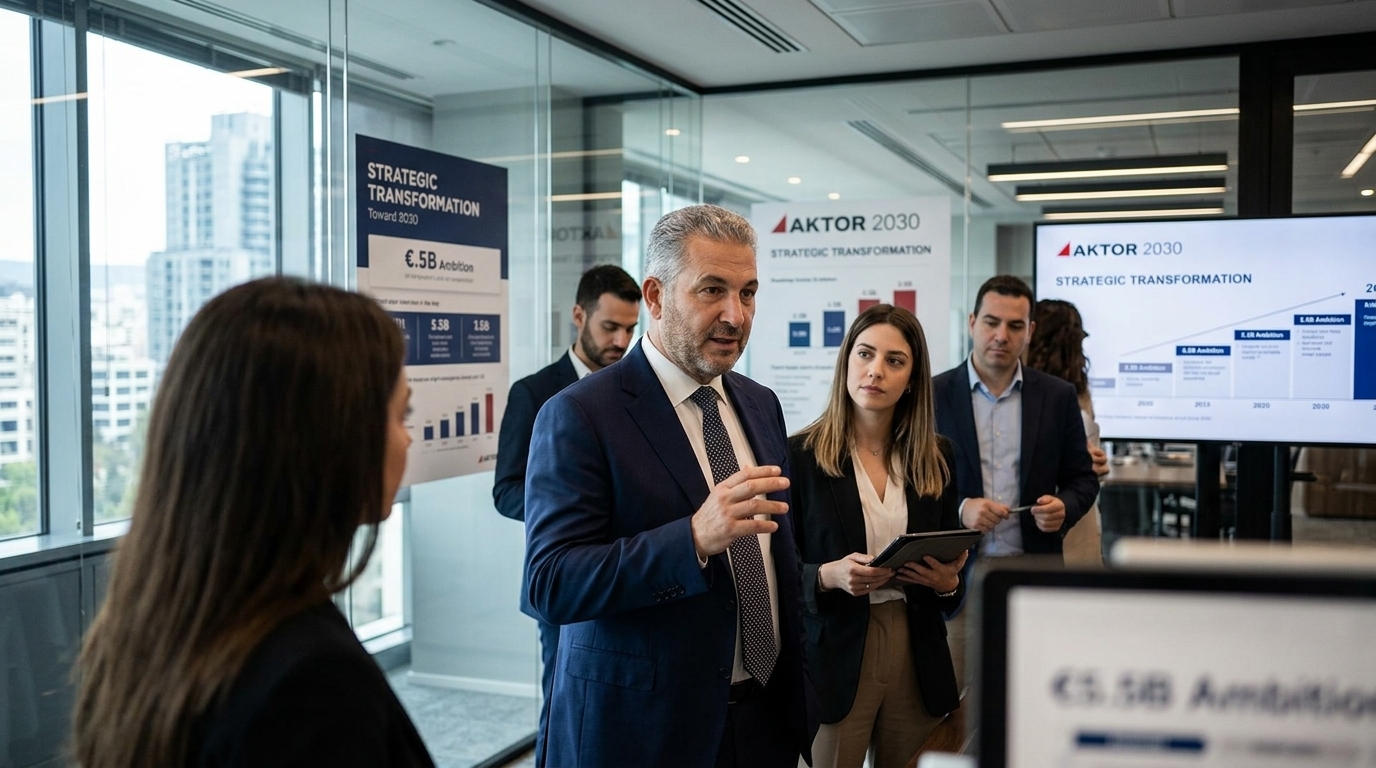
The Greek business landscape is witnessing one of the most aggressive and well-executed transformations in recent years. Aktor Group, under its new leadership and a refreshed strategic roadmap, is no longer merely aiming for dominance in the construction sector. Instead, it is pivoting toward becoming a diversified conglomerate of infrastructure, energy, and asset management. With a 2030 horizon, the group has set targets that are turning heads: revenues between €4.6 and €5.5 billion and an operating profitability (EBITDA) reaching €600 million.
The Shift from Construction to Concessions and Energy
For decades, the name Aktor was synonymous with large-scale public works. However, the new strategy recognizes that the construction sector, despite its currently high backlog, is characterized by volatility and thin margins. The acquisition of 'Aktor Concessions' is the masterstroke that changes the game. By integrating concessions, the group gains access to stable, long-term cash flows that act as a buffer during economic downturns.
Motorway concessions and other critical infrastructure are not just revenue streams; they are the foundation upon which borrowing capacity for future major investments will be built. Market analysts believe this move will allow the group to significantly improve its risk profile, attracting institutional investors looking for stability and dividends.
LNG as a Growth Catalyst
The most striking addition to the group’s portfolio is its entry into the Liquefied Natural Gas (LNG) market. At a time when Europe’s energy security remains at the heart of the geopolitical chessboard, Aktor Group is positioning itself strategically. Its involvement in LNG is not just about trading; it involves creating the necessary infrastructure for the reception, storage, and regasification of the fuel.
The boost from LNG is expected to contribute significantly to 2030 revenues as Greece evolves into an energy hub for Southeast Europe. Combining traditional energy sources with Renewable Energy Sources (RES), where the group already maintains a strong presence, creates a holistic energy model that meets the demands of the green transition without ignoring current market realities.
Digital Transformation and Operational Efficiency
Beyond the headline figures, the group’s management is emphasizing internal modernization. The use of Artificial Intelligence in project management, the digitalization of supply chain processes, and the adoption of advanced ESG (Environmental, Social, and Governance) systems are integral parts of the plan. The target of €600 million in EBITDA will not be achieved through turnover alone, but also through drastic reductions in operating costs and the optimization of synergies between various subsidiaries.
"Aktor Group is not just changing its name or logo; it is changing its DNA. It is transforming into an organization that generates value through innovation and strategic diversification," sources close to the management state.
Challenges and Geopolitical Risk
Despite the optimism, the road to 2030 is not without obstacles. The shortage of skilled labor in the construction sector, fluctuations in raw material prices, and the high cost of capital remain unpredictable factors. Furthermore, expanding into international markets, while necessary to achieve revenue targets, exposes the group to geopolitical risks, particularly in the Balkans and the Middle East.
In conclusion, Aktor Group is attempting a leap forward. If the 2030 bet pays off, the company will have successfully evolved from a domestic construction player into a regional infrastructure and energy giant, redefining the limits of what a Greek enterprise can achieve in the 21st century.