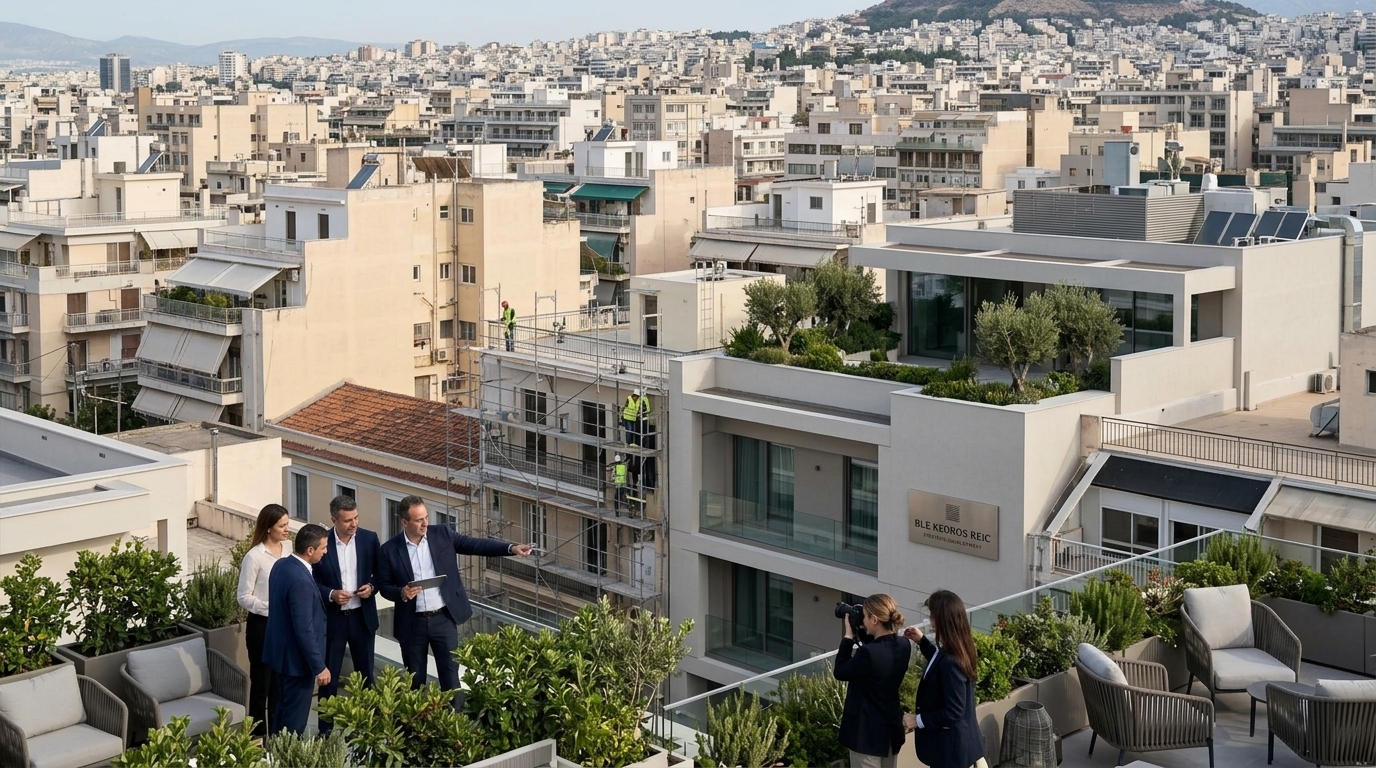
At a pivotal moment for the Greek real estate market, Ble Kedros REIC, the real estate investment vehicle of the Efmorfidis family (founders of Coco-Mat), has announced an escalation of its investment program, now reaching €93.3 million. This strategic move is not merely a portfolio expansion but a clear statement of confidence in the resilience of the Greek tourism product and the emerging demand for high-end residential properties.
The Anatomy of the Investment: From Athens to Monemvasia
The €93.3 million program includes eight major projects currently at various stages of development. The lion's share is directed toward the hospitality sector, which remains the company's primary growth engine. In the heart of Athens, Ble Kedros continues to bolster its presence, despite the well-known legal and urban planning challenges that have made headlines in the past. However, management's focus is now shifting toward regional Greece, with flagship projects in Monemvasia and Mykonos.
In Monemvasia, the company is developing a complex that aims to redefine sustainable tourism, blending traditional architecture with the Coco-Mat philosophy of "natural living." Simultaneously, its entry into the residential market marks a significant diversification. This pivot to housing is no accident. The lack of quality residential stock in Attica and rising sale prices make the development of new housing units a highly profitable prospect for REICs, which have traditionally focused on commercial properties and offices.
The Philosophy of "Green" Real Estate
One of the key features distinguishing Ble Kedros from other market players is its commitment to sustainability. This is not just about using natural materials like wood and cotton—hallmarks of Coco-Mat products—but a comprehensive ESG (Environmental, Social, and Governance) approach. New buildings are designed with low energy consumption and the minimization of the environmental footprint in mind.
- Integration of bioclimatic design in all new hotel projects.
- Use of recyclable materials and local raw materials in construction.
- Investment in smart building technologies to optimize resource management.
This approach serves more than just ethical purposes; it is a rational economic choice. Institutional investors and banks now prioritize projects that meet sustainability criteria, offering better financing terms and higher valuations.
Challenges and the Macroeconomic Environment
Despite the optimism, the road is not without obstacles. Rising construction costs, fueled by inflationary pressures and supply chain disruptions, represent the biggest headache for management. Furthermore, the European Central Bank's high interest rates increase borrowing costs for REICs, putting pressure on dividend yields.
"The Greek real estate market is in a phase of maturation, where the quality and identity of the product will determine the winners of the next decade," industry executives note.
Ble Kedros must also navigate the complex bureaucratic and legal framework in Greece. The case of the hotel in the Makrygianni area (near the Acropolis) served as a harsh lesson on how legislative ambiguities can trap significant capital. The company now appears more cautious, selecting projects with a clearer legal horizon and greater acceptance from local communities.
Conclusion: A Strategic Investment in the Future
Ble Kedros REIC’s €93.3 million investment program is a vote of confidence in Greece. By diversifying between tourism and residential sectors, the company is building a more resilient portfolio, capable of absorbing shocks from potential downturns in specific sectors. The success of these projects will depend on the speed of implementation and the company's ability to maintain the high quality standards that established it, in an increasingly competitive environment.