In the heart of Rome, where centuries of tradition meet stone and history, a new revolution is quietly unfolding. Pope Francis, a leader who has often surprised the world with his progressive stance on social issues, has now turned his gaze toward the future of humanity: Artificial Intelligence (AI). The concept of the "AI Pope" no longer refers merely to viral deepfake images of him in a white puffer jacket, but to a profound, institutional, and ethical intervention by the Catholic Church in technological evolution.
The Digital Transformation of St. Peter's Basilica
One of the most impressive aspects of this new era is the creation of a "digital twin" of St. Peter's Basilica. In collaboration with Microsoft and the company Iconem, the Vatican used drones, lasers, and AI to record every inch of the monument. Over 400,000 high-resolution images were processed to create a three-dimensional model with millimeter precision. This project is not just a tourist application; it is a conservation tool that allows scientists to identify structural damage invisible to the human eye. Simultaneously, it opens the Vatican's doors to billions of people who cannot travel to Rome, democratizing access to cultural heritage.
Algorethics: The New Moral Compass
Beyond technological application, the Vatican has introduced a new term to the global vocabulary: "algorethics." Pope Francis, the first pontiff to address a G7 summit, emphasized that Artificial Intelligence is a "fascinating but also terrifying" tool. The Church's core concern is that algorithms lack a "heart" and moral judgment. The "Rome Call for AI Ethics," signed by giants such as Microsoft, IBM, and Cisco, sets out six basic principles: transparency, inclusion, accountability, impartiality, reliability, and security. The Vatican argues that technology must serve humanity and not the other way around, warning of the danger of a "technocratic dictatorship" that could widen social inequalities.
The Political Dimension and Global Influence
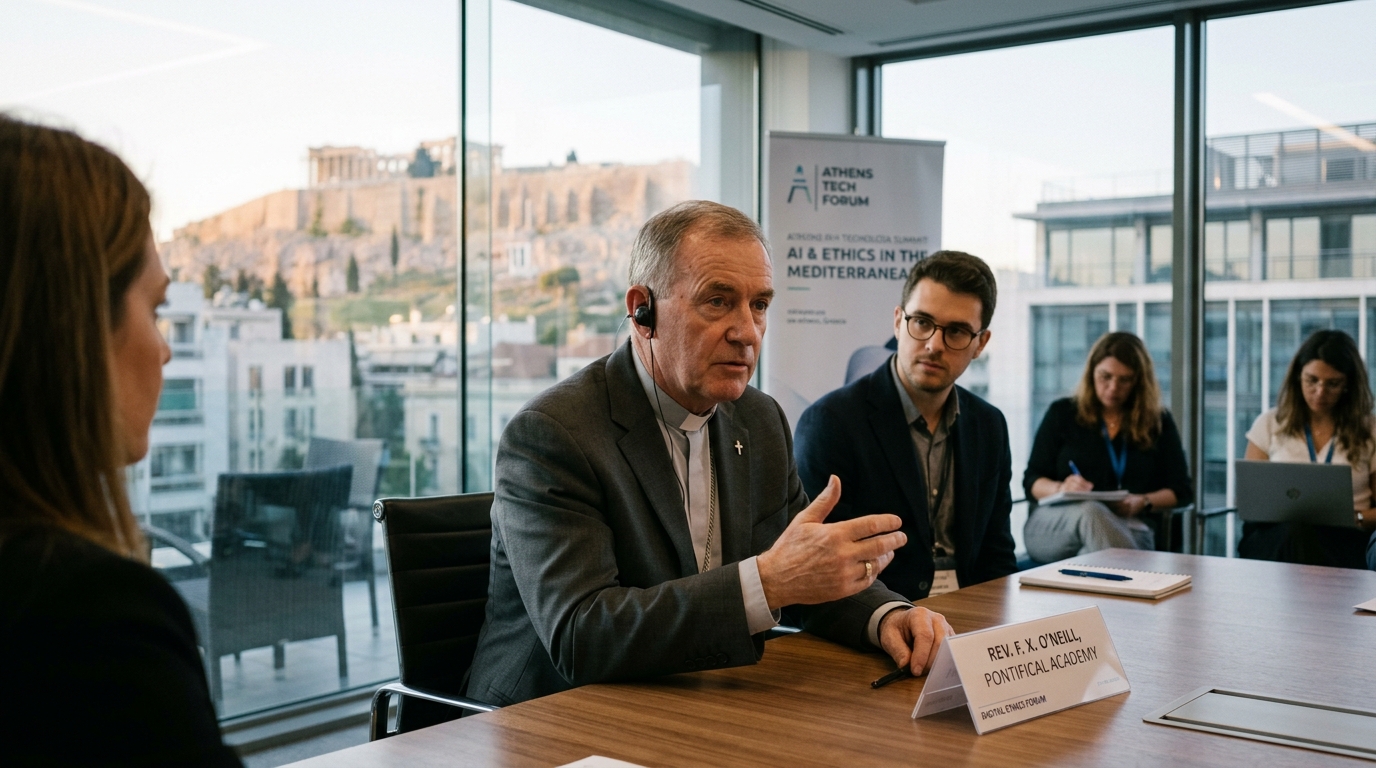
The Vatican's intervention is not limited to the narrow confines of theology. It acts as a moral mediator in a world divided by the competition of major powers for AI supremacy. By bringing religious leaders from Islam and Judaism to the same table alongside tech leaders, the Vatican is creating an ecumenical front for the protection of human rights. The Pope's criticism of the use of AI in weapon systems (Lethal Autonomous Weapons) is particularly sharp, calling for their total ban. The Church's position is clear: no machine should have the right to decide on the life or death of a human being.
Challenges and the Future of Faith
Naturally, this digital shift raises questions. Can a religion based on tradition keep pace with the exponential growth of technology? The Vatican's answer seems to be positive, as long as "human uniqueness" is preserved. The use of AI for analyzing ancient manuscripts in the Vatican Library or for providing spiritual guidance via chatbots is already under discussion. However, the risk remains: over-reliance on technology can lead to spiritual alienation. The "AI Pope" symbolizes the Church's effort to remain relevant in the 21st century, not as an obstacle to progress, but as the ethical barrier that will prevent the loss of our humanity within the ocean of data.