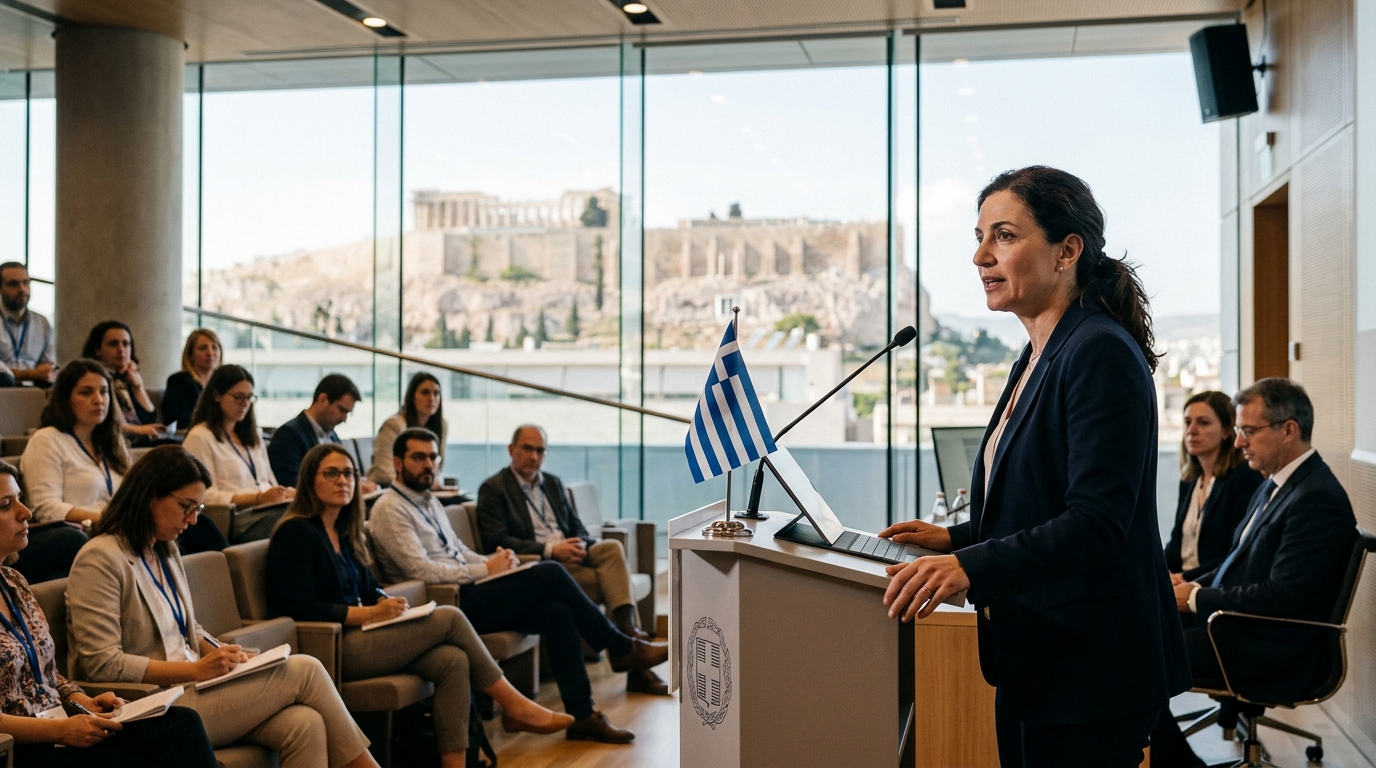
The fourth industrial revolution is no longer a theoretical promise confined to distant laboratories in Silicon Valley; it is a tangible reality knocking on the door of Greek industry. The recent webinar organized by AXIA CERT, in collaboration with leading institutions, highlighted a critical turning point: Artificial Intelligence (AI) is ceasing to be an optional 'accessory' and is becoming the central pillar of operational survival and international competitiveness.
From Theory to Practice: The Digital Transformation of Production
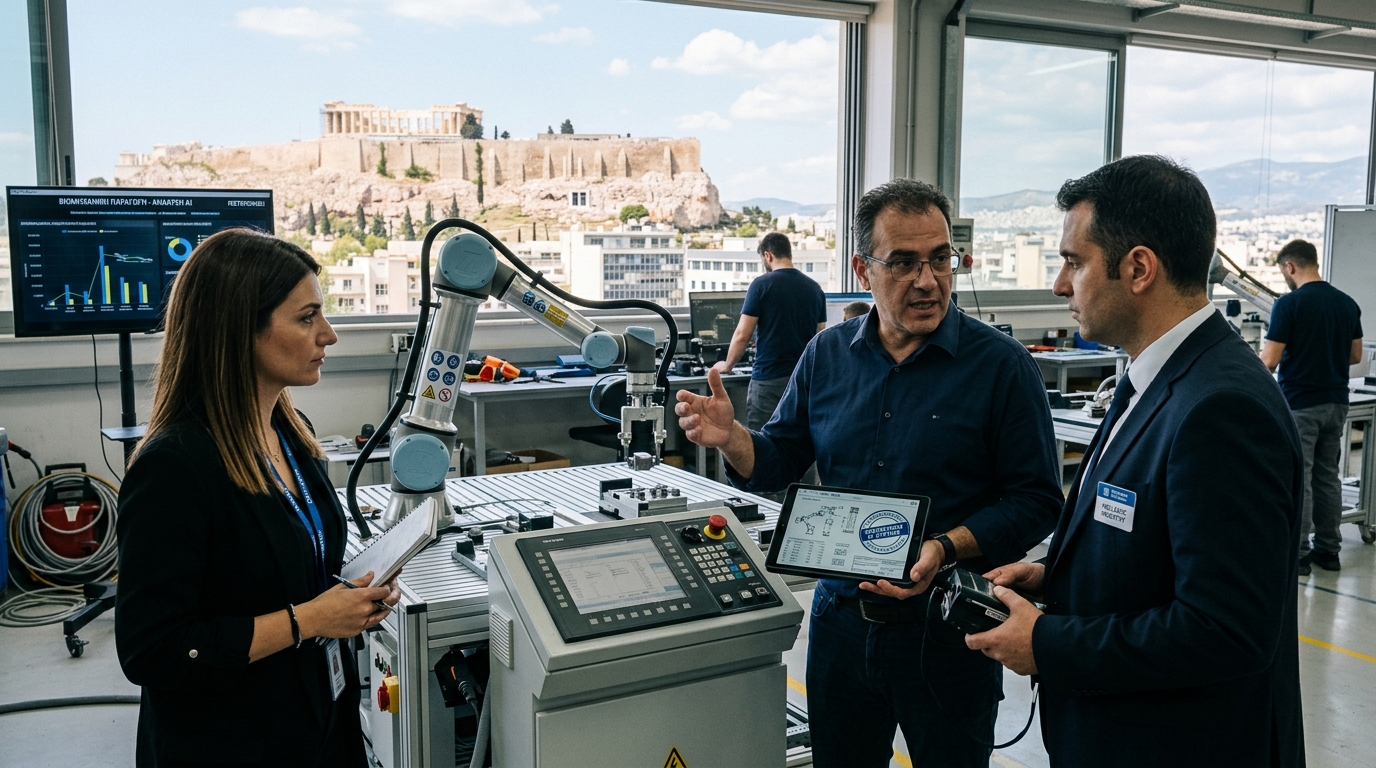
At the heart of the discussion was the need to integrate intelligent systems into production lines. For Greek industry, which primarily consists of Small and Medium-sized Enterprises (SMEs) but also strong groups in food, construction materials, and energy, AI offers solutions to chronic problems. Predictive maintenance is perhaps the most characteristic example. Through sensors and machine learning algorithms, industries can now predict a failure before it occurs, saving millions of euros in lost labor hours and spare parts.
However, the webinar emphasized that technology alone is not enough. The 'smart' industry requires a new data culture. Greek companies are called upon to transition from empirical decision-making to evidence-based real-time data analysis. This means that a factory manager in 2026 does not just monitor production indicators but collaborates with Digital Twins to simulate supply chain optimization scenarios.
Certification as a Guarantee of Trust and Security
One of the most important points highlighted by AXIA CERT is the role of certification in this new environment. As the European Union fully implements the AI Act, the need for transparent, ethical, and secure systems becomes imperative. Certification is no longer a bureaucratic obligation but a passport to international markets.
"Trust is the currency of the digital age. Without certified AI systems, industry risks not only cyberattacks but also the loss of credibility with customers and investors," it was noted during the proceedings.
The introduction of standards such as ISO/IEC 42001 for AI management provides Greek companies with a framework to identify and mitigate risks. This includes protecting intellectual property, ensuring the quality of training data, and avoiding biases that could lead to flawed business decisions.
Human Capital and the Reskilling Challenge
A common misconception debunked during the webinar is that AI will completely replace the human factor. On the contrary, the trend points toward "Collaborative Intelligence." Industrial workers must be reskilled to handle these new tools. The Greek state and certification bodies have a duty to support this transition, ensuring that technological progress leaves no one behind.
- Training in data analysis tools for production staff.
- Developing skills in managing hybrid human-machine systems.
- Focusing on cybersecurity at the industrial automation level.
In conclusion, the AXIA CERT initiative demonstrates that Greece has the potential to lead in Industrial AI, provided it combines technological boldness with institutional protection. The industry of the future is already here, and it is intelligent, certified, and outward-looking.