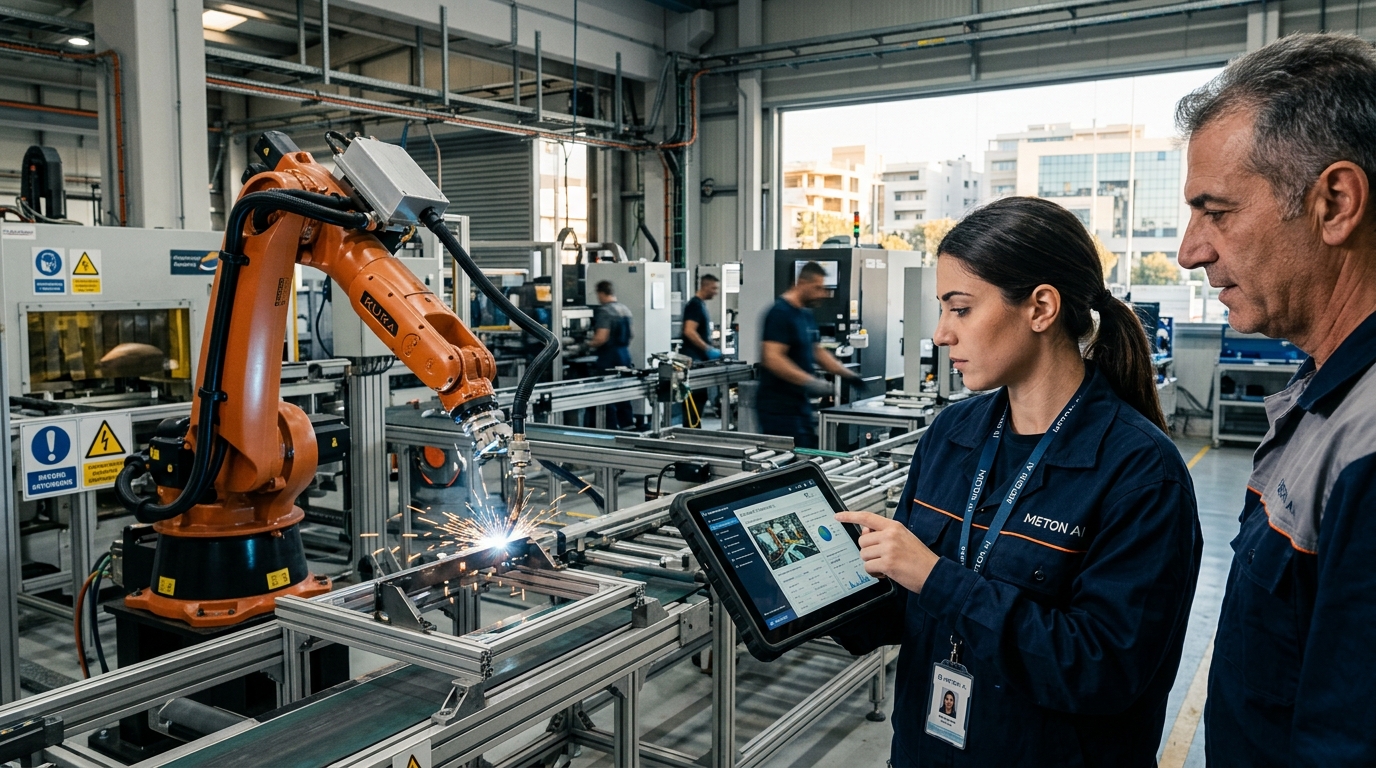
The image of a factory with rows of robotic arms performing repetitive tasks is now a relic of the past. Today, Artificial Intelligence (AI) is entering the heart of the production process, not merely as an automation tool, but as a 'brain' that optimizes every aspect of industry. From predicting failures before they occur to designing products using Generative AI, Industry 4.0 is giving way to a new, more intelligent reality.
From Automation to Autonomy
Traditional automation was based on predefined rules. Robots did exactly what they were programmed to do. AI changes this paradigm by introducing learning and adaptability. Modern Computer Vision systems can now detect microscopic flaws in products that the human eye would miss, reducing waste and improving quality in real-time.
Furthermore, the use of 'Digital Twins' allows companies to create exact digital replicas of their factories. Through these, they can simulate production scenarios, test changes in assembly lines, and predict energy consumption without stopping actual production for a single second. This capability offers a massive competitive advantage, especially in industries with high operating costs.
The Geopolitical Shift: Reshoring and Sovereignty
On a global scale, we are witnessing a trend of 'reshoring' — the return of production from low-cost labor countries back to Europe and the US. AI eliminates the advantage of cheap manual labor, making market proximity and technological superiority the new decisive factors. For countries like Greece, this means a chance to reclaim a share of the European manufacturing pie, provided there is strategic investment in digital infrastructure.
- Predictive Maintenance: Factories are using AI sensors to predict when a pump or motor will need service, avoiding costly downtime.
- Energy Optimization: With energy prices remaining volatile, AI helps manage the energy load, reducing both carbon footprint and costs.
- Generative Design: AI algorithms can suggest product designs that use less material while maintaining structural integrity, a boon for sustainability.
However, the integration of AI is not just about hardware; it's about the data layer. The ability to collect, process, and act upon data from the factory floor in milliseconds is what separates the leaders from the laggards in the current industrial landscape.
The Human Element and the Future of Work
The entry of AI into factories sparks intense debate about the future of employment. While AI may replace certain low-skilled jobs, it simultaneously creates new needs for data analysts, AI maintenance technicians, and cybersecurity experts. The factory of the future will not be 'empty' of humans; instead, it will rely on human-machine collaboration (Cobots).
"Artificial intelligence will not replace the worker, but the worker who knows how to use AI will replace the one who does not," industry executives often remark.
The challenge lies in the speed of transition. Governments and corporations must prioritize reskilling programs to ensure that the workforce is not left behind. In Greece, the Hellenic Federation of Enterprises (SEV) has been vocal about the digital gap, urging for a faster transition to prevent the country's manufacturing sector from becoming obsolete in an increasingly autonomous global market.
Conclusion: A Strategic Imperative
As we move deeper into 2026, AI in manufacturing is no longer an experimental luxury; it is a strategic imperative. For the Greek economy, which seeks to diversify beyond tourism and services, the 'smart factory' offers a path toward high-value exports and economic resilience. The question is no longer whether AI will dominate the factory floor, but how quickly we can adapt to its presence.