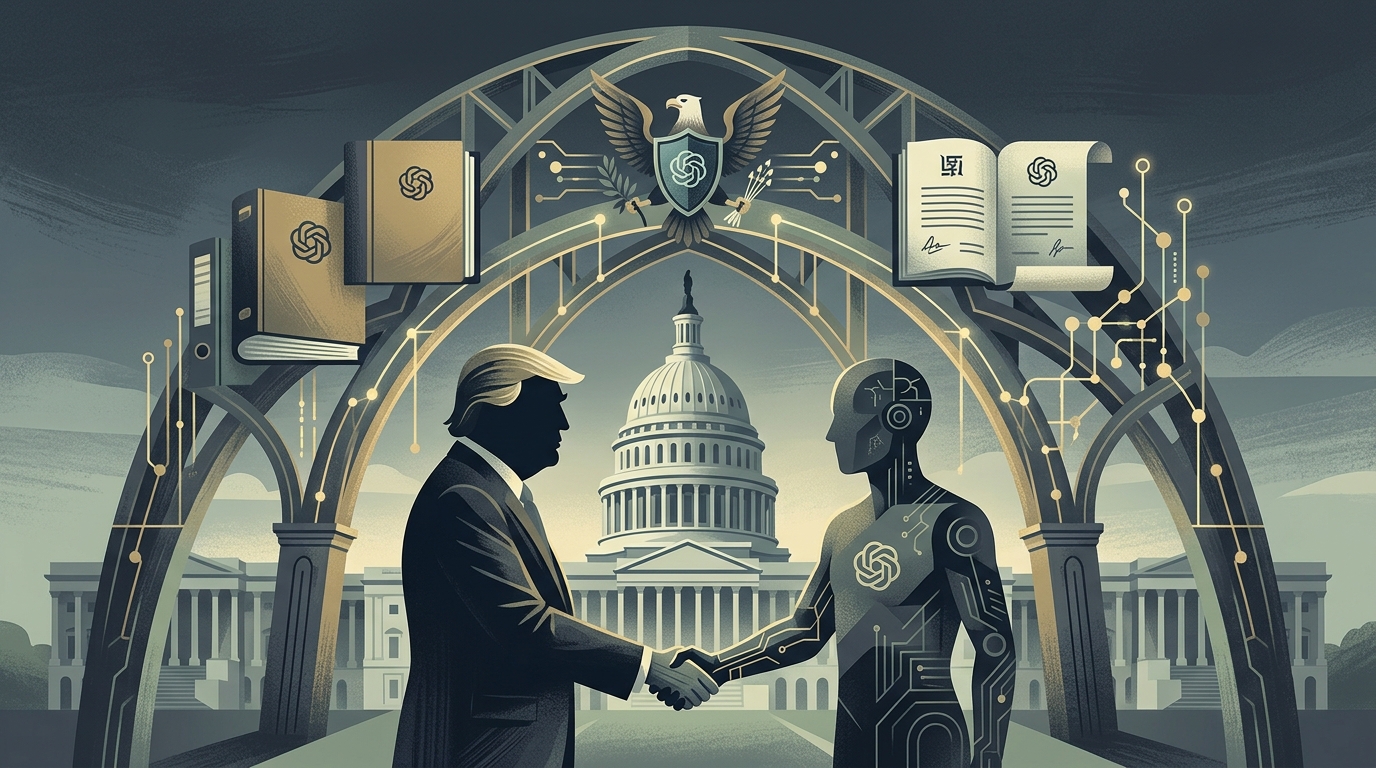
In November 2025, the Canadian government took a step hailed as a milestone for digital governance: the release of its first Federal AI Register. This initiative was presented as the fulfillment of a commitment to total transparency, allowing citizens to see where and how algorithms are deployed across the public sector. However, a new research paper (arXiv:2604.15514) disrupts this idyllic narrative, arguing that such registers are not neutral mirrors of government activity, but active instruments that often "obscure through disclosure."
Performative Transparency and the Information Paradox
The central argument of the study revolves around the concept of "performative transparency." According to the researchers, creating a register can function as a form of political theater. By providing an exhaustive list of low-risk applications—such as customer service chatbots or document optimization algorithms—the government creates an illusion of oversight. Meanwhile, the most critical, controversial, and high-risk applications remain shrouded in shadow.
Bureaucracy, by its very nature, tends to be self-protective. In the case of the Canadian Register, there is a noticeable trend of classifying systems in ways that downplay their complexity. When a system affecting immigration or social welfare is described in dry, technical language as a "decision support tool," its political and ethical dimensions evaporate. Instead of illuminating the mechanisms of power, the register transforms them into inscrutable administrative data points.
The "Silences" of the Register: What’s Missing?
Perhaps the most troubling finding of the analysis is the "bureaucratic silences"—the gaps left intentionally or due to systemic flaws. The research identifies three primary areas where the register fails significantly:
- National Security and Policing: The vast majority of systems used by intelligence agencies and federal police are exempted from the register for "security reasons." This creates an accountability black hole in the very areas where AI could have the most severe impacts on human rights.
- Definitions and Categorization: Many systems based on advanced statistical analysis are not labeled as "Artificial Intelligence" under narrow government definitions, thereby avoiding registration altogether.
- Outsourcing: When the state purchases off-the-shelf solutions from private corporations, the operational details are often protected by trade secret clauses, rendering the register entries hollow.
The Politics of Naming
The study highlights that how we name something determines how we regulate it. The Canadian Register employs language that sanitizes technology. Using terms like "automated processing" instead of "algorithmic judgment" diminishes the sense of human responsibility. The researchers argue that this "technicalization" of transparency discourages meaningful civic engagement. If a citizen cannot understand how a registered system affects their life, then transparency is a hollow victory.
"Transparency without intelligibility and contestability is not a democratic achievement, but a bureaucratic survival strategy," the study notes.
Toward Meaningful Accountability
To overcome these hurdles, the paper proposes a radical rethink of how AI registers function. A list of applications is not enough. It requires the inclusion of Impact Assessments, training data provenance, and, most importantly, mechanisms for citizen redress. Furthermore, there must be an independent oversight body to verify the accuracy of entries, rather than relying on the self-reporting of government departments.
In conclusion, the Canadian AI Register serves as a valuable lesson for the rest of the world, including the European Union. It reminds us that technology is never detached from politics and that a government's "silences" are often more revealing than its official declarations. True transparency requires the courage of self-critique and the acceptance of scrutiny—elements that currently seem to be missing from digital bureaucracy.