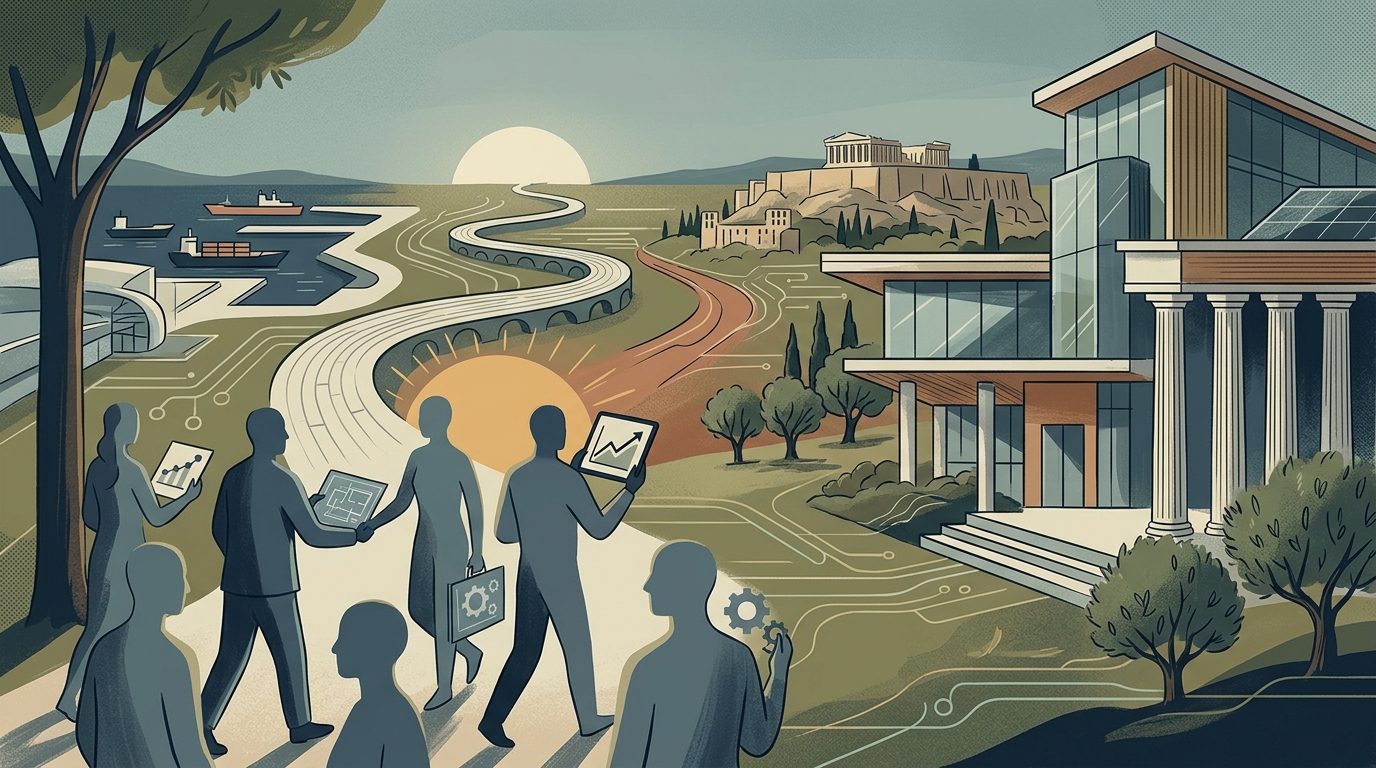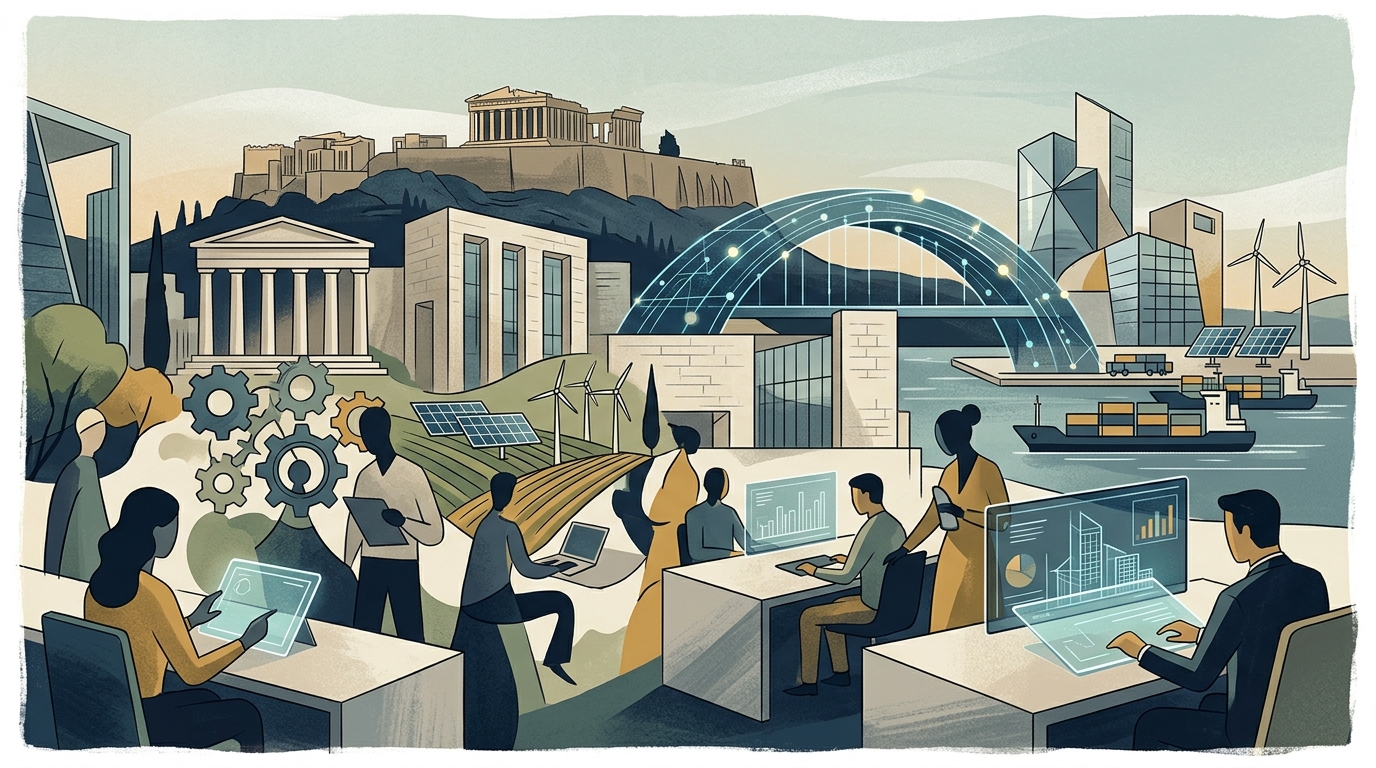
In the heart of 2026, Greece finds itself facing an unprecedented socioeconomic paradox that could define the country's trajectory for decades to come. On one hand, the nation's "digital natives"—Gen Z and Millennials—are exhibiting AI adoption rates that rank among the highest in Europe. On the other hand, the backbone of the Greek economy, small and medium-sized enterprises (SMEs), shows a worrying hesitancy, remaining spectators to a revolution already reshaping global business.
According to recent data analyzed by Oikonomikos Tachydromos, over 65% of Greeks aged 18-34 use Generative AI tools in their daily lives, whether for educational purposes or personal productivity. In contrast, less than 18% of Greek businesses have integrated AI into their operational processes. This gap is not merely a statistical detail; it is a ticking time bomb at the foundations of national productivity.
Youth as an Accelerator of Change
For young Greeks, Artificial Intelligence is not a threat, but a multi-tool. In the universities and coworking spaces of Athens and Thessaloniki, using models like GPT-5 and Gemini 2.0 is now the norm. Young people utilize AI for coding, translating complex texts, creating visual content, and data analysis. This familiarity creates an exceptionally talented workforce, which, however, often faces a harsh reality when entering the domestic labor market.
The problem lies in the fact that the skills young people acquire organically do not find fertile ground in Greek businesses. Many graduates specializing in AI data analysis are forced to seek work in multinationals or engage in digital nomadism, working for foreign companies from Greece. This represents a new form of "brain drain," where talent remains in the country but its added value is exported.
Fear and Inertia in the Business World
But why are Greek businesses lagging behind? The answer is complex and multi-layered. First, the structure of the Greek economy, dominated by very small enterprises (micro-enterprises), makes investing in new technologies difficult. For the owner of a small hotel or a retail store, AI seems distant and expensive, despite the availability of affordable SaaS (Software as a Service) solutions.
Secondly, there is a serious deficit in digital leadership. The management of many businesses, belonging to older generations, views AI with suspicion, fearing loss of control or cybersecurity issues. Furthermore, the lack of tax incentives and the bureaucracy in absorbing funds for digital transformation act as a deterrent.
"AI won't replace businesses, but businesses that use AI will replace those that don't," a technology market executive characteristically notes.
The Impact on the National Economy
The low adoption of AI by businesses has a direct impact on productivity. While competing countries in Europe and Asia automate routine tasks and optimize their supply chains, Greece risks remaining a low-value-added economy. In the crucial sector of tourism, for example, the use of AI for personalized customer service and revenue management is still in its infancy, giving an advantage to other Mediterranean destinations.
Moreover, the lack of investment in AI solutions prevents Greek companies from growing. Without the tools that allow for rapid scaling, Greek SMEs remain trapped in the internal market, unable to compete internationally. The need for a "National Action Plan for AI in Business" is now imperative, and it should include not only funding but also extensive reskilling programs for existing executives.
The Future: Bridging the Gap
To reverse the situation, a holistic approach is required. Universities must connect more closely with the labor market, offering programs that teach the practical application of AI in business. At the same time, the state must simplify procedures for digital upgrades and promote the creation of "innovation ecosystems" where young people with digital skills can provide services to traditional businesses.
Greece has the most valuable capital: a youth that is not afraid of the future. The challenge is to convince the business world to follow the same path. If the country manages to bridge this gap, Artificial Intelligence can become the catalyst for a new Greek economic miracle. If not, we risk becoming a two-speed country: digitally advanced citizens in an analogically backward economy.