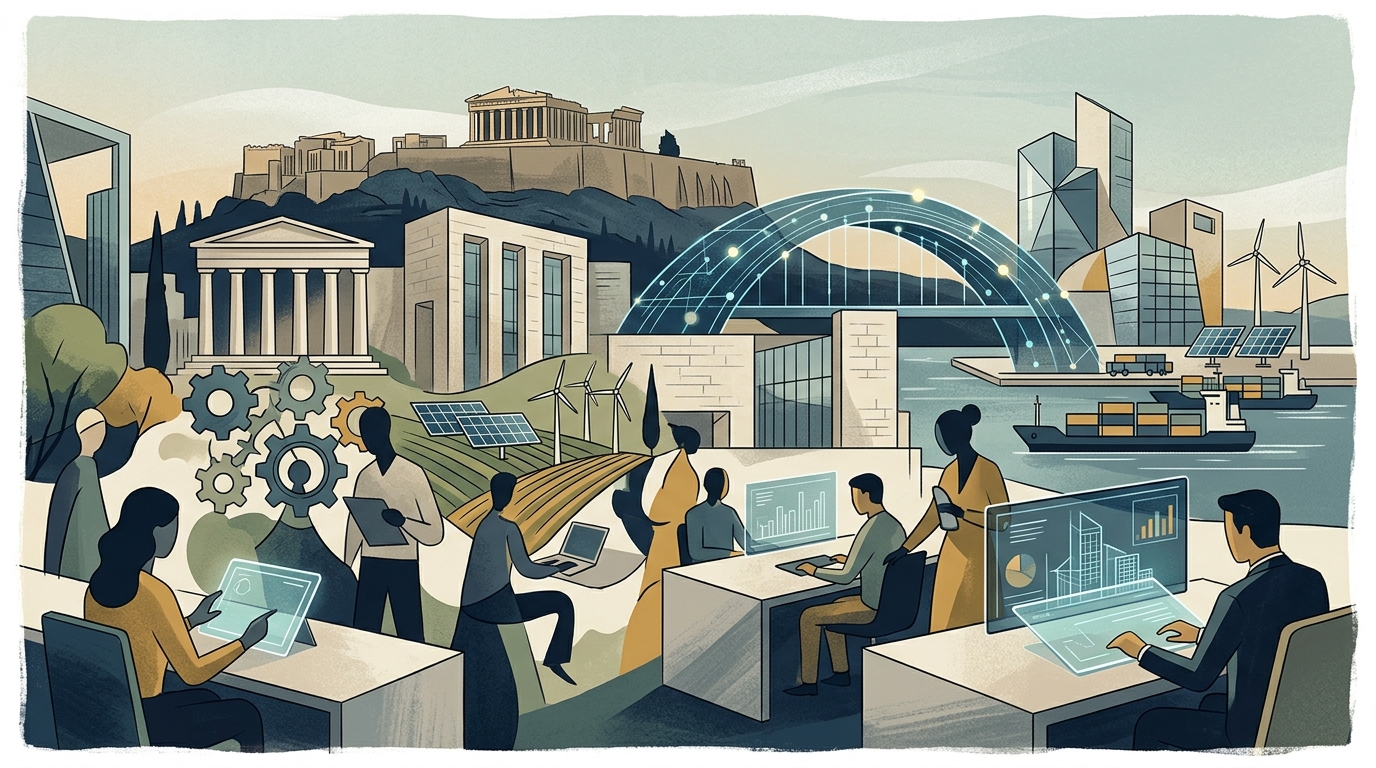
In the heart of the Philippine archipelago, the island of Palawan, known as the country's "last frontier" due to its unparalleled natural beauty, has become the epicenter of an experiment that feels plucked from the pages of a science fiction novel. The premise is as simple as it is daunting: can Artificial Intelligence (AI) take the reins of governance, replacing cumbersome and often corrupt human bureaucracy with algorithmic precision?
The Digital Leviathan of Palawan
The Palawan experiment is not merely about automating municipal services. It involves the integration of a centralized AI system that makes decisions on resource allocation, tourism management, and the protection of marine ecosystems. Utilizing data from thousands of sensors, satellite imagery, and economic indicators, the system proposes—and in some cases implements—policies aimed at maximum efficiency.
Proponents of the project argue that AI lacks human frailties. It cannot be bribed, it doesn't have relatives to appoint to office, and it is unswayed by political costs. In Palawan, where illegal logging and overfishing are perennial problems fueled by local corruption, AI offers the promise of incorruptible surveillance. The system can detect real-time deviations in shipping routes or suspicious movements in forests, mobilizing authorities without the interference of intermediaries.
The Challenge of Ethics and Sovereignty
However, the question looming over the island is deeply political: Who controls the algorithm? Governance is not just about mathematics; it is about values, priorities, and compromises. When an AI decides that to protect a coral reef, fishing must be banned in a certain area, it takes the livelihood away from hundreds of families. A human politician would have to weigh the ecological benefit against social cohesion. An algorithm, unless programmed with extreme nuance, could trigger a social explosion.
Furthermore, there is the issue of "digital sovereignty." The technological infrastructure running the Palawan experiment is not indigenous. It belongs to major tech giants and is funded by foreign investment capital that views the island as a "sandbox"—a testing ground. If the experiment succeeds, the expertise will be exported. If it fails, the residents of Palawan will be the ones to suffer the consequences of a fractured social fabric.
From the Agora to the Algorithm
The history of democracy began in ancient Athens with the direct participation of citizens in the Agora. In Palawan, the Agora is being replaced by the Cloud. Citizens are invited to participate through apps, providing data about their daily lives, which the AI processes to "improve" their existence. But is this participation meaningful, or is it a form of "behavioral governance," where citizens are guided by data rather than guiding their own destiny?
Critics warn of the risk of "algorithmic authoritarianism." If an AI decides who is entitled to benefits or which infrastructure projects move forward based on "performance prediction," then minorities or less "productive" groups risk being completely marginalized. The transparency of the code remains the ultimate requirement. Without open source and public oversight, AI governance remains a "black box."
The Future of "Startup States"
The Palawan experiment is not an isolated incident. It is part of a broader trend of creating "Charter Cities" or "Startup Societies," where traditional laws are set aside for the sake of innovation. For Europe and the global community, this example is both a warning bell and a source of inspiration. The digitalization of the state is necessary, but the delegation of decision-making to machines touches the core of human dignity.
In conclusion, Palawan shows us that technology can solve problems that human politics has failed to address for decades. However, governance remains an art that requires empathy, moral judgment, and, above all, accountability. AI can be an excellent advisor, but a dangerous sovereign. The challenge is to keep the "human-in-the-loop," ensuring that technology serves the citizen and not the other way around.