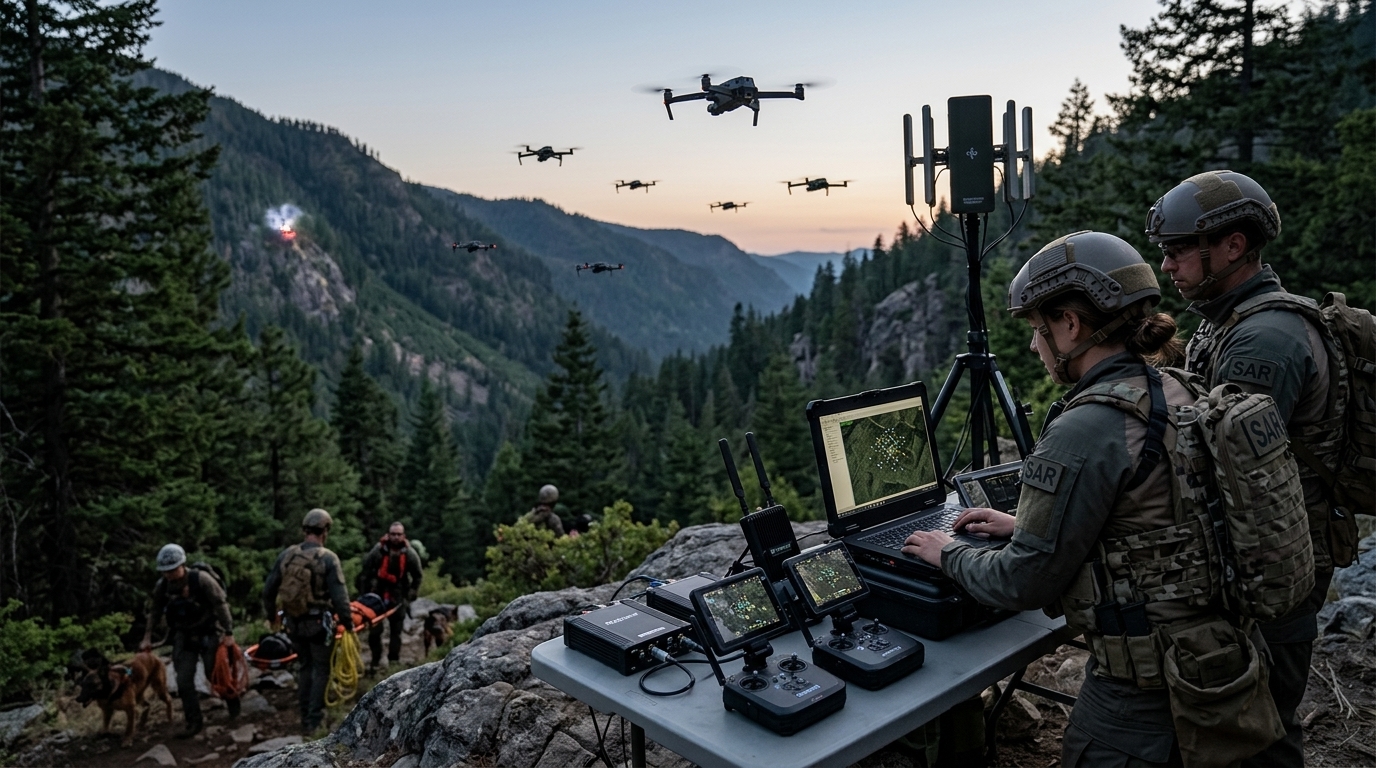
The era when tax audits in Greece relied solely on physical visits and handwritten notes is officially over. As the summer of 2026 reaches its peak, the Independent Authority for Public Revenue (AADE) is launching an unprecedented digital offensive, utilizing cutting-edge technology to safeguard public revenue. Focusing on the Aegean and Ionian islands, this "digital invasion" involves a combination of artificial intelligence, satellite data, and drone swarms designed to make tax evasion practically impossible.
The AI 'Eye' Over the Aegean
AADE's core strategy is based on the utilization of advanced machine learning algorithms fed with data from multiple sources. The most ambitious part of the program is the automated cross-referencing of Land Registry (Ktimatologio) data with property tax declarations (E9). The AI analyzes high-resolution satellite imagery and compares it with the declared square footage of buildings. Any discrepancy—whether it's a new hotel wing or a pool that was "forgotten" to be declared—immediately triggers a red flag in the central system.
These audits are not limited to real estate. The AI system now scans short-term rental platforms, comparing bookings with the income reported on the MyData application. The system's ability to process vast amounts of data in real-time allows AADE to target cases with the highest probability of non-compliance with surgical precision, saving both time and resources.
Drones: The Scourge of Coastal Violations
Where satellite imagery falls short, drones take over. Equipped with high-definition cameras and thermal sensors, AADE's unmanned aerial vehicles fly over tourist zones, monitoring the occupation of public spaces and beaches. The "MyCoast" app is now directly linked to the drones, allowing inspectors to see if a business's umbrellas and sunbeds exceed the limits of the concession granted by the state.
- Automated detection of undeclared swimming pools via spectral analysis.
- Monitoring customer flow at beach clubs to cross-reference issued receipts.
- Mapping new constructions in Natura sites and protected zones.
- Real-time connection with tablets used by inspectors on the ground.
The use of drones also acts as a deterrent. The knowledge that an audit can occur at any time from the air, without a physical presence, has already led to increased compliance among entrepreneurs in popular tourist destinations such as Mykonos, Santorini, and Rhodes.
Privacy Challenges and the Road Ahead
Despite the effectiveness of the new measures, the use of such technologies raises serious questions regarding personal data protection and citizen privacy. AADE assures that drones are used exclusively to identify tax and urban planning violations and that collected images are processed to ensure individual rights are not violated. However, legal experts emphasize the need for a more robust regulatory framework to clearly define the boundaries of digital surveillance.
"Technology is no longer an auxiliary tool, but the central pillar of our tax administration. Our goal is not punishment, but justice and the equal distribution of burdens," AADE sources state.
In conclusion, the integration of AI and drones into audit mechanisms represents a turning point for the Greek economy. If the island experiment proves successful, expanding these methods nationwide will be the next logical step, turning Greece into an international example of digital transformation in tax administration. The fight against tax evasion now moves through code and algorithms, promising a more transparent and fair future for all taxpayers.