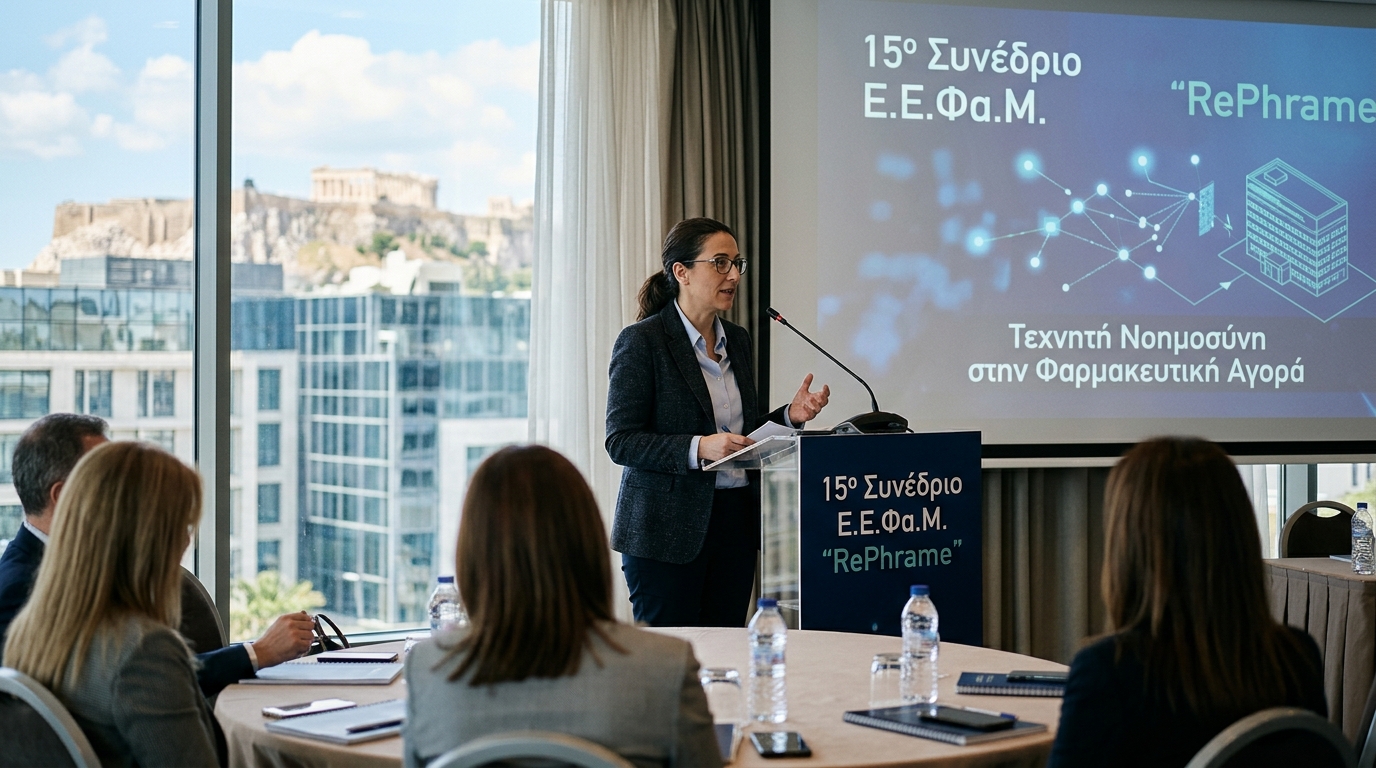
The 15th Conference of the Hellenic Association of Pharmaceutical Management (E.E.Fa.M.), aptly titled 'RePhrame,' opened its doors this year at a time when Artificial Intelligence (AI) is no longer a future promise but a daily reality reshaping the foundations of healthcare. In a rapidly changing world, the Greek pharmaceutical sector is called upon to redefine its role, its strategies, and, most importantly, its relationship with patients and the healthcare system.
The Digital Transformation of the Pharmaceutical Market
The central message of the 'RePhrame' conference focuses on the need for a new framework of thinking. Participants—leading executives from the local and international pharmaceutical scene, academics, and analysts—agreed that adopting AI is not just a technical upgrade but a cultural shift. The use of machine learning algorithms in data management now allows companies to predict market needs with a level of precision that was previously unthinkable.
In Greece, the pharmaceutical industry is one of the most extroverted and dynamic sectors of the economy. Integrating AI tools into the supply chain, marketing, and communication with healthcare professionals creates new competitive advantages. However, the challenge remains: how to ensure that this technology translates into better patient access to innovative treatments?
Revolutionizing Research and Development (R&D)
One of the most compelling sessions of the conference concerned the role of AI in drug discovery. Traditionally, developing a new drug requires over a decade and billions of euros in investment. AI drastically reduces this time by analyzing millions of chemical compounds and predicting their efficacy before clinical trials even begin.
Within the context of 'RePhrame,' it was emphasized that Greece can play a significant role in this field. By developing innovation hubs and fostering collaboration between universities and industry, our country has the opportunity to attract investments in digital-era clinical trials. The use of 'digital twins' to simulate patient reactions to treatments is already a field of intense interest that was discussed extensively.
Precision Medicine: Putting the Patient at the Center
The concept of 'precision medicine' was at the core of the discussions. AI enables the analysis of vast amounts of genomic data, leading to treatments tailored to each patient's biological profile. This means fewer side effects and greater efficacy, radically changing the 'one-size-fits-all' model.
Speakers highlighted that e-health in Greece is making steady progress, with electronic prescribing serving as the foundation for further innovation. The ability of patients to monitor their health through wearables and apps that connect directly to their medical records provides a continuous stream of data that, if utilized correctly, can save lives through early prevention.
Ethics, Data, and the Future
Despite the enthusiasm, the conference did not fail to address the critical issues of ethics and data protection. The use of AI in health requires a strict regulatory framework to ensure the transparency of algorithms and the protection of patient privacy. The discussion on 'Ethical AI' was particularly intense, with experts pointing out that public trust is the most valuable currency in the new digital age.
In conclusion, the 15th E.E.Fa.M. Conference 'RePhrame' sent a clear message: Artificial Intelligence is not a threat to the human workforce of the pharmaceutical market but a powerful ally. Success in the next decade will be judged by the ability of executives to 'reframe' their skills, combining technological intelligence with human empathy. Greece, despite the challenges, appears ready to lead in this transformation, provided it continues to invest in innovation and education.