The geopolitical chessboard of technology is vibrating with a new, fierce confrontation. The United States government has officially escalated its allegations against three of China's most prominent AI developers: DeepSeek, Moonshot AI, and MiniMax. The charges no longer pertain solely to access to advanced semiconductors but extend to claims of systematic "theft" of models and the illicit use of training data belonging to US giants such as OpenAI and Anthropic.
The New Method of "Distillation" and the Allegations
At the heart of the dispute lies the technique known as "model distillation." According to sources within the US Department of Commerce, there are credible suspicions that Chinese firms utilized the APIs (Application Programming Interfaces) of American models to generate vast amounts of synthetic data, which they then used to train their own domestic models. While this practice exists in a technical gray area, Washington views it as a violation of terms of service and a direct theft of intellectual property.
DeepSeek, which recently stunned the global community with the efficiency of its models, is under scrutiny for the speed at which it matched GPT-4's performance. US officials argue that such leaps in progress are impossible to achieve without "parasitic" exploitation of existing architectures. Meanwhile, Moonshot AI, backed by Alibaba and Tencent, and MiniMax, which focuses on social AI, are accused of evading US sanctions via subsidiaries in third-party countries to gain access to high-end cloud computing power.
Geopolitical Conflict and the Data "Cold War"
This move by the US is not merely a legal dispute; it is a strategic choice in the unfolding AI Cold War. As we approach mid-2026, AI dominance is seen as the defining factor for economic and military superiority in the 21st century. Washington fears that if Chinese companies successfully bridge the gap using American technology, efforts to contain China via chip export controls will prove futile.
"It is no longer just about who has the best chips, but who controls the data and the architecture of machine thought," says a Washington-based strategic analyst.
China, for its part, dismisses the allegations as "technological bullying." Beijing maintains that its companies are innovating based on open science and that the US is attempting to maintain a monopoly that stifles global competition. However, the pressure on investors is already palpable, with many venture capital (VC) firms pulling back from Chinese AI startups for fear of future sanctions and blacklisting.
Implications for the Global AI Ecosystem
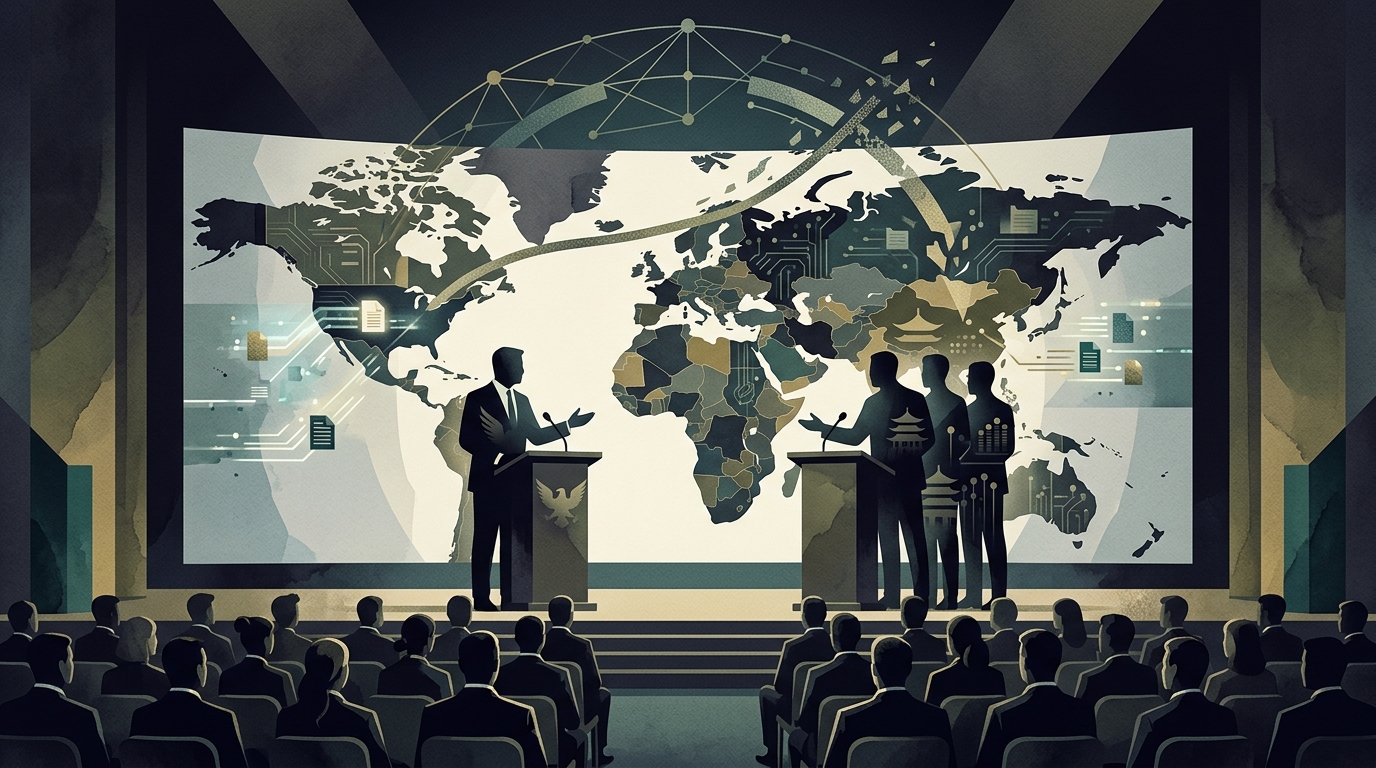
This escalation threatens to lead to a complete fragmentation of the internet and artificial intelligence, often referred to as the "Splinternet." If the US proceeds to add DeepSeek, Moonshot, and MiniMax to the "Entity List," the consequences will be far-reaching:
- Restriction of Collaborations: Academic institutions and Western companies will be forced to sever all research ties.
- Technological Divergence: Chinese models will develop on entirely different data frameworks, leading to incompatible AI systems.
- Increased Costs: The need for domestic development of every segment of the tech stack will drive up costs for all market players.
In this environment, Europe remains an anxious observer. While the EU attempts to balance through the AI Act, the polarization between the US and China makes neutrality increasingly difficult. The question remains whether innovation can survive in an environment where knowledge is treated as a state secret and progress as a threat to national security.