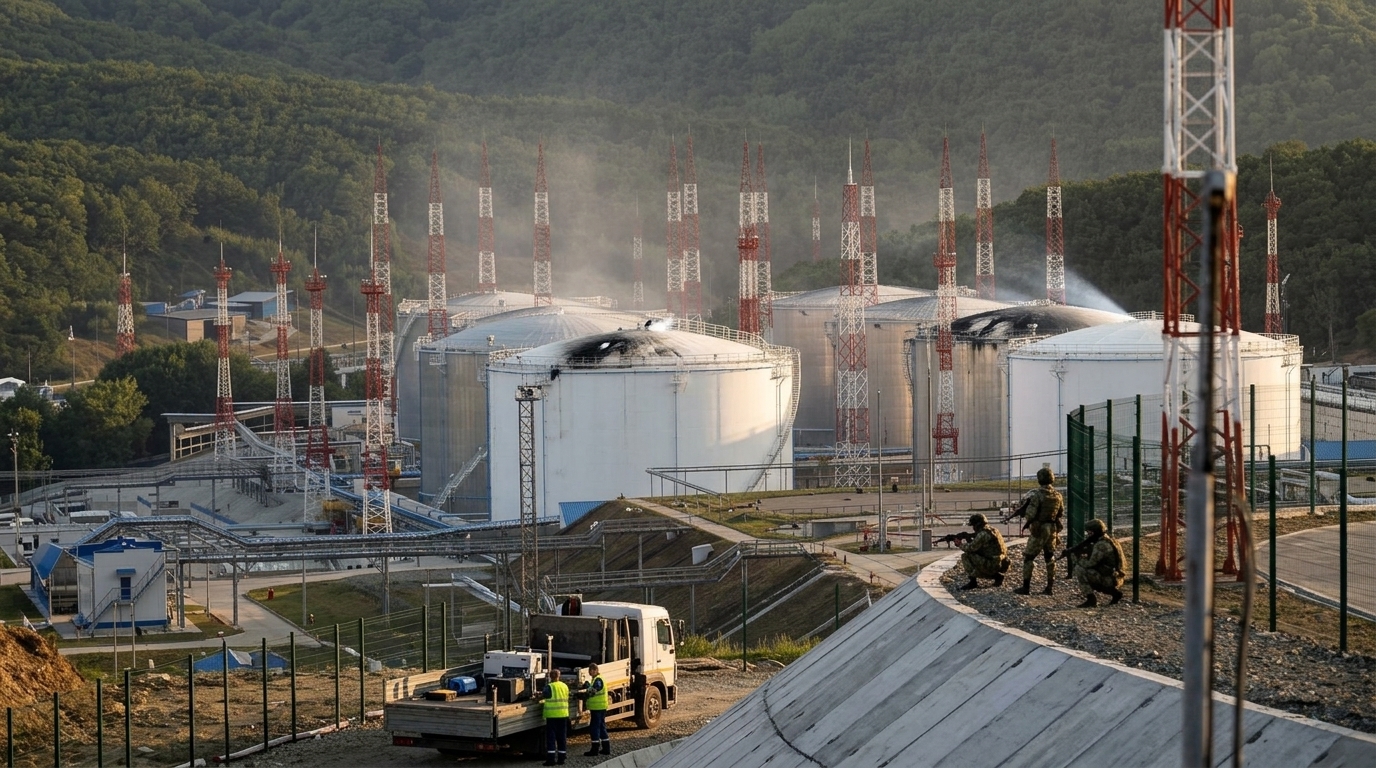
The recent Ukrainian drone attack on a Russian oil terminal, which ignited significant fires and disrupted export operations, is more than just another tactical strike in an ongoing conflict. It represents a fundamental shift in Kyiv’s strategy, now aimed directly at Moscow’s economic jugular: fossil fuel revenues. As 2026 progresses, Ukraine is demonstrating that it possesses the technological maturity and political resolve to strike targets deep within Russian territory, defying warnings of potential volatility in global energy markets.
Targeting the 'Shadow Fleet'
Of particular significance is the reported strike on a tanker belonging to Russia’s so-called 'shadow fleet' in the Black Sea. These vessels, often aging and operating with dubious insurance coverage, are utilized by the Kremlin to bypass G7 sanctions and the oil price cap. By striking these ships, Ukraine is not only causing physical damage but is also sharply increasing insurance premiums and the perceived risk for maritime operators still willing to trade with Russia.
The deployment of long-range drones, many of which are now produced domestically within Ukraine, allows Kyiv to bypass restrictions imposed by Western allies regarding the use of NATO-supplied weaponry inside Russian borders. This 'strategic autonomy' is a game-changer, forcing Russia to divert air defense systems from the front lines to protect critical infrastructure in the hinterland.
Technological Sophistication and AI Integration
Analysts point out that recent successes are driven by the integration of advanced AI-based navigation systems. These systems enable drones to identify targets visually, making them immune to Russian electronic warfare (jamming) that targets GPS signals. The ability of Ukrainian forces to hit specific nodes within refineries—such as distillation towers—maximizes structural damage with minimal ammunition expenditure.
- Expansion of Ukrainian strike range beyond 1,000 kilometers.
- Targeted strikes on oil export infrastructure to drain Russia's foreign currency reserves.
- Psychological pressure on the Russian leadership by bringing the war to their doorstep.
Geopolitical Implications and Energy Security
This escalation is causing jitters in international markets. While Washington has previously expressed concerns that attacks on Russian refineries could lead to a spike in global gasoline prices, Kyiv appears to maintain that dismantling the Russian war chest is the priority. This strategy highlights the friction between Western short-term economic interests and Ukraine’s existential military needs.
"We cannot ask Ukraine to fight with one hand tied behind its back when Russia uses every available resource to annihilate it," stated a senior European official.
In conclusion, the attack on the oil terminal and the shadow fleet marks a new phase where energy is no longer just a tool of blackmail for Moscow, but also its Achilles' heel. Ukraine, through drone innovation, is imposing its own costs in a war of attrition that no longer recognizes traditional borders.