As the war in Ukraine enters its fifth year, Kyiv appears to be moving away from traditional frontal assault methods, investing instead in a strategy of "suffocating" Crimea. Mykhailo Fedorov, the man behind Ukraine's digital transformation and the notorious "Army of Drones," made statements combining military realism with a touch of dark humor, describing the peninsula as a "popular tourist destination" for Ukrainian drones. This statement is not merely a PR stunt; it captures the essence of the new Ukrainian military doctrine: isolation through technological superiority.
From Digital Ministry to War Machine
Mykhailo Fedorov has emerged as one of the most influential players in the Ukrainian resistance. As the Minister of Digital Transformation, he managed to turn a bureaucratic structure into an innovation hub producing drones at industrial scales. The plan for Crimea is based on the premise that the peninsula is the "soft underbelly" of Russian logistics. By striking supply lines, ammunition depots, and, most importantly, the Kerch Bridge, Kyiv seeks to make the Russian military presence there economically and militarily unsustainable.
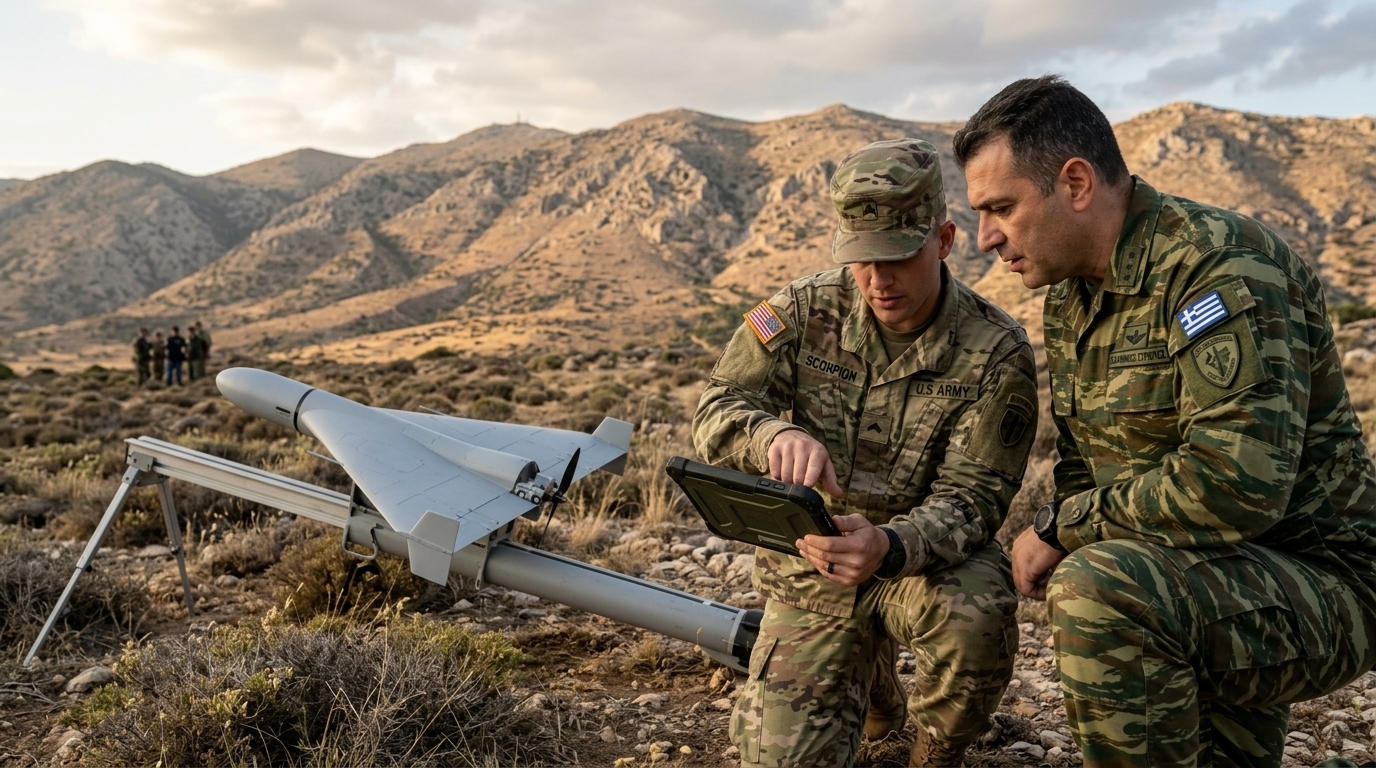
The use of drones, both aerial and maritime (the famous Sea Babies), has changed the dynamics in the Black Sea. Russia, despite its numerical fleet superiority, has been forced to withdraw many of its ships from the port of Sevastopol, fearing precision strikes. Fedorov emphasizes that technology allows Ukraine to wage a war of attrition at a much lower cost than what is required to maintain Russian defense systems.
Strangling the Peninsula: The Logistics of Isolation
For Moscow, Crimea is not just a territorial gain from 2014; it is a symbol of Russian power and the central hub for operations in southern Ukraine. Its isolation would mean the collapse of the front in Kherson and Zaporizhzhia. Kyiv knows this and systematically targets infrastructure. Attacks are no longer limited to military targets but extend to anything that sustains the Russian presence: from refineries to railway hubs.
The "isolation" strategy involves three stages:
- The destruction of S-300 and S-400 air defense systems to open corridors for drones.
- The harassment of maritime supply routes.
- The final severing of the Kerch Bridge, which serves as the peninsula's umbilical cord to the Russian mainland.
The "Tourist" Narrative as Psychological Warfare
Fedorov's irony regarding "tourism" targets Russian morale directly. Throughout the summer, Russia attempted to promote Crimea as a safe holiday destination for its citizens, despite explosions rocking airbases. Kyiv, by adopting this rhetoric, reminds the world that no part of the peninsula is immune anymore. The psychological pressure on Russian settlers and soldiers is immense, as the sense of an "impregnable fortress" has given way to uncertainty.
"Crimea will become a trap. We don't need to take it by storm; we just need to make it unlivable for the enemy," sources from the Ukrainian Ministry of Defense state.
Challenges and the Future of Operations
Despite progress, isolating Crimea remains a Herculean task. Russia possesses powerful electronic warfare systems capable of neutralizing drones, while the peninsula's fortification is multi-layered. Furthermore, the West remains cautious about the use of its long-range weapons (such as ATACMS or Taurus missiles) for strikes deep into Crimea, fearing escalation. However, Ukraine responds with domestic production, proving that innovation can, to some extent, substitute for deficiencies in conventional weaponry.
In conclusion, Fedorov's statement signals a new phase in the war: one where pixels and algorithms carry as much weight as artillery. If Kyiv manages to "isolate" Crimea in 2026, it will have achieved one of the greatest strategic victories in modern history, permanently altering the geopolitical map of Eurasia.