The news of two teenagers killed in Russia's Belgorod region, their motorcycle struck by a Ukrainian drone, serves as a grim reminder that the war in Ukraine has entered a new, more unpredictable, and technologically advanced phase. As of May 2026, the use of Unmanned Aerial Vehicles (UAVs) is no longer a mere auxiliary tool on the battlefield but the spearhead of a strategy designed to bring the cost of war directly into the Russian heartland.
The Strategy of Asymmetric Response
For Kyiv, the escalation of drone strikes is a necessity born from the need to counterbalance Russian superiority in conventional assets like artillery and aviation. With Western long-range missile supplies often coming with strings attached—specifically restrictions on their use within Russian territory—Ukraine has pivoted heavily toward domestic drone production. These "low-cost" weapons have proven remarkably effective at hitting strategic targets: oil refineries, ammunition depots, and airbases.
However, this strategy also carries a psychological dimension. Transporting hostilities onto Russian soil, in regions like Belgorod, Kursk, and Voronezh, aims to dismantle the Kremlin’s narrative of "security" and a "controlled special operation." When the war arrives at the doorstep of the average Russian citizen, the political pressure on the leadership mounts, even if such pressure is swiftly suppressed by the state apparatus.
Technological Evolution and Artificial Intelligence
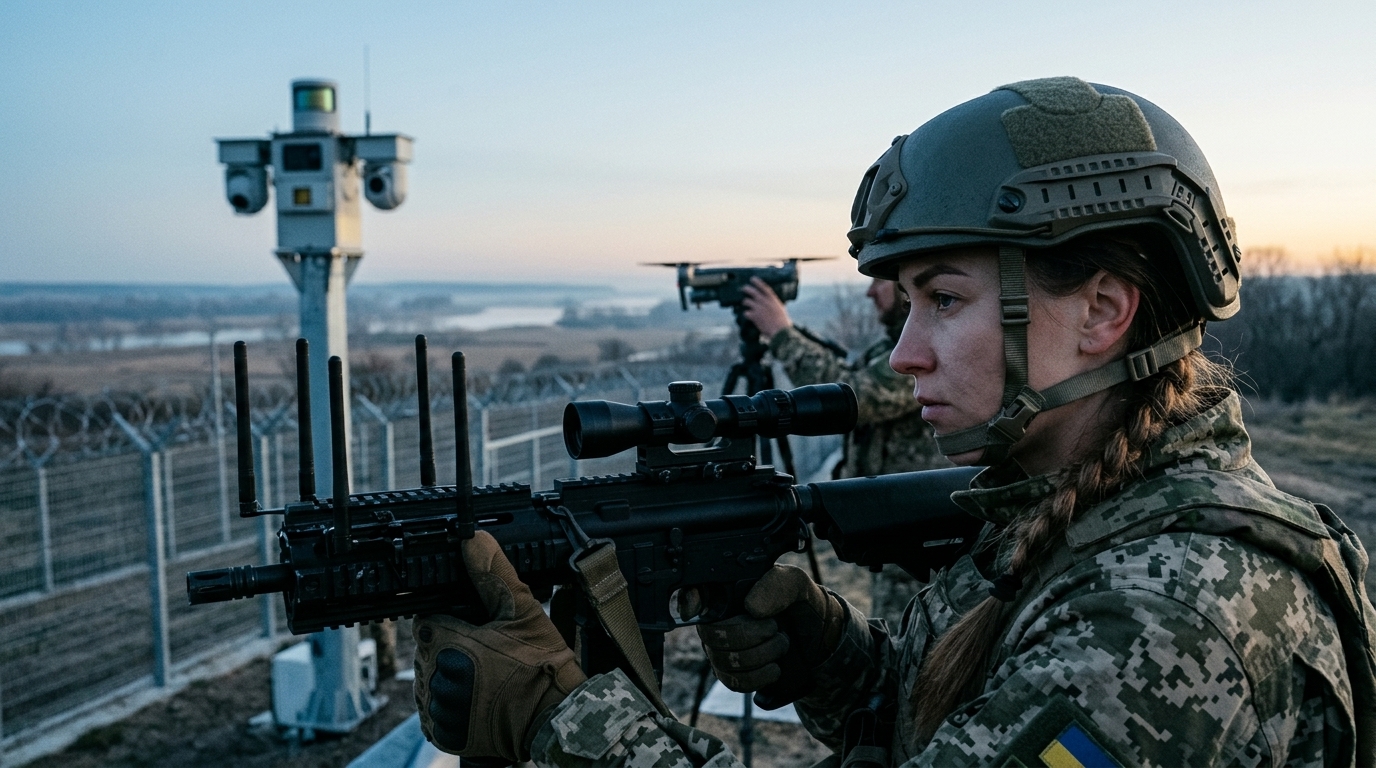
On the operational front, 2026 marks the full integration of Artificial Intelligence into drone warfare. The systems deployed by Ukraine now possess autonomous navigation and target recognition capabilities, bypassing Russian Electronic Warfare (EW) systems. This means that even if the link to the operator is severed, the drone can complete its mission based on visual data and machine learning algorithms.
- Autonomy: Drones flying without GPS, utilizing real-time terrain mapping.
- Swarms: Coordinated attacks by dozens of UAVs that overwhelm enemy air defenses.
- Cost Efficiency: The use of commercial off-the-shelf components makes the cost-to-damage ratio extremely favorable for Ukraine.
This technological leap, however, brings profound ethical dilemmas. The incident in the village of Volchya Alexandrovka, where a drone struck a motorcycle carrying teenagers, raises questions about targeting precision and the distinction between military and civilian objectives. While Moscow labels these as "terrorist acts," Kyiv maintains that its strikes are surgical, targeting the infrastructure that fuels the Russian war machine.
Geopolitical Repercussions
The international community is watching with bated breath. The United States and the European Union find themselves in a delicate balancing act. On one hand, they recognize Ukraine's right to self-defense; on the other, they fear an uncontrolled escalation that could lead to a direct NATO-Russia confrontation. The use of domestically produced drones provides Kyiv with "strategic autonomy," allowing it to act without being constrained by the red lines of its Western allies.
"Drone warfare is not just a technological innovation; it is the total subversion of the traditional concept of the front line. Now, the front is everywhere," notes an analyst from the International Institute for Strategic Studies.
Russia, for its part, has bolstered its anti-aircraft defenses around major cities, but the sheer vastness of the border makes total coverage an impossible task. Moscow's response is typically asymmetric, involving massive missile strikes on Ukraine’s energy infrastructure, plunging entire cities into darkness and cold. This cycle of retaliation seems endless, with civilians on both sides paying the heaviest price.
Conclusions for the Future
The conflict in Ukraine has transformed into a global laboratory for the warfare of the future. The escalation of drone strikes suggests that peace is not on the horizon. Instead, we are bracing for a prolonged period of attrition, where technological superiority and societal resilience will determine the outcome. International diplomacy is challenged to find new rules for a war fought from a distance, yet whose consequences are more immediate and painful than ever.