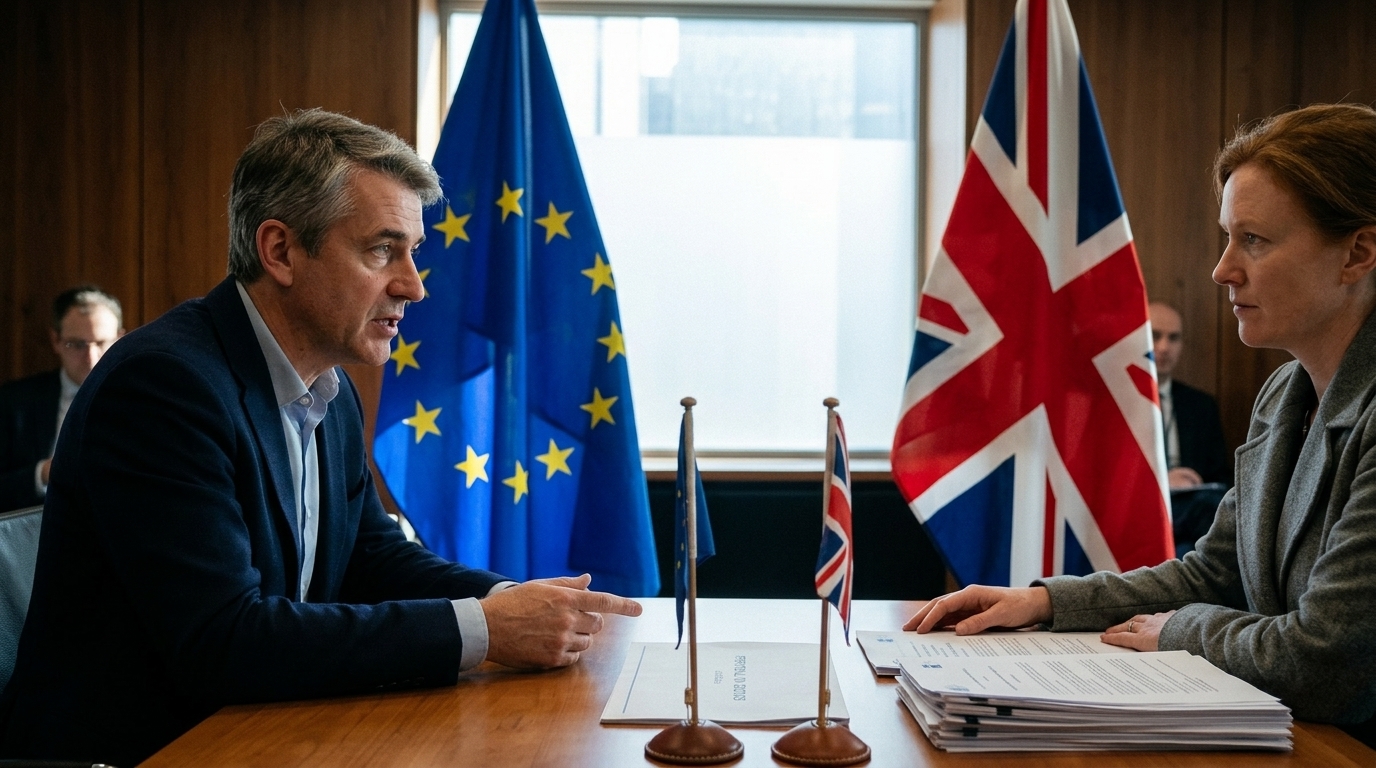
The history of relations between the United Kingdom and the European Union since 2016 has often resembled a long and painful recovery from a self-inflicted wound. Today, under the leadership of Keir Starmer, London appears to be abandoning the bellicose rhetoric of its predecessors, entering a phase of "pragmatic rapprochement." The proposal for a common market for goods represents the most ambitious step in this "Brexit Reset," signaling an effort to mitigate economic friction without formally rejoining the Single Market.
Anatomy of the Proposal: Moving Beyond Cherry-picking
The core of the British proposal lies in the adoption of common standards and rules for industrial and agricultural products. This would allow the flow of goods without the exhaustive border checks that have battered supply chains and increased costs for businesses and consumers. For the Labour government, this is a "common sense" move aimed at stimulating growth, which has remained anemic following the pandemic and the exit from the EU.
However, this proposal hits a fundamental EU tenet: the indivisibility of the four freedoms (goods, services, capital, people). The EU has historically refused market access for goods without the acceptance of free movement of people, fearing that such a concession would create a precedent that would weaken the Union's cohesion. London, for its part, is trying to argue that geopolitical stability and the need for a strong European front against global challenges outweigh a dogmatic adherence to these rules.
Economic Rationalism vs. Political Sovereignty
The economic analysis of the proposal is clear: reducing non-tariff barriers could add billions to the British GDP. Sectors such as automotive, pharmaceuticals, and food, which rely on "just-in-time" production, would be the primary beneficiaries. For Brussels, however, the question is the price. A specific agreement on goods would require the UK to accept the jurisdiction of the European Court of Justice on certain matters—a "red line" that has toppled Conservative governments in the past.
Furthermore, there is the issue of "dynamic alignment." If the EU changes its rules on product safety, must London follow automatically? If so, Britain becomes a "rule-taker," something Brexit supporters view as a betrayal of national sovereignty. The Starmer government is betting that British public opinion, weary of economic stagnation, is now more receptive to such compromises.
The Geopolitical Dimension: Europe as a Fortress
In a global environment characterized by the rise of protectionism in the US and intensifying competition with China, the need for a closer UK-EU relationship is becoming imperative. Security is no longer just about armaments; it is about economic resilience. A "Brexit Reset" that includes a goods agreement could serve as the foundation for broader defense and energy cooperation.
- Alignment on sanitary and phytosanitary (SPS) standards to reduce food checks.
- Mutual recognition of professional qualifications to facilitate services.
- A youth mobility scheme that could serve as a "bridge" for free movement.
- Closer cooperation on the green transition and carbon pricing.
In conclusion, the proposal for a common market for goods is a test of flexibility for both London and Brussels. If it succeeds, it will mark the end of the "cold peace" period and the beginning of a new, functional relationship. If it fails, the UK risks remaining in an economic "gray zone," isolated from its main trading partner at a time when the world around it is changing rapidly.