In the geopolitical landscape of 2026, the rhetoric of economic nationalism has reached the status of dogma. The Trump administration, faithful to its promise of reviving American industry, has turned tariffs into its primary tool of foreign policy. However, behind the fiery speeches about "America First" lies a much more complex and often contradictory reality. While tariffs disrupt international trade, the White House selectively "celebrates" certain foreign imports, highlighting the structural gaps in domestic production and the unavoidable dependence on the global supply chain.
The Strategy of Selective Exemptions
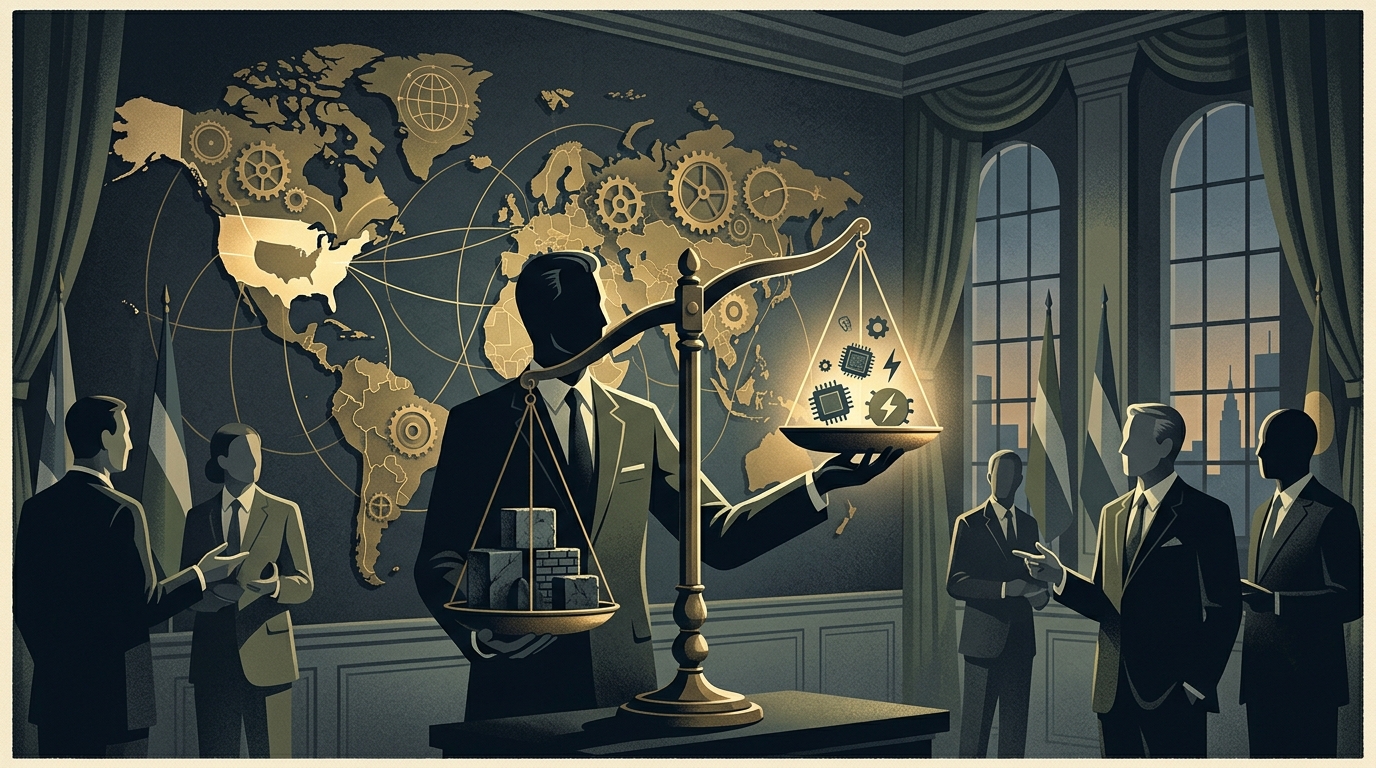
The imposition of broad tariffs, particularly against China and the European Union, aimed to force companies to move production within U.S. borders. Nevertheless, the reality of the numbers shows that certain products remain "untouchable." These are primarily raw materials and specialized high-tech components essential for the U.S. defense industry and the artificial intelligence sector. The administration appears to be implementing a "two-tier" policy: punitive tariffs for consumer goods and strategic facilitation for imports deemed critical to national security.
“Protectionism is a powerful political tool, but economic reality does not always obey campaign slogans. The need for specialized semiconductors and rare earth metals forces even the most hardline tariff supporters to take a step back.”
This approach creates an environment of uncertainty for investors. On one hand, tariffs increase production costs for American businesses relying on imported parts; on the other, selective exemptions create a system of "cronyism" where access to power determines who pays the tax and who does not.
The Challenge of AI and Semiconductors
At the center of this confrontation is the technology industry. The development of Artificial Intelligence (AI) requires vast amounts of advanced chips, most of which are manufactured in Taiwan and South Korea. Despite efforts to boost domestic production through the CHIPS Act, the U.S. is still years away from full self-sufficiency. The White House, realizing that a lag in AI would mean a geopolitical defeat, has created "green lanes" for imports of equipment powering the massive data centers of Silicon Valley.
- Exemptions for components not produced in the U.S. in sufficient quantities.
- Agreements with "friendly" nations to bypass general tariffs.
- Preferential treatment for companies committing to future investments on American soil.
This practice, however, provokes reactions from other sectors of the economy, such as the automotive and agricultural industries, which see their costs skyrocket without enjoying the same facilities. The dissatisfaction of farmers in Midwestern states, who are hit by retaliatory measures from foreign governments, poses a constant political threat to the stability of the government's line.
Geopolitical Implications and the European Stance
Europe views these moves with skepticism. The imposition of tariffs on European products, such as steel and aluminum, has led to a cold period in transatlantic relations. The EU has responded with its own tariffs, targeting iconic American products. However, the "selective" nature of U.S. imports shows that there is room for negotiation. Brussels is trying to leverage the U.S. need for cutting-edge European technology in green energy and medicine to secure better trade terms.
In the long run, this policy may lead to a fragmentation of global trade. Instead of a single global trade organization, we are moving toward a system of bilateral agreements and "closed clubs," where access to the U.S. market will be a privilege traded for political concessions. This model of "transactional trade diplomacy" redefines the concept of the free market, turning it into a field of constant negotiation and power play.
Conclusion: The Utopia of Self-Sufficiency
The case of "celebrated imports" in Trump's White House proves that full economic self-sufficiency is a utopia in the 21st century. Even the world's strongest economy cannot operate isolated from the resources and innovation produced outside its borders. The challenge for the future is not the abolition of imports, but the management of dependencies in a way that does not undermine economic stability. Tariffs may be an effective slogan for the polls, but governing requires the recognition that prosperity is, and will remain, a global endeavor.