In the global geopolitical arena, where Artificial Intelligence (AI) has become the new 'nuclear weapon' of economic and military power, a small island nation at the tip of Southeast Asia is managing to outshine superpowers. Singapore, often called the 'Little Red Dot,' is no longer just a financial hub; it is rapidly transforming into the ultimate sanctuary and headquarters for the world's tech giants.
The recent surge of activity in the city-state is no coincidence. While the United States and China engage in a relentless technological 'cold war,' Singapore offers something rare in today's era: stability, regulatory clarity, and a strategic neutrality that makes it an ideal hub for global AI development.
The NAIS 2.0 Strategy: A Masterclass in Governance
Singapore's success is not based on luck, but on meticulous planning. The government unveiled its National AI Strategy 2.0 (NAIS 2.0), aiming to fully integrate AI into the economy and society. Unlike the European Union, which focused primarily on restriction and risk regulation (through the AI Act), Singapore has chosen an innovation-first approach.
Its regulatory framework is 'business-friendly' yet rigorous regarding ethics. Through initiatives like 'AI Verify'—the world's first AI governance testing framework—the country allows companies to test their models in a controlled yet supportive environment. This balance between safety and freedom of movement is precisely what has captured Silicon Valley's attention.
The Tech Invasion: Nvidia, Microsoft, and AWS
The numbers speak for themselves. Nvidia, the company at the heart of the semiconductor revolution, sees approximately 15% of its revenue coming from Singapore. CEO Jensen Huang is a frequent visitor, recognizing that the demand for AI infrastructure there is disproportionately high compared to its population size.
Simultaneously, Amazon Web Services (AWS) announced investments totaling $9 billion to expand its data centers in the country, while Microsoft and Google are constantly strengthening their presence with new research and development labs. For these giants, Singapore is not just a market, but the gateway to all of Southeast Asia—a region with 650 million people and a booming digital economy.
Geopolitical Neutrality: The Art of Balance
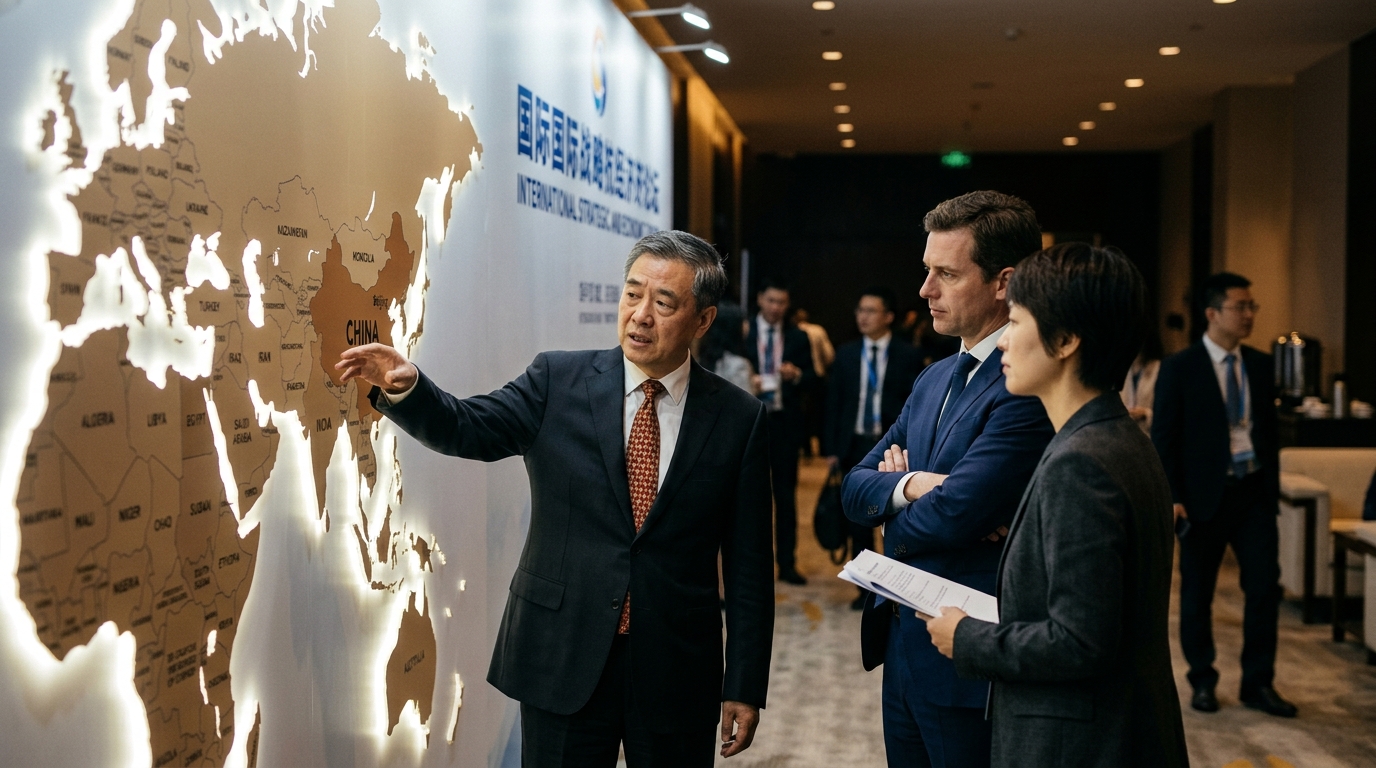
Perhaps Singapore's most significant advantage is its ability to remain friends with everyone. In an age where Washington imposes chip export restrictions on China and Beijing responds in kind, Singapore functions as a 'sterile' space for cooperation.
It is one of the few places where American capital, Chinese manufacturing prowess, and international talent can coexist without fear of immediate political retaliation. This 'strategic autonomy' allows Singapore to absorb expertise from both sides of the Pacific, making it an indispensable link in the global AI supply chain.
Challenges: Energy and Space
However, the road to the top is not without obstacles. Singapore is a small country with limited resources. Running massive data centers requires enormous amounts of energy and water for cooling—resources that are precious in Singapore. The government has already set strict sustainability criteria for new data centers, pushing companies to invest in 'green' technologies.
Furthermore, there is the talent issue. Despite its excellent education system, Singapore needs thousands of specialized data scientists and AI engineers. The proposed solution is a combination of attracting foreign 'brains' via specialized visas and the massive upskilling of the local workforce.
In conclusion, Singapore is winning the AI battle not just with capital, but with the intelligence of its governance. In a fragmenting world, the city-state proves that technological supremacy requires, above all, political foresight and the ability to build bridges where others build walls.