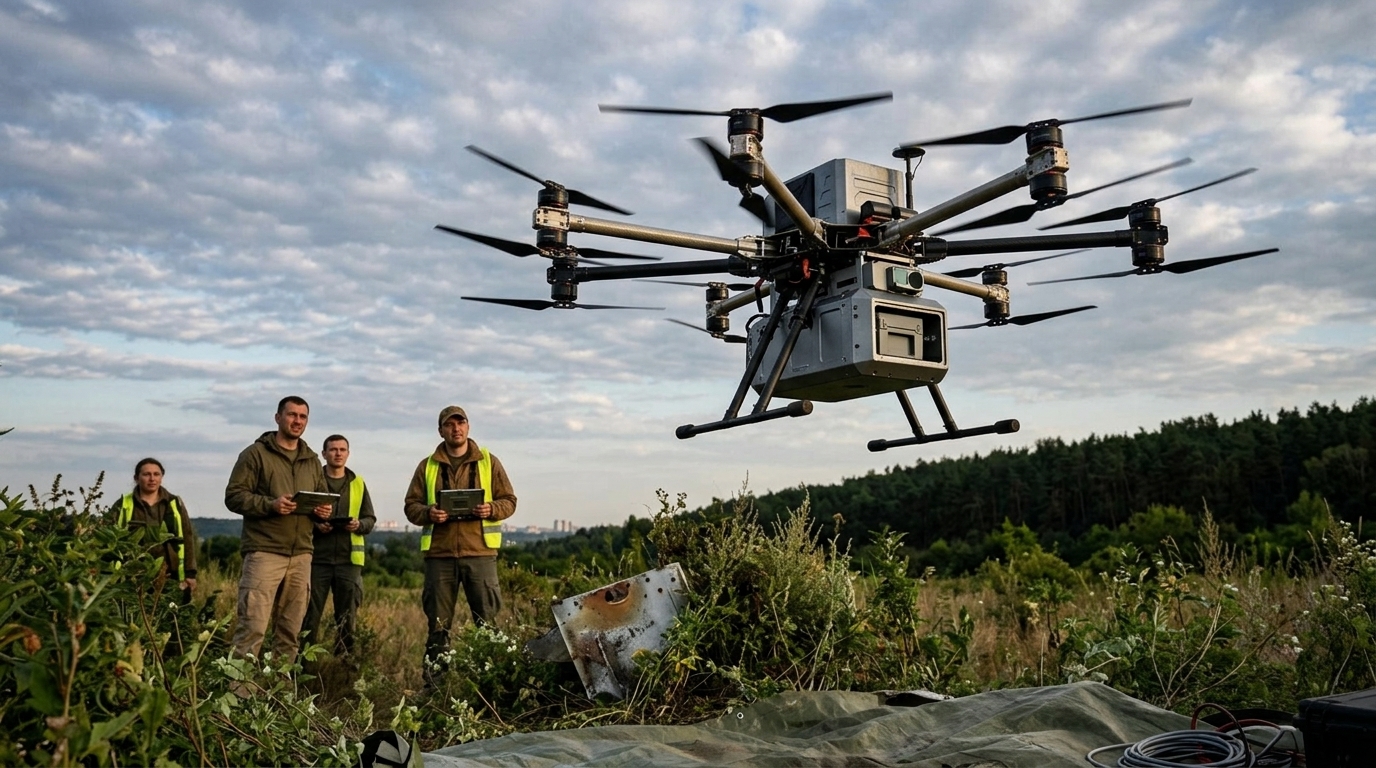
In the early hours of May 22, 2026, the skies over western Russia once again became the stage for a silent but deadly confrontation. The interception of Ukrainian unmanned aerial vehicles (UAVs) heading toward Moscow and the strategically vital Yaroslavl region is no longer an isolated incident, but part of a broader, systematic effort by Kyiv to bring the costs of war to the heart of the Russian Federation. The news, confirmed by the Russian Ministry of Defense, highlights the evolution of Ukraine's long-range strike capabilities, utilizing technology that bypasses traditional electronic warfare systems.
The Strategic Targeting of Yaroslavl
While attacks on Moscow often carry symbolic weight, the targeting of Yaroslavl—located approximately 250 kilometers northeast of the capital—reveals a more calculated economic strategy. Yaroslavl is home to the Slavneft-YANOS refinery, one of the largest and most critical facilities for supplying the Russian domestic market and military operations. Ukrainian forces have realized that "energy strangulation" is perhaps the only tool capable of causing long-term tremors in the Russian war machine.
According to analysts, the choice of targets at such a distance from the border demonstrates the failure of Russian surveillance zones to create an impenetrable "umbrella" of protection. Despite official announcements of successful shoot-downs, the mere presence of drones over such areas disrupts supply chains and forces Russia to divert precious air defense systems, such as the Pantsir-S1 and S-400, from the front lines to protect its infrastructure.
Technological Evolution and Artificial Intelligence
One of the most compelling aspects of these strikes is the integration of advanced artificial intelligence algorithms into Ukrainian drones. As Russia has deployed some of the world's most sophisticated jamming systems, drones no longer rely solely on GPS signals. Instead, they use visual odometry and AI-driven terrain recognition to locate their targets even in environments of total electronic blackout.
- Autonomous navigation without the need for satellite communication.
- Use of composite materials to reduce radar cross-sections (stealth characteristics).
- Swarming strategies to saturate and overwhelm air defenses.
This technological arms race has turned the airspace over Russia into a testing ground for the future of autonomous warfare. Every successful or failed attempt provides data that fuels the next generation of weaponry, making defenses increasingly difficult to maintain.
Political Implications and the "New Normal"
For the Kremlin, the penetration of drones into Moscow's airspace remains a persistent political thorn. The promise of domestic security is being tested as residents of major urban centers face the sounds of explosions and sirens. The Russian leadership attempts to downplay the significance of these strikes, labeling them as "terrorist acts," yet their frequency suggests a new normal where the war is no longer confined to the Donbas or Kherson.
"Ukraine's ability to strike targets at depths exceeding 1,000 kilometers changes the geopolitical equation, forcing Moscow to re-evaluate its resource allocation," notes a military attaché from a European nation.
In conclusion, the shoot-downs in Yaroslavl and Moscow are not merely military bulletins. They are the symptoms of a war that has entered a phase of high technology and strategic attrition, where the advantage is determined not just on the ground, but in the ability to strike the opponent's nervous system where they feel most secure.