As the war in Ukraine enters a new, even more attritional phase in May 2026, data from the field of operations reveals a disturbing shift in Moscow's tactics. According to recent reports and data released to the public, Russia has launched more than 800 unmanned aerial vehicles (drones) against Ukrainian port infrastructure during the first four months of the year. A comparison with the same period last year, when only 75 attacks were recorded, highlights a tenfold increase that is not merely quantitative but profoundly strategic.
The Industrialization of Terror: Why Russia is Investing in Drones
Russia's pivot toward the mass use of drones, primarily the Shahed-136/131 type (or Geran-2 in Russian nomenclature), is the product of a coordinated effort to industrialize production within the country. Facilities in the Alabuga Special Economic Zone appear to have reached full production capacity, allowing Moscow to maintain a tempo of attacks that would be impossible using expensive cruise missiles. These drones, while slower and more vulnerable to certain air defense systems, offer an unsurpassed advantage: low cost.
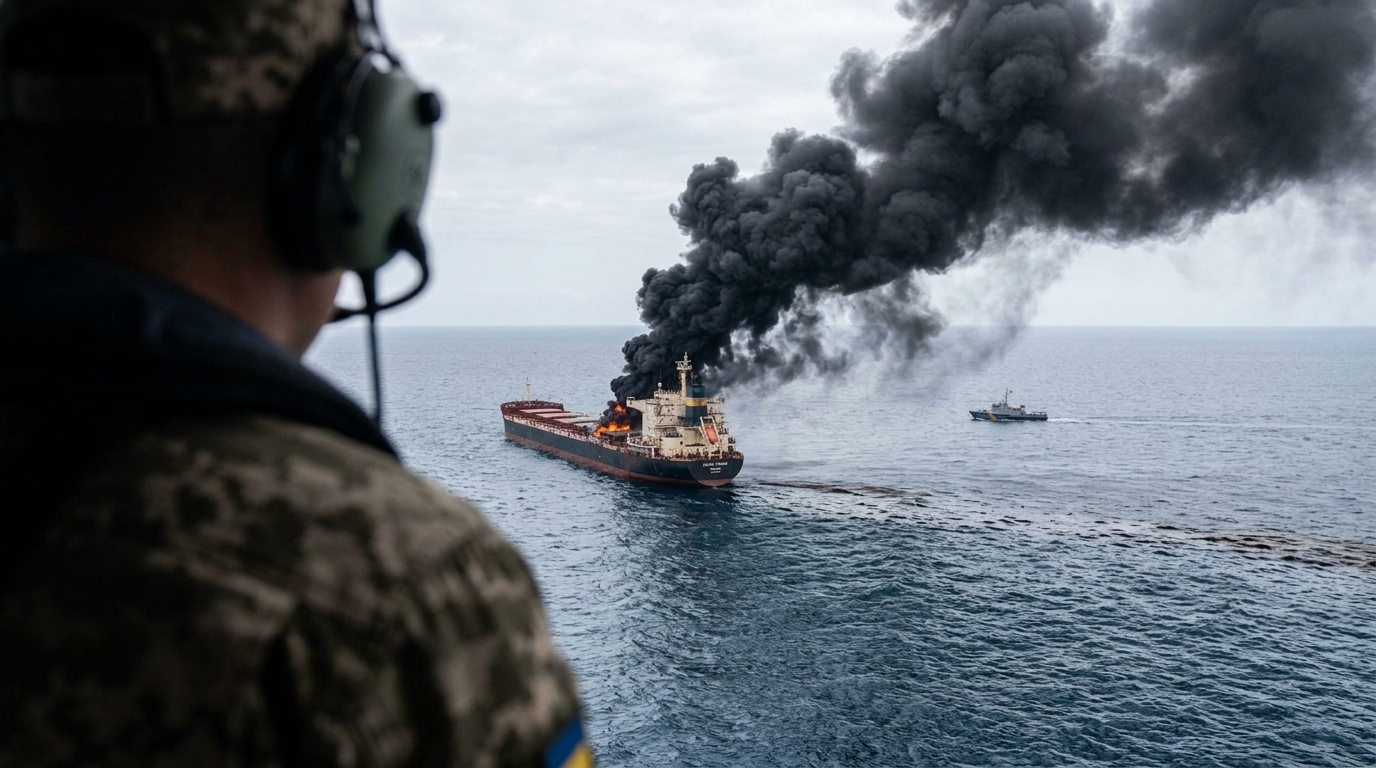
By targeting the ports of Odesa, Izmail, and Reni, Russia is not only seeking to destroy military targets but to completely paralyze the Ukrainian economy. These ports are the country's lungs, through which the bulk of grain and export products are moved. The tenfold increase in attacks suggests a decision by the Kremlin to make navigation in the Black Sea prohibitive, driving up insurance premiums and discouraging Ukraine's international trade partners.
The Asymmetric Threat and the Air Defense Challenge
Ukraine faces a critical mathematical equation. Using a Patriot missile or an IRIS-T system, which costs millions of dollars, to shoot down a drone worth only $20,000-$50,000 is economically unsustainable in the long run. Although the interception rate remains high, the 'rain' of drones aims to deplete Ukrainian air defense stocks, leaving cities and critical infrastructure exposed to more devastating strikes.
- Use of mobile fire groups with machine guns to reduce interception costs.
- Strengthening electronic warfare (jamming) systems to divert drones.
- Development of domestic 'interceptor drones' to hunt Russian swarms in the air.
Russia's 2026 strategy also shows an evolution in the technology of the drones themselves. Reports from the front speak of drones with black paint to avoid easy detection at night, as well as the integration of SIM cards allowing the use of mobile networks for real-time course correction.
Geopolitical Implications and Food Security
This escalation does not only affect Kyiv and Moscow. The entire planet is watching with concern as grain prices once again show volatility in international markets. Russia, through these attacks, is using food security as a lever of pressure against the West, seeking to force countries of the Global South to move away from supporting Ukraine. At the same time, Turkey, as the guarantor of the Montreux Convention, finds itself in a difficult position, trying to balance its NATO obligations with the need to maintain open channels of communication with the Kremlin.
"It is no longer a war of territory, but a war of infrastructure endurance. Whoever controls the flow of goods in the Black Sea controls the future of the region," says an analyst from the International Institute for Strategic Studies.
In conclusion, the tenfold increase in drone attacks on Ukraine's ports is a clear sign that Moscow is betting on Western fatigue and the economic collapse of its opponent. For Ukraine, the response cannot be purely defensive; it requires a new approach to protecting trade routes and even closer cooperation with allies to provide cheap and effective means of countering the drone threat.