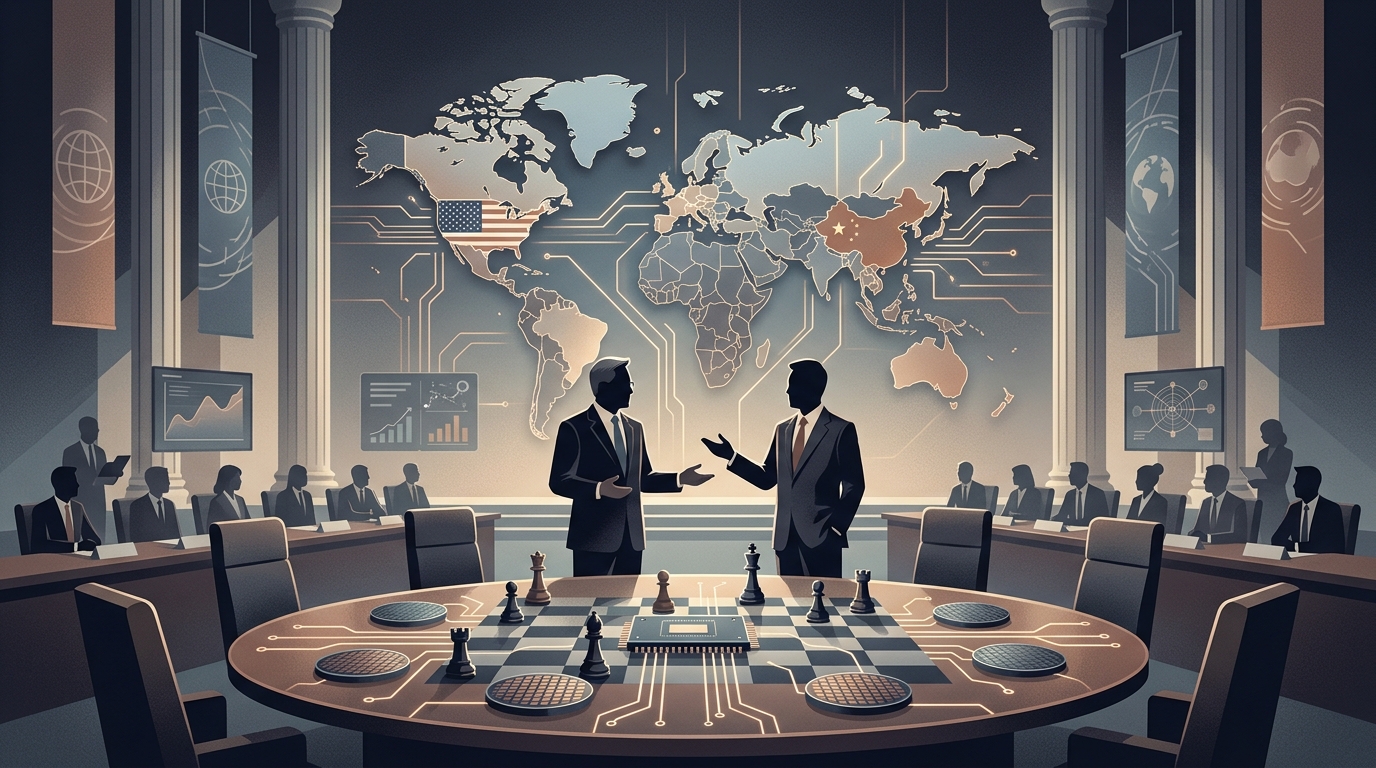
The recent visit of Jensen Huang, the iconic leader of Nvidia, to China was far from a routine corporate PR tour; it was a masterclass in geopolitical tightrope walking. At a time when Washington and Beijing are locked in an undeclared 'chip war,' the presence of the man who controls 80% of the global AI accelerator market on Chinese soil speaks volumes. Nvidia finds itself squeezed between the stringent export controls of the U.S. Department of Commerce and the existential need to maintain access to the world’s largest semiconductor market.
The Strategy of 'Compliant' Innovation
The primary concern for Nvidia’s leadership is preserving market share in China, which has historically accounted for 20% to 25% of the company's revenue. Following the imposition of bans on flagship chips like the H100 and B200, Nvidia was forced to develop down-specced versions, such as the H20, specifically for the Chinese market. However, the reception from Chinese giants like Alibaba and Tencent has been lukewarm. These companies fear that the U.S. could tighten the screws even further at any moment, rendering their investments in American hardware obsolete.
Huang’s visit appears aimed at soothing these anxieties. Reports suggest the CEO met with tech executives and government officials, attempting to reassure them that Nvidia remains a committed partner despite political constraints. The challenge is immense: how do you sell 'crippled' products to a market that demands the cutting edge to remain competitive in the global AI race?
The Rise of Domestic Contenders
While Nvidia maneuvers through bureaucratic hurdles, Chinese competition is not standing still. Huawei, with its Ascend series of processors, and startups like Biren Technology, are capitalizing on the vacuum left by U.S. restrictions. Although Nvidia still holds a massive advantage thanks to its CUDA software ecosystem, China is pouring billions into creating a fully autonomous supply chain. Huang is acutely aware that if Chinese firms become accustomed to working without Nvidia, the loss for his company will be permanent and irreversible.
- CUDA's ecosystem remains Nvidia’s most significant competitive moat.
- China is accelerating its own lithography and packaging capabilities.
- U.S. sanctions are inadvertently acting as a catalyst for Chinese self-reliance.
"AI is the new electricity, and you cannot have a global economy where half the world is cut off from the grid," noted one industry analyst.
Geopolitical Risk and the Path Ahead
Huang’s move also carries significant political risk within the United States. In a polarized political climate, any rapprochement with China can be framed as a lack of patriotism or a compromise of national security. However, Nvidia’s counter-argument is that maintaining a commercial presence in China is vital for funding the R&D that keeps the U.S. at the forefront of technology. Without Chinese revenue, Nvidia’s pace of innovation could falter, allowing global rivals to close the gap.
In conclusion, Jensen Huang’s journey signals a new phase in the Tech Cold War. It is no longer just about quarterly sales; it is about defining the rules of the future. Nvidia is trying to prove that technology can remain a bridge even as political leaders build walls. Whether they succeed or are crushed between the two superpowers will determine the trajectory of global AI for the next decade.