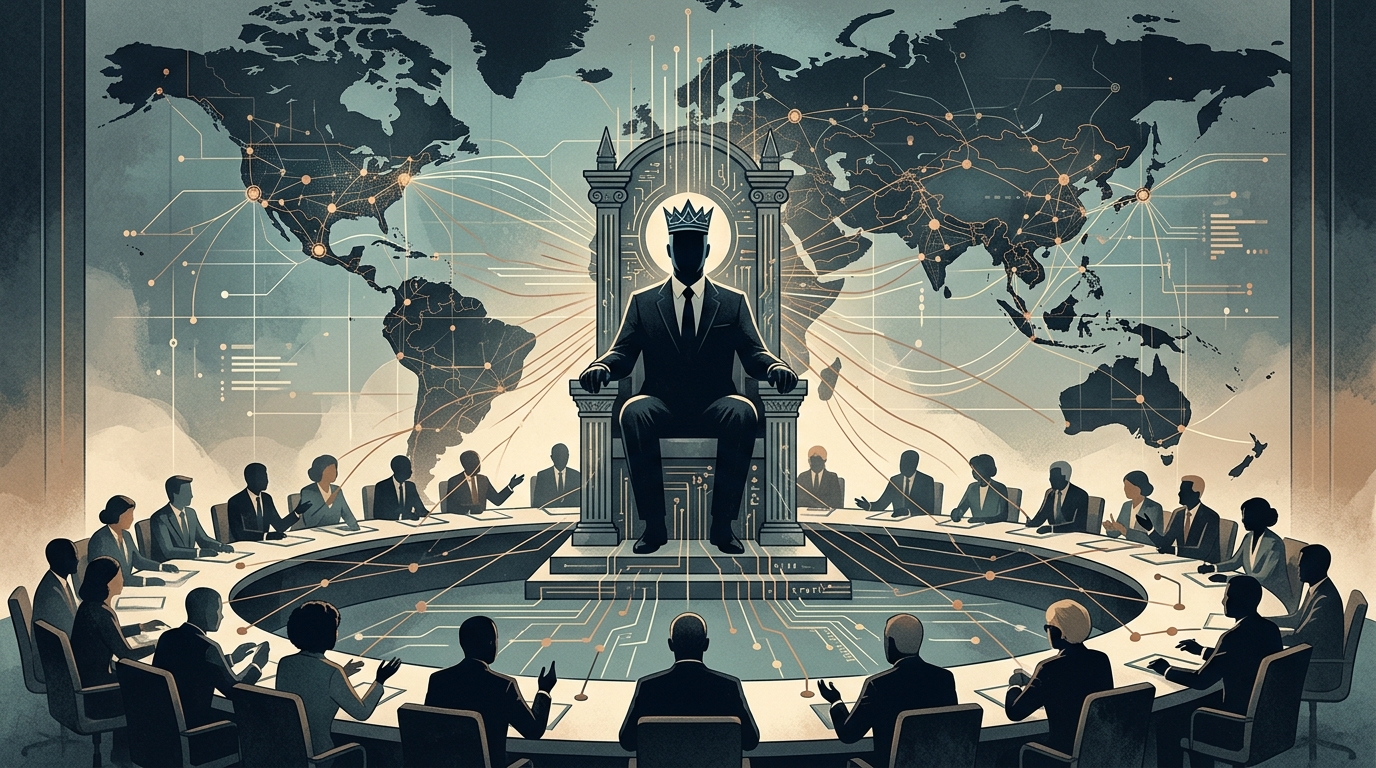
The global AI chessboard is undergoing a structural transformation as China accelerates its efforts to decouple from Western technological dependence. The recent news that Huawei, in collaboration with leading Chinese chipmakers, is rapidly integrating the DeepSeek V4 model into its infrastructure is not merely a technical upgrade; it is a declaration of geopolitical intent. DeepSeek V4, the latest achievement from the Hangzhou-based startup that recently rattled Silicon Valley, is becoming the connective tissue of a domestic ecosystem aimed at making U.S. sanctions obsolete.
The Rise of DeepSeek V4 and the Architecture of Sovereignty
DeepSeek V4 represents a pivotal moment for Chinese AI. Unlike previous models that were often viewed as derivatives of Western architectures, V4 is built on a highly optimized Mixture-of-Experts (MoE) structure. This approach allows the model to deliver performance on par with GPT-4 or Claude 3.5, but at a fraction of the computational power typically required. For China, which faces severe restrictions on accessing Nvidia's flagship H100 and Blackwell processors, computational efficiency is not a luxury—it is a necessity for survival.
Huawei, through its Ascend series of processors (specifically the new 910C), has taken on the role of the custodian of this transition. Huawei's engineers are working feverishly to optimize the CANN (Compute Architecture for Neural Networks) software stack to ensure that DeepSeek V4 performs at its peak on domestic hardware. The strategy is clear: if you cannot have the fastest chips in the world, you must have the smartest software to squeeze every drop of performance out of the chips you do have.
Strategic Alliances and the End of Nvidia's Hegemony
The adoption of DeepSeek V4 is not limited to Huawei. Other players, such as Biren Technology and Moore Threads, are aligning their strategies with the new model. What we are witnessing is the creation of a "national champion" at the software level, supported by a phalanx of hardware manufacturers. The Chinese government, through subsidies and policy guidance, is encouraging domestic enterprises to abandon Nvidia's CUDA ecosystem and migrate to indigenous solutions.
- Hardware Optimization: Ascend 910C processors are now showing performance metrics that rival Nvidia in specific DeepSeek-related workloads.
- Open Weights Strategy: DeepSeek's "open weights" approach allows Chinese firms to customize the model for their specific needs without fear of access being cut off.
- Ecosystem Consolidation: The establishment of common standards for AI model training in China is reducing market fragmentation.
Geopolitical Implications: Silicon as a Frontier
The success of this endeavor could shift the balance of power in the 21st century. If China manages to develop a fully functional and competitive AI ecosystem using exclusively domestic technology, Washington's primary lever of pressure—export controls on semiconductors—will lose its efficacy. Furthermore, DeepSeek V4 is beginning to look attractive to other nations in the "Global South" seeking to avoid dependence on American Big Tech.
However, challenges remain. Scaling semiconductor production at 5nm or 7nm remains difficult for China's SMIC due to the lack of EUV lithography machines. Huawei and its partners are betting that innovation in model architecture, like that of DeepSeek V4, can compensate for the hardware gap. It is a high-stakes gamble that will define the future of digital sovereignty.
Conclusion: Toward a Bipolar AI World
The rapid integration of DeepSeek V4 into Chinese hardware marks the maturation of a parallel technological reality. We are no longer talking about a China trying to catch up with the West, but a China building its own stadium with its own rules. For global investors and policymakers, the message is clear: the era of Silicon Valley's undisputed dominance is ending, and the future of AI will inevitably be bipolar.