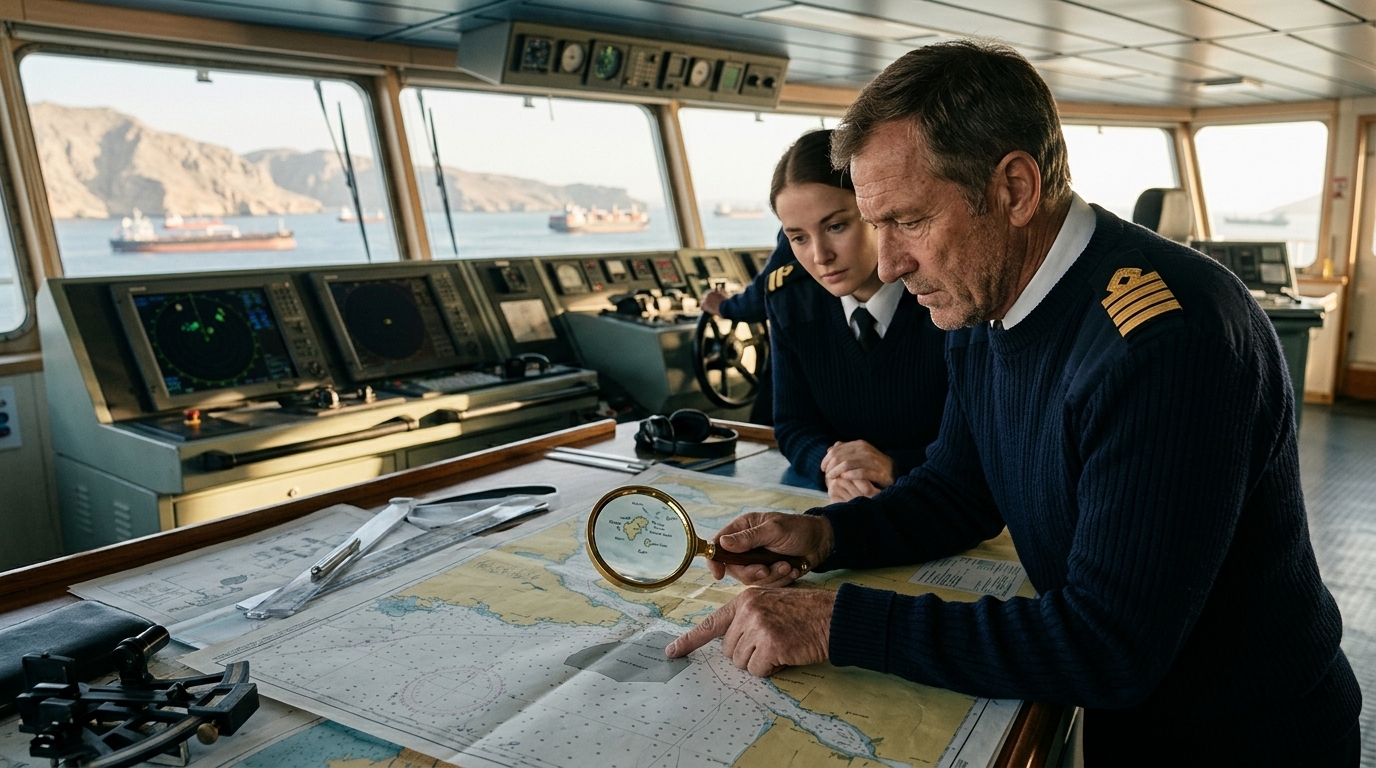
The ongoing crisis in the Strait of Hormuz, triggered by the U.S. blockade of Iranian ports, has forced the global community to confront a harsh reality: the concept of "energy independence" is more of a political slogan than an economic fact. As maritime activity has effectively ground to a halt in this critical passage, global reserves are being depleted at an alarming rate, proving that no state, regardless of its resource wealth, can remain immune to geopolitical tremors in the Persian Gulf.
The Ground Zero of Global Energy
The Strait of Hormuz is the most vital artery of the global energy system. Measuring only 33 kilometers at its narrowest point, it serves as the sole maritime exit from the Persian Gulf to the open oceans. Approximately 20% to 30% of global oil consumption passes through here daily, along with massive quantities of Liquefied Natural Gas (LNG), primarily from Qatar.
The blockade imposed by the U.S., while aimed at restricting Iranian revenues, has created a domino effect. Shipping companies, fearing retaliation or accidental skirmishes, have suspended routes, while risk insurance premiums have skyrocketed to levels that make transport unfeasible. The result is an artificial shortage caused not by resource depletion, but by the inability to access them.
The Myth of Domestic Sufficiency
For years, many analysts in the U.S. and Europe argued that increasing domestic production (such as U.S. shale oil) would shield their economies from Middle Eastern crises. The current situation refutes this claim. Oil is a global commodity. When supply drops in the Strait of Hormuz, the global price of Brent or WTI spikes everywhere.
- American industries pay more for fuel despite domestic production levels.
- European countries, which turned to LNG to decouple from Russia, now find themselves trapped as tankers from Qatar cannot pass.
- China, the world's largest energy importer, sees its manufacturing engine slowing down, affecting exports globally.
"Energy is not just a resource; it is the lifeblood of global trade. When an artery is blocked, the entire organism suffers," a senior official from the International Energy Agency noted.
Geopolitical Implications and the Path Forward
This crisis highlights the failure of alternative routes. Despite efforts by Saudi Arabia and the UAE to build pipelines bypassing the Strait—ending at the Red Sea or the Gulf of Oman—the capacity of this infrastructure is insufficient to fill the gap. Furthermore, the security of these pipelines remains vulnerable to sabotage.
On a political level, the blockade is testing alliances. The European Union, though a U.S. ally, is pushing for a diplomatic solution, as European economies are more exposed to energy price hikes. The tension between the need for "hard power" and the need for economic stability has never been more evident.
Conclusion
The history of the Strait of Hormuz in 2026 will be recorded as the end of the illusion of energy isolation. In a world where supply chains are interconnected, a state's security depends on the stability of points thousands of miles away from its borders. Real energy independence may not lie in discovering new deposits, but in accelerating the transition to local, renewable energy sources that do not depend on maritime geopolitical chessboards. Until then, the world remains a hostage to a narrow neck of water and rock.