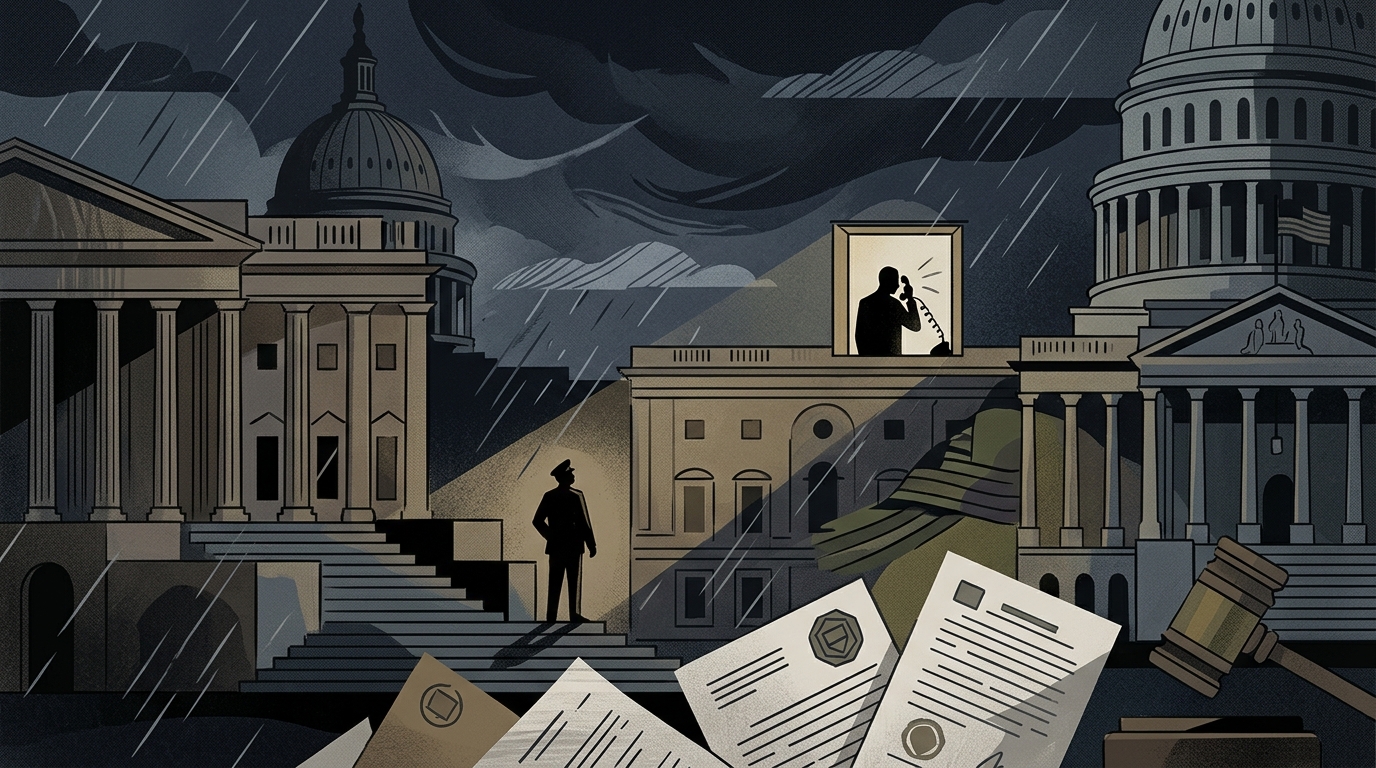
In an era where information is the ultimate currency, the Central Intelligence Agency (CIA) has signaled a profound shift in its operational philosophy. According to reports from the Washington Post and other major outlets, the Agency is aggressively accelerating its adoption of Artificial Intelligence (AI) and other cutting-edge technologies. This transition marks more than just a technical upgrade; it represents a fundamental reimagining of espionage for the digital age, where algorithms are becoming as essential as field agents.
The Data Deluge and the Need for Machine Speed
For decades, the primary challenge for intelligence services was gaining access to guarded secrets. Today, the problem is reversed: there is an overwhelming surplus of information. From satellite imagery and intercepted communications to the vast expanse of Open Source Intelligence (OSINT), the sheer volume of data flowing into the CIA is humanly impossible to process. AI is being deployed as a critical filter, capable of identifying patterns, translating hundreds of languages in real-time, and flagging anomalies that would otherwise remain buried in the noise.
Generative AI, in particular, is transforming how analysts interact with data. Instead of manual cross-referencing, analysts can now query enterprise-level AI models using natural language. A query like "Identify all cargo vessels that have disabled their transponders near the South China Sea in the last 24 hours" can yield a synthesized report in seconds, pulling from disparate data streams that would have previously taken days to compile.
The Geopolitical Arms Race: Washington vs. Beijing
This acceleration is not occurring in a vacuum. It is a direct response to the intensifying technological rivalry between the United States and China. Beijing has made no secret of its ambition to become the global AI leader by 2030, integrating AI into everything from domestic surveillance to autonomous weaponry. The CIA recognizes that failing to secure algorithmic superiority would be a strategic catastrophe.
Director William Burns has consistently argued that the Agency must adapt to a world of "digital shadows." The pivot toward high-tech intelligence is seen as a necessary evolution to maintain a strategic edge over adversaries who are equally invested in using AI to disrupt American interests. This involves not just better software, but a complete overhaul of the Agency's cloud infrastructure and data management protocols.
Ethical Minefields and the 'Black Box' Dilemma
The integration of AI into the world's most powerful intelligence agency is not without significant risk. The most pressing concern is reliability. AI models are prone to hallucinations and can reflect the biases of their training data. In the high-stakes world of national security, a flawed AI assessment could lead to catastrophic diplomatic errors or unintended military escalations. Furthermore, the "black box" nature of deep learning—where the reasoning behind an output is opaque—challenges the traditional requirements for accountability and evidence-based decision-making.
"AI will not replace human judgment, but the analyst who uses AI will replace the analyst who does not," is the emerging mantra within the intelligence community.
The CIA is reportedly working on frameworks for "Responsible AI," ensuring that humans remain "in the loop" for critical evaluations. However, the inherent tension between the speed of machine processing and the deliberation required for ethical oversight remains a central point of contention for civil liberties advocates and internal watchdogs.
The Public-Private Nexus
Furthermore, this technological leap relies heavily on the private sector. The CIA cannot build these complex systems in isolation. It relies on massive contracts with companies like Microsoft, Amazon (AWS), and Google to provide the cloud backbone and foundational models necessary for its operations. This creates a complex interdependence where national security is increasingly intertwined with the commercial success and security of Silicon Valley giants. Ensuring that these commercial platforms are secure enough to handle the nation's most sensitive secrets is a task of unprecedented scale.