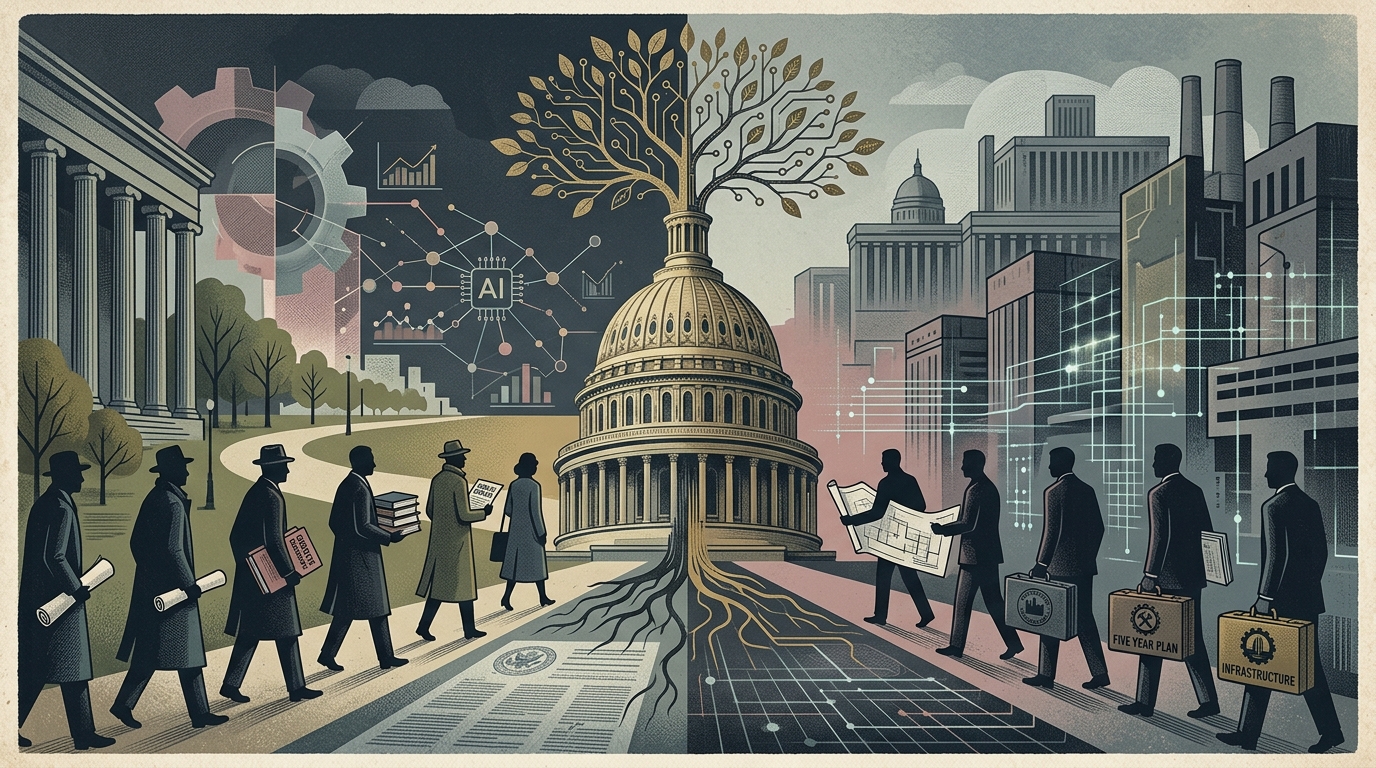
The saga of Manus could serve as the ultimate textbook case on how geopolitics can strangle technological innovation. Today, April 29, 2026, the news that Chinese authorities have forced the cancellation of Meta Platforms Inc.’s $2 billion acquisition of Manus is not merely a business failure; it is the official death certificate of one of the world’s most promising AI models.
The Chronicle of a Foretold Collapse
Manus began its journey as the “East’s answer” to the autonomous AI agents developed by OpenAI and Anthropic. With an architecture promising unprecedented autonomy in decision-making and complex task execution, it immediately caught Mark Zuckerberg’s eye. Meta, seeking a way to bypass the lead held by its US rivals, saw in Manus an opportunity to integrate cutting-edge Chinese expertise into its ecosystem.
However, Beijing had other plans. The intervention by the State Administration for Market Regulation (SAMR) was swift and decisive. Citing national security concerns and the protection of intellectual property in “critical computing sectors,” the Chinese government ordered an immediate halt to all technology transfer processes. The result? Manus is now caught in a vacuum: stripped of Meta’s capital and infrastructure, yet viewed with suspicion by the Chinese government for its attempted “defection” to the West.
Digital Sovereignty as a Noose
The Manus case highlights China’s new doctrine: Artificial Intelligence is not a product; it is a national resource.
“This isn’t a simple antitrust decision,” says a Beijing-based tech analyst. “It is a message that every line of code written on Chinese soil belongs to the Chinese state, especially if that code can tip the global balance of power.”
For Meta, this failure is a painful lesson. Zuckerberg’s attempt to “build bridges” with the Chinese tech scene appears to be collapsing under the weight of the New Cold War. The deal’s cancellation leaves Meta with a $2 billion hole in its strategic planning and, more importantly, without the “miracle model” that would have placed it at the forefront of the AI agent race.
The Chilling Effect on Chinese Entrepreneurs
The fate of Manus sends a chilling message to the entire startup ecosystem in China. Entrepreneurs are realizing that their success has a “ceiling” defined by their country’s borders. If a company becomes too successful, it ceases to belong to its founders and becomes an instrument of state policy.
- Foreign venture capital investment in Chinese AI startups is expected to plummet.
- The “brain drain” toward Singapore or the UAE is likely to intensify.
- The Manus model, deprived of access to global data and the Nvidia H100 processors that Meta would have provided, is now considered technologically stagnant.
The End of Global AI Collaboration?
As we head into the second half of 2026, the Manus case confirms the creation of a “Silicon Curtain” in the tech sector. On one side, the US tightens chip export controls; on the other, China bans algorithm exports. Manus did not die of technical inadequacy; it died of geopolitical suffocation. The promise of a unified, global AI that would benefit humanity seems further away than ever, as superpowers prefer to destroy innovation rather than let it fall into the hands of a rival.