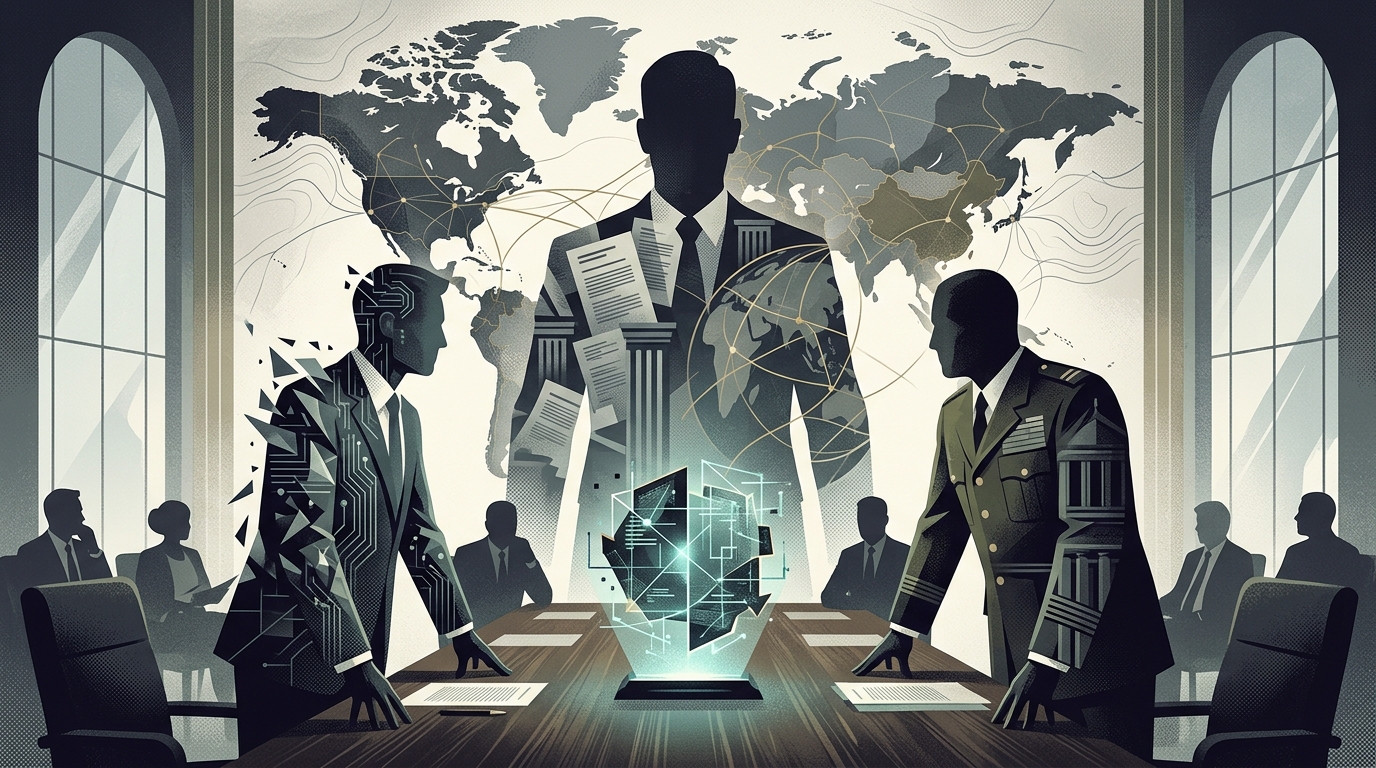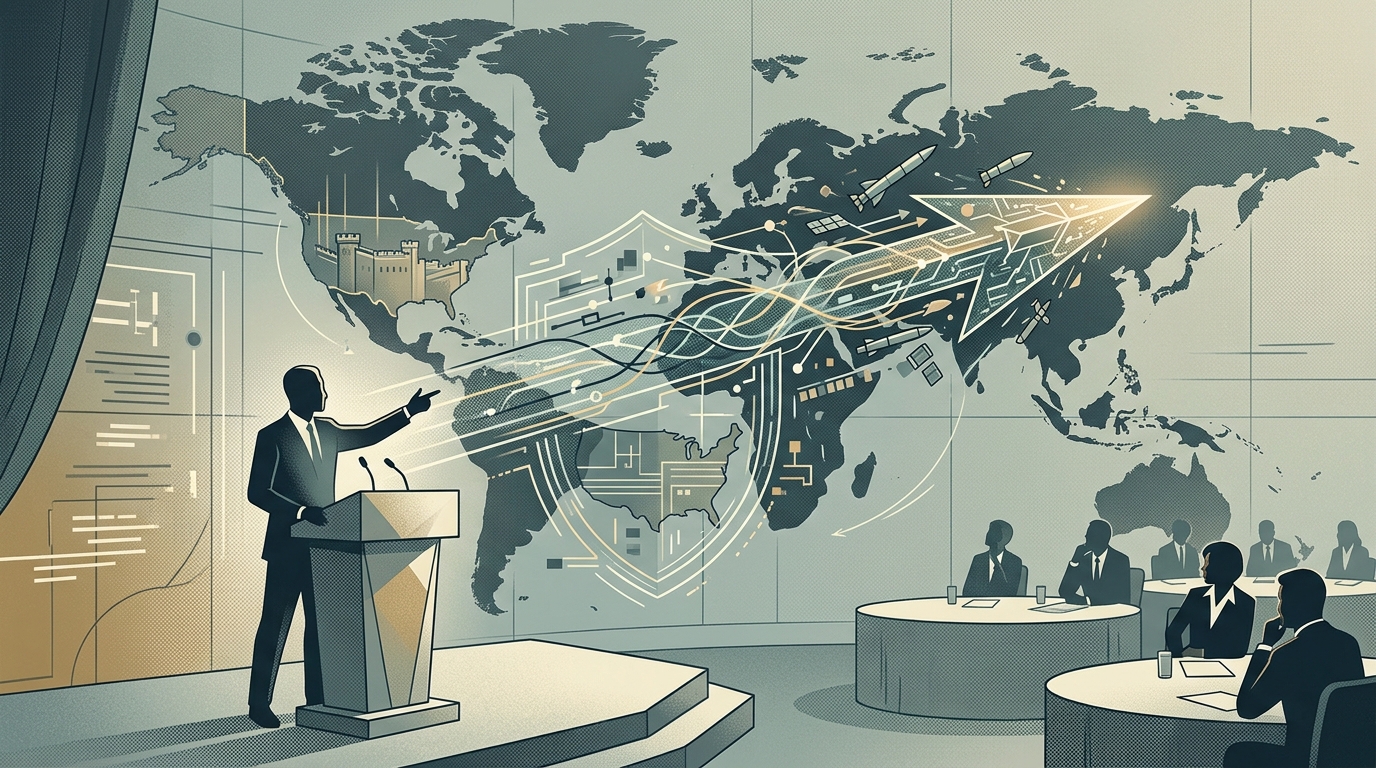
At the heart of 21st-century geopolitical friction, the People's Republic of China is not merely seeking to match Western military prowess but to leapfrog it through a radical technological metamorphosis. The concept of 'intelligentization' (智能化) has become the cornerstone doctrine for the People's Liberation Army (PLA), signaling an era where Artificial Intelligence (AI) is not just a supporting tool but the central nervous system of national defense. Recent reports, including analysis from Vietnam.vn, highlight how Beijing is accelerating AI integration across every facet of its defense industry, from hypersonic missile design to logistics management.
The Strategy of 'Intelligent' Defense
For Chinese leadership, AI represents the 'third revolution' in military affairs, following gunpowder and nuclear weapons. Beijing's strategy rests on 'Military-Civil Fusion' (MCF), a policy that mandates the flow of innovation from China's booming tech sector into its defense industries. Unlike the West, where ethical debates and bureaucratic hurdles often slow the adoption of new technologies, China moves at a velocity that has sparked deep concern in Washington. This systemic integration allows for a seamless transition from commercial R&D to battlefield application.
The use of AI in defense manufacturing enables the automation of complex design processes. Analysts suggest that Chinese engineers are now employing Generative AI algorithms to optimize the aerodynamics of aircraft and missiles, reportedly reducing wind tunnel testing time by up to 70%. This acceleration is not just about production speed; it is about the qualitative evolution of weapon systems, making them more resilient, adaptable, and lethal in contested environments.
Hypersonics and Autonomous Swarms
One of the domains where China appears to be gaining a significant edge is in hypersonic weaponry. Navigating a missile traveling at five times the speed of sound requires real-time calculations that exceed human cognitive limits. AI takes over flight control, adjusting trajectories to evade interceptors, rendering Chinese ordnance nearly 'invisible' to traditional missile defense systems. Simultaneously, the development of 'swarms'—large groups of unmanned aerial and naval vehicles—is a central pillar of its strategy. Through AI, thousands of drones can communicate and coordinate attacks, overwhelming an adversary's fleet defenses without the need for direct human intervention.
- Automated tactical decision-making in high-intensity combat.
- Predictive maintenance for military hardware via AI-integrated sensors.
- Real-time satellite imagery analysis for rapid target acquisition.
- Cyber warfare enhanced by algorithms that identify vulnerabilities in seconds.
Industrial Optimization and Supply Chain Resilience
Beyond the frontline weaponry, AI is transforming the very structure of the defense industrial base. China faces demographic challenges with an aging population; thus, automating the production lines for munitions and military hardware is vital for long-term sustainability. 'Smart' factories in provinces like Sichuan utilize AI-driven robotics that operate 24/7 with near-zero error rates. Furthermore, AI is being deployed to manage supply chains, ensuring that critical components—even those subject to Western sanctions—reach their destination through optimized, alternative routes.
China's ability to synthesize vast amounts of Big Data from its civilian society for military ends provides a unique advantage. Facial recognition and behavioral analysis technologies, honed for internal security, are being adapted into systems that can identify enemy operatives or predict an opponent’s movements on the battlefield with chilling accuracy. This data-driven approach turns the entire nation into a laboratory for military AI.
Geopolitical Implications and the Balance of Power
The speed at which China is embedding AI into its defense apparatus has triggered a new 'arms race' with the United States. Washington has responded with stringent export controls on advanced semiconductors (such as those from Nvidia), attempting to throttle the progress of Chinese AI models. However, Beijing has countered with massive investments in domestic chip production and the development of 'lean' algorithms that require less raw computing power to achieve high-level results.
"Artificial Intelligence is not just a force multiplier; it is the very definition of power in the 21st century," states a high-ranking PLA official.
The risk of unintended escalation remains a primary concern for global security experts. As AI systems become more autonomous, the 'decision window' for human leaders to react during a crisis shrinks dramatically. If a Chinese AI system misinterprets a maneuver by the U.S. Navy in the South China Sea, the response could be triggered in milliseconds, far before diplomacy can intervene. The international community watches with bated breath as China constructs the future of warfare—a future where code is as lethal as steel.