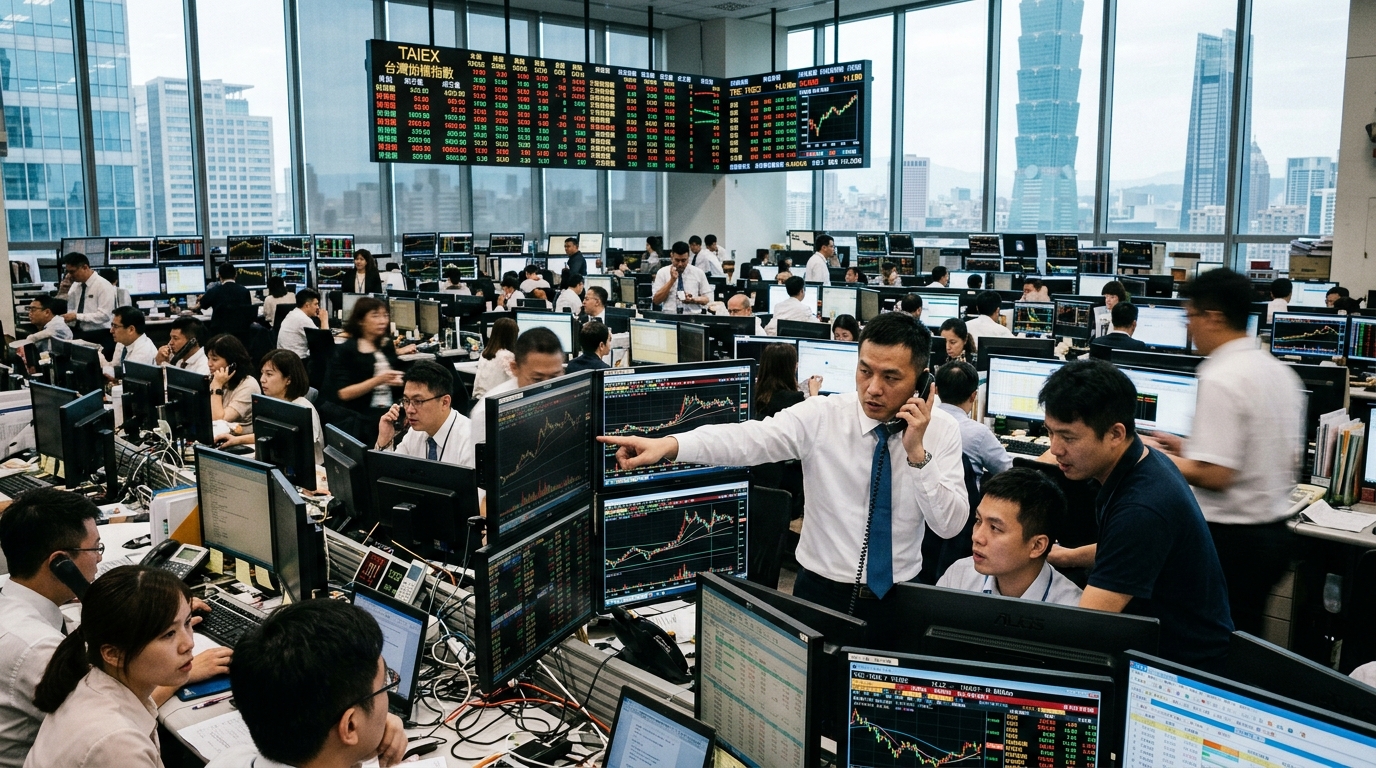
In the heart of Taipei, where the pulse of the global technology supply chain beats strongest, a new financial reality is taking shape. As the demand for Artificial Intelligence (AI) computing power reaches unprecedented heights, Taiwanese tech firms have secured a record $14.5 billion in debt deals through bond issuances and loans so far in 2026. This figure is not merely a statistic; it is a confirmation of the world's absolute reliance on this small island to realize the next industrial revolution.
The Strategy of Expansion and the Cost of Dominance
The rapid surge in borrowing reflects the urgent need for companies to expand their production lines. From TSMC (Taiwan Semiconductor Manufacturing Co.) to Hon Hai Precision Industry (Foxconn) and Quanta Computer, industry leaders are in a race to keep up with orders from the likes of Nvidia and Microsoft. High-performance chip production and AI server assembly require massive capital expenditures (CapEx), which can no longer be covered solely by existing cash reserves.
Market analysts suggest this borrowing is primarily targeted at three areas: the construction of advanced 2nm and 3nm fabrication plants (fabs), the development of CoWoS (Chip-on-Wafer-on-Substrate) technologies for advanced semiconductor packaging, and the expansion of data center infrastructure. Taiwan is no longer just manufacturing components; it is constructing the backbone of global digital intelligence.
Financial Risks and the Silicon Shield
Despite the prevailing optimism, massive borrowing carries inherent risks. Interest rates, though stabilized compared to the volatility of two years ago, remain at levels that increase debt-servicing costs. However, Taiwanese banks appear eager to finance these giants, viewing them as "too big to fail." The Taiwanese government also encourages this trend, seeing technological dominance as a "Silicon Shield" that protects the island from geopolitical pressures.
- TSMC leads bond issuances to fund new units in Arizona and Japan, diversifying its geographic footprint.
- Foxconn is diversifying its funding sources to dominate the AI server market, moving beyond consumer electronics.
- Local banks are offering preferential terms to keep capital flows within domestic borders.
The global economy's dependence on Taiwan has reached a point where any disruption in capital or production flows could trigger a worldwide economic shock. This record borrowing is the price Taiwan pays to remain the indispensable center of the technological universe.
A Bubble or the New Normal?
Many observers wonder if we are witnessing an "AI bubble." History has taught us that excessive leverage during periods of euphoria can lead to a hard landing. However, unlike the dot-com era, today's investments concern physical infrastructure and tangible products that are often pre-sold. Orders for the next two years are already secured, providing a degree of safety for lenders.
"They are not borrowing to survive; they are borrowing to conquer the future," says a senior banking executive in Taipei.
In conclusion, the $14.5 billion figure is likely just the beginning. As AI integrates into every facet of human activity, the requirement for capital will only grow. Taiwan is betting everything on its technological superiority, transforming debt into a lever for growth and geopolitical influence.