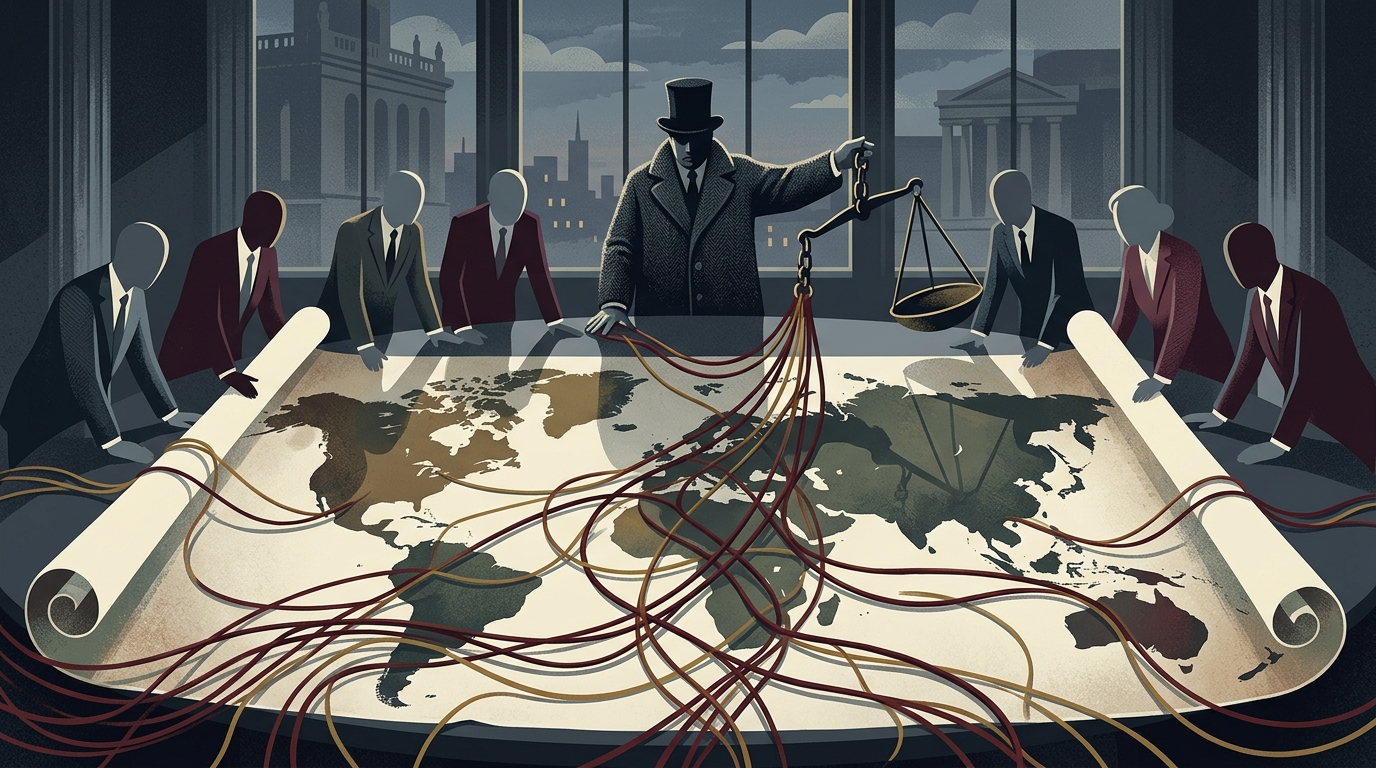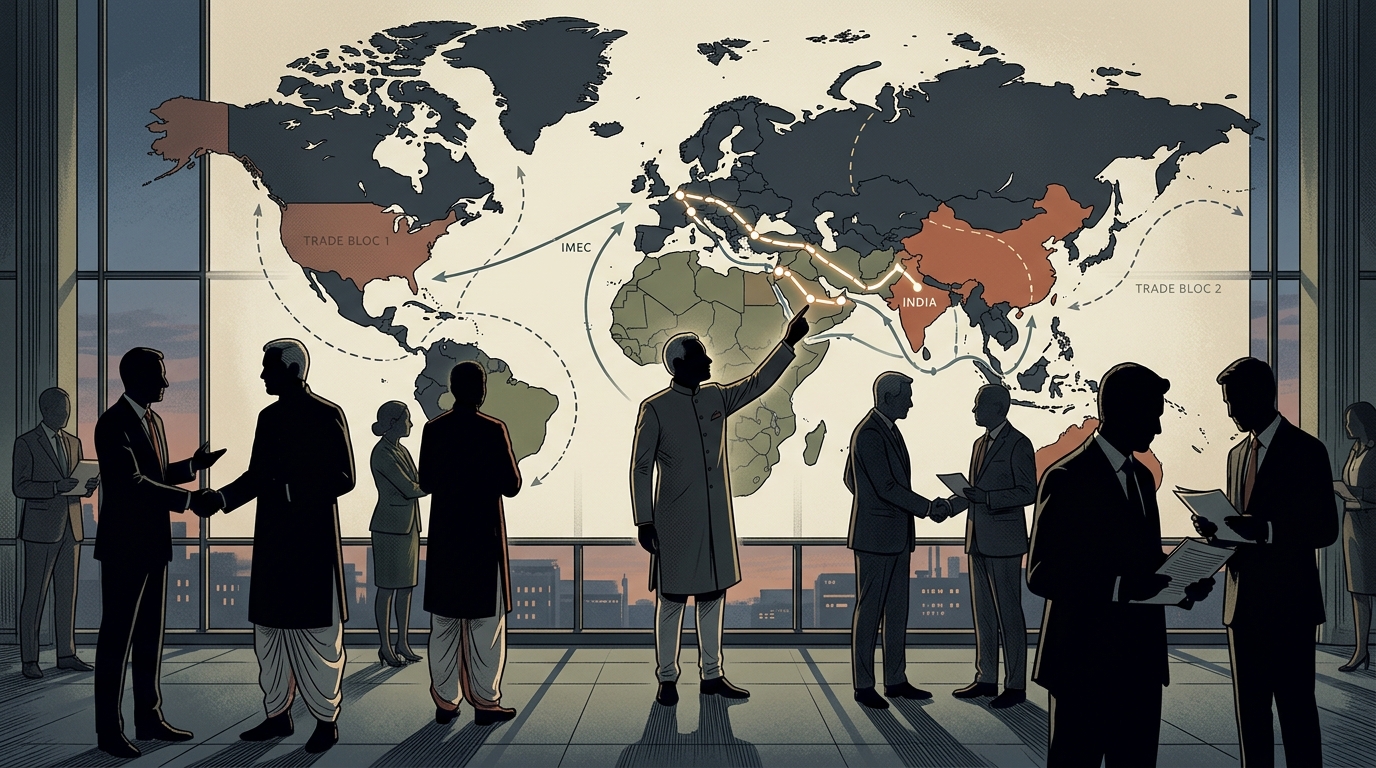
In a world increasingly retreating from the hyper-globalization of the 1990s, the geopolitical chessboard is being reshaped around new routes and emerging powers. The breakdown in relations between Washington and Beijing, often characterized as the "shipwreck" of the Trump-Xi era (marking the definitive end of mutual dependence), has created a vacuum that India is moving swiftly to fill. Narendra Modi, the visionary behind a resurgent Indian state, is positioning his nation at the heart of the India-Middle East-Europe Economic Corridor (IMEC), a project aimed at being the definitive answer to China’s Belt and Road Initiative (BRI).
The Strategic Significance of IMEC
IMEC is more than just a trade route; it is a geopolitical statement. By connecting India to the UAE, Saudi Arabia, Jordan, and Israel, with Europe as the final destination via Greece, this corridor aims to reduce transit times by 40%. At a time when the Red Sea has become a minefield due to Houthi attacks and Iranian influence, the need for an alternative, reliable, and secure route has never been more urgent.
Modi understands that India can serve as the "bridge" between the West and the Global South. While Donald Trump threatens new tariffs and Xi Jinping fortifies the Chinese economy, India promotes an agenda of "multi-alignment." This means New Delhi maintains strategic ties with Washington while refusing to isolate Moscow and leading the discourse for developing economies. IMEC represents the pinnacle of this policy, offering Europe a way out of its dependence on China and providing the Middle East with a role as a global transit hub.
Obstacles and Challenges
Despite its ambitious nature, IMEC faces formidable challenges. The conflict in Gaza temporarily halted the normalization of relations between Saudi Arabia and Israel, a cornerstone for the corridor's viability. Without stability in the Middle East, the rail and maritime link remains a blueprint. Furthermore, financing a project of this scale requires the mobilization of private capital and sovereign wealth funds, which is not guaranteed in an environment of high interest rates and geopolitical volatility.
- The urgent need for infrastructure development in transit countries like Jordan.
- Managing the Chinese response, as Beijing views IMEC as a direct threat to its interests in Piraeus and beyond.
- The internal political climate in the US, which could shift foreign policy priorities depending on the White House incumbent.
"IMEC is not just a trade route, but a path to peace and prosperity for the 21st century," Modi stated, emphasizing the moral dimension of Indian diplomacy.
The Role of Greece and the Future Map
For Greece, IMEC represents a historic opportunity. Piraeus and other Greek ports are being positioned as India's gateways to the European Union. The recent elevation of relations between Athens and New Delhi to a "Strategic Partnership" is no coincidence. Greek shipping, the most powerful in the world, will play a decisive role in transporting Indian goods, while Greek infrastructure will serve as the vital link to Central and Northern Europe.
In conclusion, the failure of the old G2 order is giving way to a new, more complex, but perhaps more balanced reality. Narendra Modi, capitalizing on the power vacuum, is making India an indispensable partner for everyone. If IMEC is realized, it will redraw the map of global trade for decades to come, shifting the center of gravity from the Pacific to the Indian Ocean and the Mediterranean.