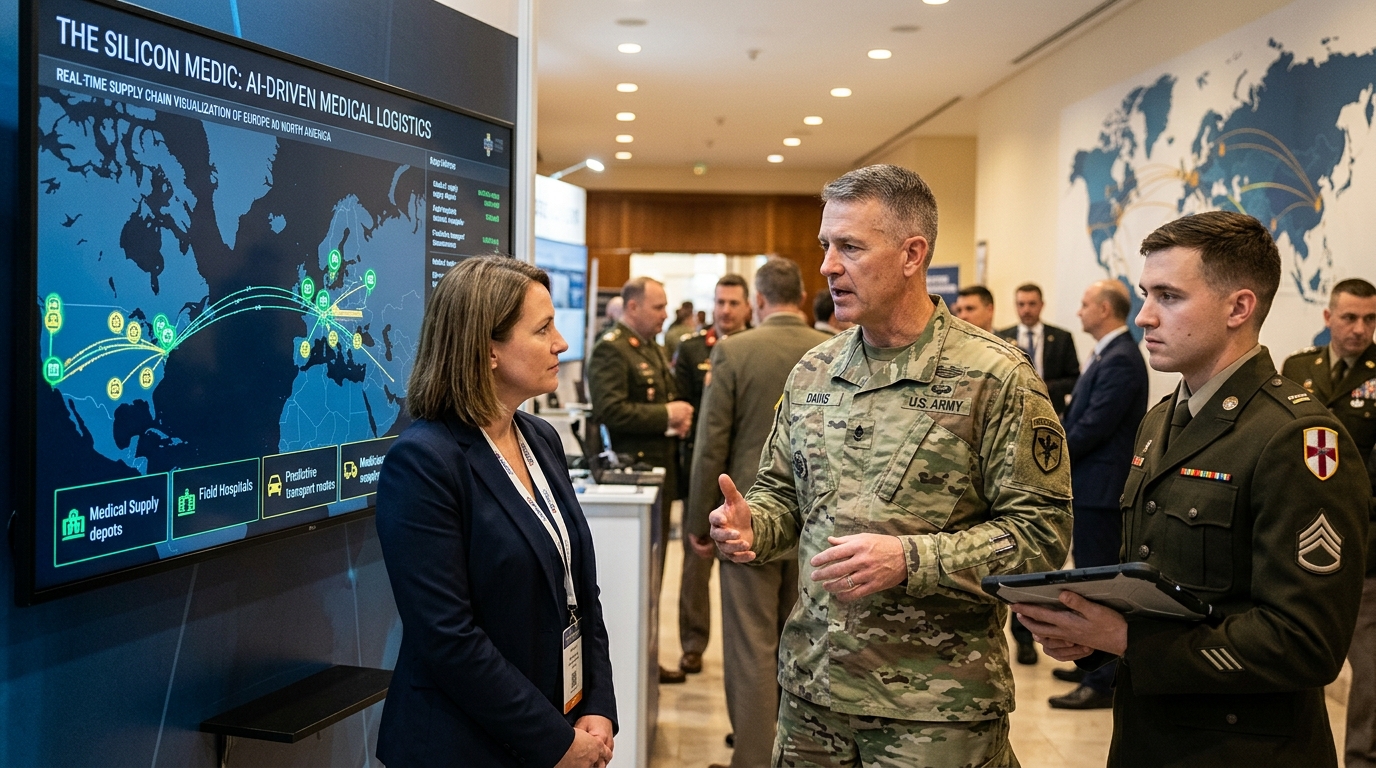
In the rear echelons of modern military operations, far from the spotlight of high-tech weaponry, a quiet but decisive revolution is unfolding. The US Army, through its medical logistics units, is increasingly turning to Artificial Intelligence (AI) to ensure that critical medical equipment—ranging from ventilators to portable X-ray machines—remains mission-ready at a moment's notice, anywhere on the globe.
From Reactive to Predictive Maintenance
For decades, military medical equipment maintenance followed a traditional pattern: technicians fixed devices when they broke or adhered to rigid, often inefficient, scheduled maintenance cycles. However, the integration of AI introduces the concept of "Predictive Maintenance" (PdM). By utilizing machine learning algorithms that analyze data from sensors and historical failure logs, the system can now predict when a component is likely to fail before it actually does.
This shift is about more than just resource management. On the battlefield, the failure of a defibrillator or an oxygen delivery system isn't just a technical glitch; it is a matter of life and death. The ability of 68A Biomedical Equipment Specialists to anticipate maintenance needs allows for a streamlined supply chain, significantly reducing the downtime of life-saving devices.
The Geopolitical Dimension of Medical Readiness
The use of AI in military medicine extends beyond the confines of a repair shop. It serves as a central pillar of strategic readiness in an increasingly volatile geopolitical landscape. In the event of a large-scale conflict, such as in the Indo-Pacific or Eastern Europe, supply lines would be stretched to their breaking point. The ability of a military force to keep its medical gear functional without relying on constant shipments of spare parts from the mainland is a profound strategic advantage.
"Readiness is not a static state but a continuous process of optimization. AI allows us to see through the 'fog' of the supply chain," note analysts from DVIDS.
Furthermore, enhanced medical readiness serves as a deterrent. A military that can guarantee the survival of its personnel through superior medical support maintains higher morale and greater operational endurance. AI enables the creation of "digital twins" for medical equipment, allowing commanders to simulate various wear-and-tear scenarios in combat environments, from jungle humidity to desert dust.
Challenges and the Human Factor
Despite the promise, the transition to AI is not without its hurdles. Data security remains the primary concern. Medical devices connected to networks for data collection are potential targets for cyberattacks. If an adversary manages to spoof maintenance data, they could effectively disable entire field hospital units without firing a single shot.
Simultaneously, there is the issue of trust. Technicians must be trained to work alongside AI, understanding when to follow the algorithm's suggestions and when human intuition and experience should take precedence. AI does not replace the human element; rather, it acts as a force multiplier, allowing smaller maintenance teams to manage a larger volume of equipment with greater precision.
The Future: Autonomous Logistics
Looking ahead, the integration of AI into maintenance is only the first step. We are moving toward an ecosystem where AI could autonomously manage spare part orders via on-site 3D printing, dramatically lightening the logistical tail of a deployed force. Military medicine is transforming from a support function into a field of intense technological innovation, where data is as vital as a surgeon's scalpel.
In a world where conflicts are becoming increasingly complex, the US Army's ability to maintain its medical superiority through AI may prove to be the deciding factor in the outcome of future operations. Efficiency in maintenance translates directly into lives saved, and that remains the ultimate metric of success for any military innovation.