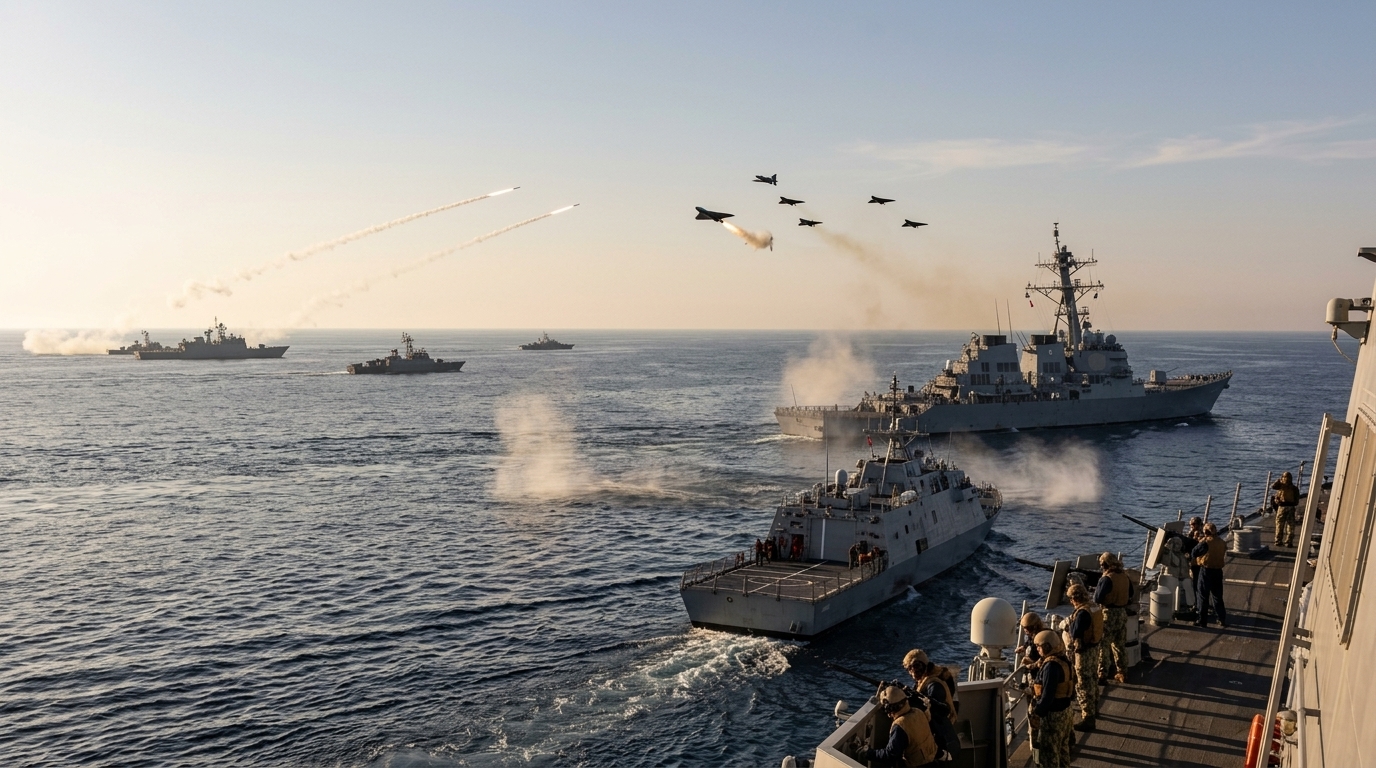
In the modern geopolitical arena, the hum of a low-cost engine over a battlefield has become more ominous than the roar of a billion-dollar fighter jet. Recent testimony from U.S. senators, as reported by Nextgov/FCW, highlights a stark reality: traditional defense infrastructures are increasingly inadequate against the 'democratized' threat of unmanned aerial vehicles (UAVs). The solution, according to lawmakers and military analysts, lies not in more ammunition, but in smarter code.
Machine Speed vs. Human Reflexes
The core argument being advanced in the halls of the Capitol is that the decision-making cycle, known as the OODA loop (Observe, Orient, Decide, Act), has accelerated to a point where the human brain is now the system's primary bottleneck. When a swarm of hundreds of drones attacks simultaneously, it is physically impossible for a radar operator to identify, track, and neutralize every threat in fractions of a second.
Artificial Intelligence is no longer a luxury; it is a prerequisite for survival. AI systems can process data from multiple sensors—radar, acoustic sensors, and optical cameras—simultaneously, distinguishing an enemy drone from a bird or a friendly aircraft with near-100% accuracy. This capability, known as 'sensor fusion,' is critical for countering saturation attacks, where an adversary attempts to overwhelm defenses through sheer volume.
The Economic Paradox of Modern Warfare
One of the most troubling aspects of the current conflict landscape is cost asymmetry. As experts point out, it is strategically unsustainable to use a $2 million missile to down a $500 drone purchased off the internet. This economic hemorrhaging can lead to strategic defeat even for the world's wealthiest powers.
- Automated Targeting: AI enables the use of directed energy (lasers) and electronic jamming with millimetric precision, reducing the cost per intercept to near-zero levels.
- Predictive Analytics: Through machine learning, systems can predict the flight path of a swarm before it reaches its objective, allowing for preemptive neutralization.
- Autonomous Response: The requirement for a 'man-in-the-loop' is shifting toward 'man-on-the-loop,' where the AI acts autonomously and the human serves in a supervisory capacity.
Ethical Dilemmas and the 'Black Box' of Autonomy
However, the pivot toward AI-driven defense is fraught with risk. Entrusting a machine with the decision to engage a target raises profound ethical questions. What happens if the system misinterprets a civilian aircraft in distress as a threat? The lack of transparency in 'black box' algorithms remains a primary concern for human rights advocates and international law experts.
"We cannot allow algorithms to wage war without accountability, but we also cannot leave our service members defenseless against technologies that move at the speed of light," remarked a senior advisor to the defense committee.
The implications extend far beyond the United States. In regions like the Mediterranean and the Middle East, the proliferation of cheap drone technology has already altered the balance of power. For nations facing persistent asymmetric threats, developing indigenous anti-drone AI is becoming a matter of national sovereignty rather than just technological advancement.
Conclusion: Technology as the New Frontier
The senatorial push for rapid AI integration in anti-drone operations is an admission that the era of human-centric tactical dominance is drawing to a close. Geopolitical power will henceforth be measured by computational capacity and the quality of algorithmic training data. The challenge for democratic nations is to find the balance between achieving technological overmatch and upholding the ethical standards that distinguish them from their autocratic rivals.