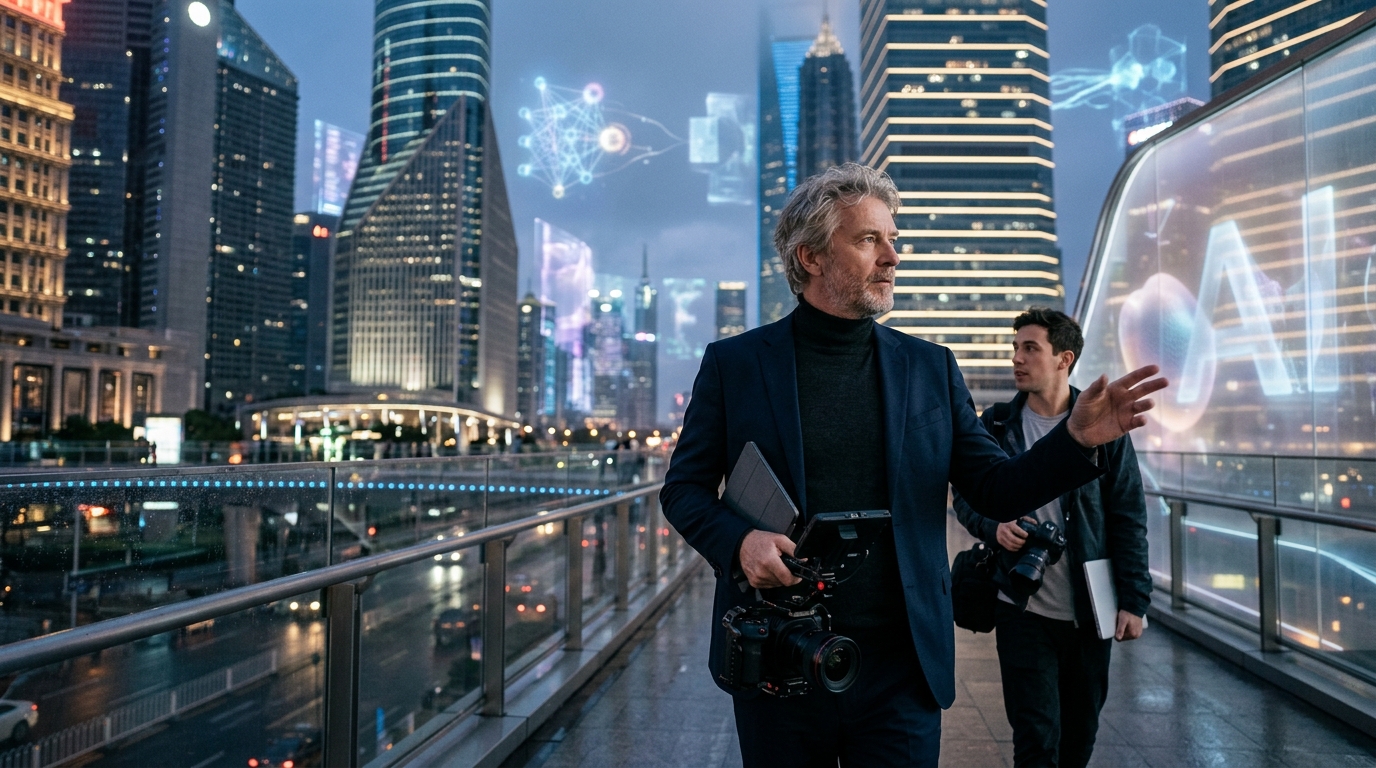
Until just a few months ago, the relationship between Hollywood and Artificial Intelligence resembled a dystopian thriller. The 2023 and 2024 strikes by actors and writers were fueled by a visceral fear of a "digital invasion." However, as we move through the spring of 2026, the atmosphere has shifted dramatically. Resistance is giving way to a cautious, yet decisive embrace. The industry’s most respected directors no longer view AI merely as a job-stealing threat, but as the ultimate tool to realize visions that were previously technically impossible or financially ruinous.
The Pivot of the Giants: From Cameron to Zemeckis
The most resonant move on the industry’s chessboard came from James Cameron. The man who famously warned us about Skynet in "The Terminator" recently joined the board of directors at Stability AI. This move was far from symbolic. Cameron, a pioneer who has consistently pushed the boundaries of technology—from the photorealistic water in "The Abyss" to the immersive world of "Avatar"—stated that the intersection of generative AI and traditional CGI is the next great wave. For Cameron, AI is not a replacement for the artist, but a "new brush" on a digital canvas.
Simultaneously, Robert Zemeckis, the visionary behind "Forrest Gump," utilized Metaphysic Live technology to de-age Tom Hanks and Robin Wright in real-time for his film "Here." Instead of the laborious and prohibitively expensive traditional CGI process, AI allowed the actors to see their younger selves on a monitor while performing, providing an immediacy that changes the fundamental rules of acting. Zemeckis noted:
“We’ve always looked for ways to tell stories that transcend time. AI has given us the key to unlock human memory on the screen.”
Economic Imperatives and the Democratization of Spectacle
Beneath the artistic pursuit lies a harsh economic reality. The cost of visual effects (VFX) has skyrocketed to levels that threaten the viability of major studios. A typical Marvel blockbuster requires hundreds of millions of dollars and thousands of hours from VFX artists often working under grueling conditions. Generative AI promises to slash these costs by 40% to 60% within the next two years.
Tools like OpenAI’s Sora or Runway’s Gen-3 now allow directors to "pre-visualize" entire sequences in minutes. What once required weeks of storyboarding and concept art is now achieved with a text prompt. Tyler Perry, one of America’s most successful producers, famously halted an $800 million studio expansion after seeing AI’s capabilities. "I no longer need to build physical sets or travel the world for a specific shot," he stated, posing a chilling question for the industry: if the giants can save this much, who will dare to say no?
The Ethics of "Stolen" Inspiration
Despite the enthusiasm, the shadow of ethics remains heavy. The primary argument from AI critics is that these models were trained on the works of thousands of artists without their consent or compensation. However, "respected" creators are moving toward a model of "Ethical AI." Studios like Adobe and NVIDIA are developing models trained exclusively on licensed content, offering filmmakers a legally "safe" path forward.
- Copyright Protection: The urgent need for legislation to protect an artist’s unique "style."
- Job Displacement: The transition from traditional VFX technician to "AI Prompt Engineer."
- Authenticity: The fear that cinema will become an endless loop of recycled aesthetics.
The danger is not the disappearance of cinema, but its homogenization. If an AI can generate an action sequence that looks like Spielberg, why hire a young director with a unique, unproven vision? This is the central dilemma facing the auteurs who are currently rushing to adopt the technology.
Conclusion: A New Era of Storytelling
Cinema has always been a machine-dependent art form. From the Lumière brothers’ first camera to the digital revolution of the 1990s, every technological shift was initially met with trepidation. The current adoption of AI by major filmmakers marks the end of the panic phase and the beginning of the integration phase. The challenge for 2026 and beyond is not whether AI will be used, but whether humans will remain the masters of the craft, using the algorithm to expand the horizons of their imagination rather than allowing it to replace them.