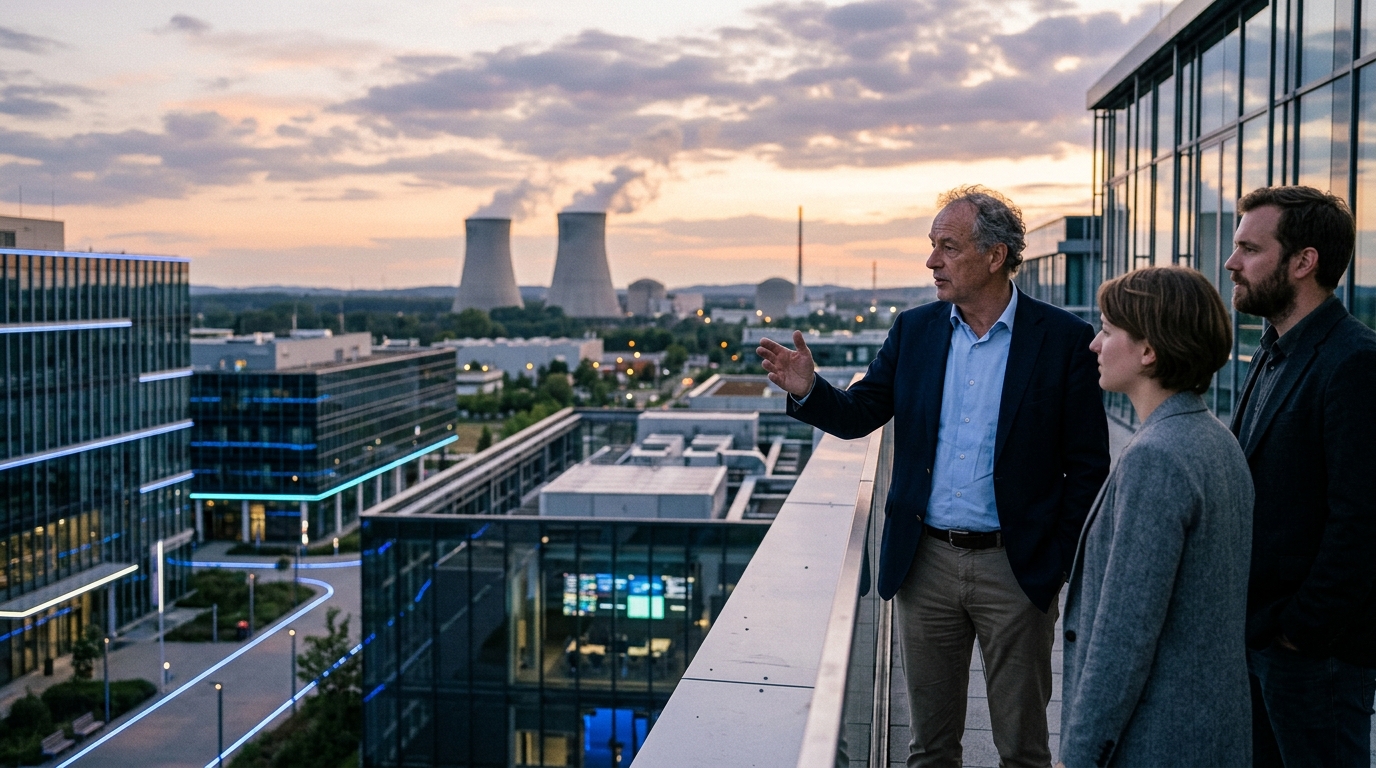
In the heart of Pennsylvania, where the iconic cooling towers of Three Mile Island stand as silent witnesses to the most notorious nuclear accident in U.S. history, a new breath of life is beginning to stir. This is not a government initiative or a national infrastructure program, but the raw necessity of a technological titan. Microsoft, in its quest to dominate the Artificial Intelligence (AI) race, has signed a historic agreement with Constellation Energy to restart Unit 1 of the plant. It is a move that symbolizes the full convergence of 20th-century physical power with 21st-century digital intelligence.
The Insatiable Energy Demands of the AI Era
The rise of Large Language Models (LLMs) and generative AI has radically altered the economics of Silicon Valley. Data centers are no longer mere warehouses for data; they are processing factories that require vast amounts of energy to power Nvidia's GPUs and their associated cooling systems. Microsoft, which has committed to becoming "carbon negative" by 2030, faces a paradox: AI demand is growing faster than the capacity of renewable energy sources (wind and solar) to provide steady baseload power 24/7.
Nuclear energy, despite its historical stigma, offers exactly what AI needs: massive amounts of carbon-free electricity with a stability that sun and wind cannot guarantee. The 20-year Power Purchase Agreement (PPA) stipulates that Microsoft will purchase 100% of the energy generated by Unit 1, which will be renamed the "Crane Clean Energy Center," in honor of Chris Crane, the late CEO of Exelon.
Reanimating a Nuclear Giant
It is impossible to discuss Three Mile Island without mentioning 1979. The accident at Unit 2 frozen the U.S. nuclear industry for decades. However, Unit 1, located adjacent to it, continued to operate safely and efficiently until 2019, when it was closed for economic reasons. Microsoft’s decision to bankroll its restart—a process expected to cost at least $1.6 billion—shows that the fear of the past is receding in the face of the needs of the future.
The restart process is not simple. It requires approval from the Nuclear Regulatory Commission (NRC), upgrades to the turbine, generator, and control systems, as well as enhancements to the transmission grid. Experts estimate the plant will be ready to feed power into the grid by 2028. For the local community in Pennsylvania, this means 3,400 direct and indirect jobs and a significant boost to the local GDP, explaining the warm support from politicians and labor unions alike.
The Geopolitics of Energy and AI
Microsoft’s move is not an isolated incident. Amazon recently purchased a data center powered directly by the Susquehanna nuclear plant, while Google is investing in Small Modular Reactors (SMRs). What we are witnessing is the privatization of energy strategy. As states struggle to upgrade their infrastructure at the speed required by technological evolution, Big Tech companies are stepping into the role of financier and anchor customer for major energy projects.
In the context of global competition with China, securing energy sovereignty to support AI is now considered a matter of national security. If the West wants to lead in AI, it must solve its energy problem. The revival of Three Mile Island is the boldest answer to this dilemma, proving that in the AI era, nothing remains in the dustbin of history if it can generate gigawatts.
- The deal covers 835 megawatts of carbon-free energy.
- Unit 1 will operate exclusively for Microsoft until 2054.
- Refurbishment costs will be covered by Constellation, backed by Microsoft's commitment.
- The move bolsters nuclear energy's credibility as a green solution for the tech sector.
"This decision is the most powerful symbol of the nuclear renaissance. The technology we once feared is now becoming the savior of our digital ambition." — Energy Industry Analyst