When Charles Darwin published "On the Origin of Species" in 1859, he didn't just change biology; he dismantled the edifice of human exceptionalism. The idea that humans were not a divine creation separate from the animal kingdom, but the product of a relentless process of natural selection, caused an ontological earthquake that resonates to this day. Today, as Artificial Intelligence (AI) evolves from a simple automation tool into an entity capable of complex reasoning, creativity, and problem-solving, we stand before our own "Darwinian moment."
This new revolution is not about our biological origins, but our intellectual and cognitive uniqueness. For centuries, the capacity for "Reason" was considered the final fortress of human dominance. If a machine can think, synthesize, and decide as well as or better than us, then what does it mean to be human? The challenge we face is not merely technical or economic, but profoundly existential.
The Dethroning of Human Reason
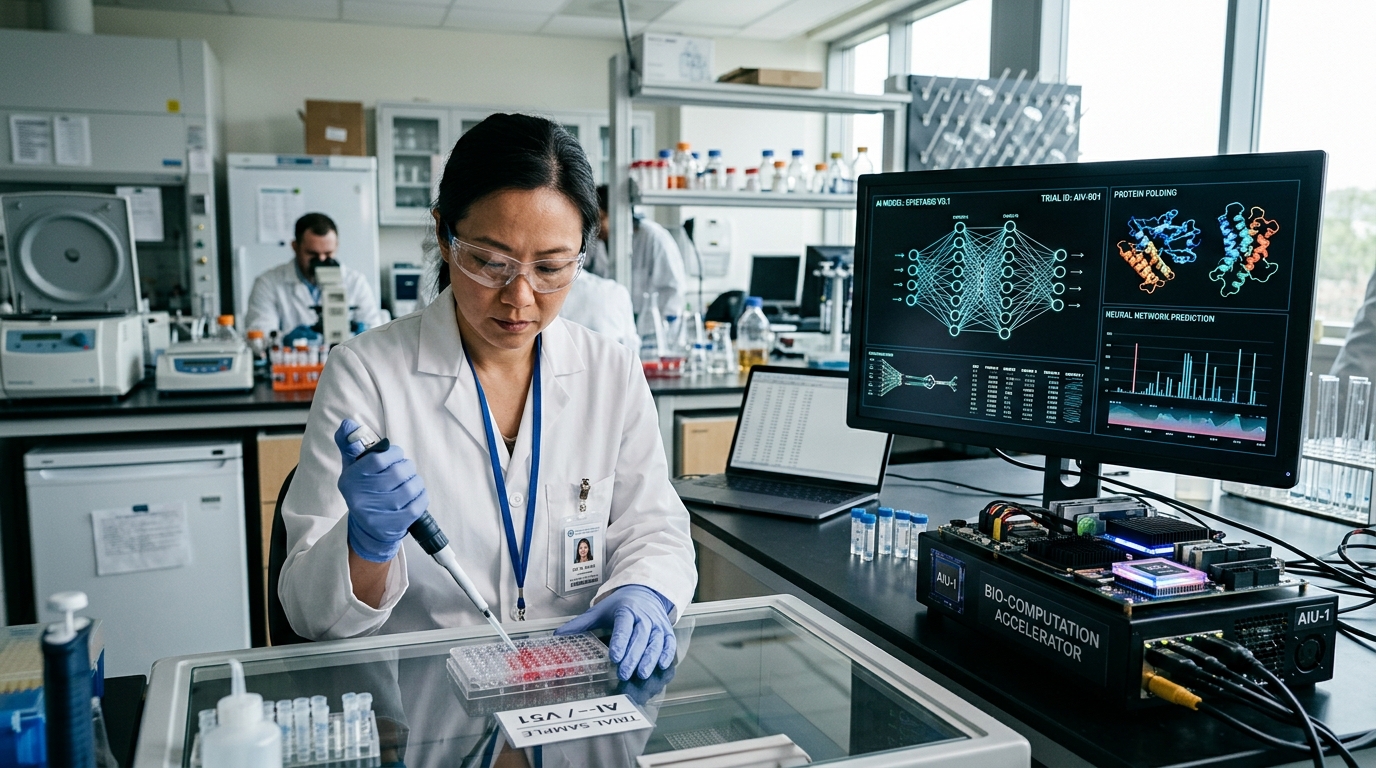
The current generation of Large Language Models (LLMs) and generative AI systems has begun to invade domains we once thought were exclusively human. Writing poetry, generating code, legal analysis, and medical diagnosis are no longer the sole provinces of the human brain. Just as Darwin showed that our bodies are part of a biological continuum, AI is showing us that our intelligence may be part of a computational continuum.
This realization is painful. Our society is structured around the idea that human judgment is irreplaceable. However, the ability of machines to process vast amounts of data and identify patterns that escape human perception suggests that "Reason" might not be a mystical property of the soul, but a sophisticated form of information processing. In this new hierarchy, humans are called to redefine their value, not based on what they can "do," but on what they "are."
From Tool to Autonomous Entity
The transition from AI as a tool (Narrow AI) to AI as general intelligence (AGI) represents the critical tipping point. Until recently, computers executed instructions. Today, they are beginning to exhibit emergent behaviors—capabilities they were not explicitly programmed to have. This mirrors the process of evolution, where simple structures lead to extraordinarily complex systems through interaction.
- Decision-Making Autonomy: AI systems are beginning to operate without constant human supervision, formulating their own strategies.
- Creative Synthesis: The ability to generate new knowledge from existing data overturns the concept of originality.
- Adaptability: The speed at which AI learns and adapts surpasses any biological pace of evolution.
This evolution forces us to ask whether we are creating a new form of "digital life." While AI does not (yet) possess consciousness or biological needs, its impact on our culture is as catalytic as the appearance of a new dominant species in the ecosystem.
The Politics of Survival and Social Adaptation
In a Darwinian process, survival depends on adaptability. Our institutions—the educational system, the labor market, the legal framework—are still rooted in a pre-AI era. The lag in adaptation creates a vacuum that could prove fatal. Inequality could take on new dimensions, dividing humanity into those who control the new intelligence and those who become "functionally redundant."
"History doesn't repeat itself, but it often rhymes. The Darwinian revolution took us decades to assimilate. The AI revolution gives us only months."
Political leadership worldwide seems to vacillate between fear and enthusiasm. However, the real challenge is maintaining human dignity in a world where machine efficiency will be the absolute norm. We must decide which parts of the human experience are sacred and should not be surrendered to algorithms, even if it means less "efficiency."
Conclusion: A New Humanism
The "Darwinian moment" of AI does not have to be the end of humanity, but it can be the end of human arrogance. Just as Darwin taught us to see ourselves as part of nature, AI can teach us to see intelligence as a broader phenomenon. The challenge is to build a new Humanism that will not be based on the superiority of our minds, but on our capacity for empathy, moral judgment, and collective care. At the end of the day, evolution is not just about the strongest, but about those who can best cooperate with their environment—and our new environment is now digital.