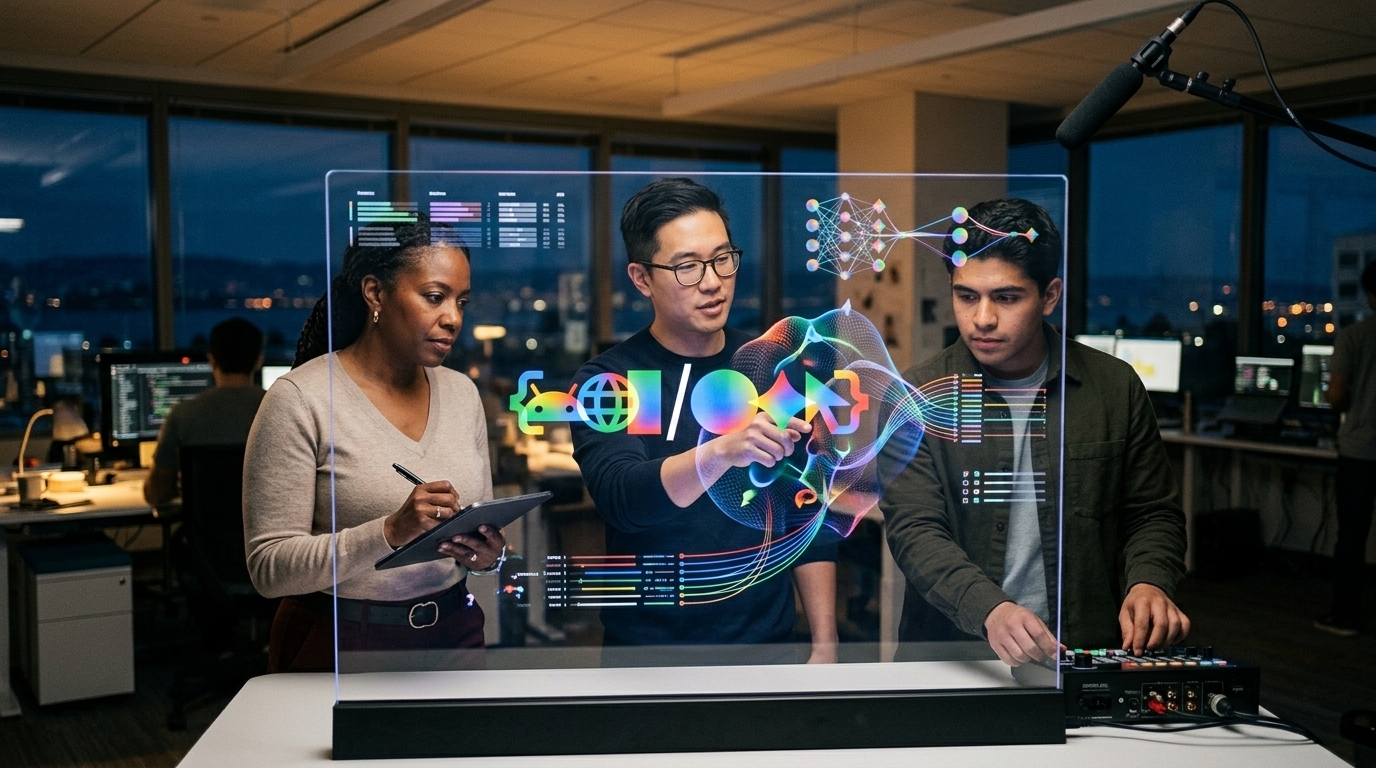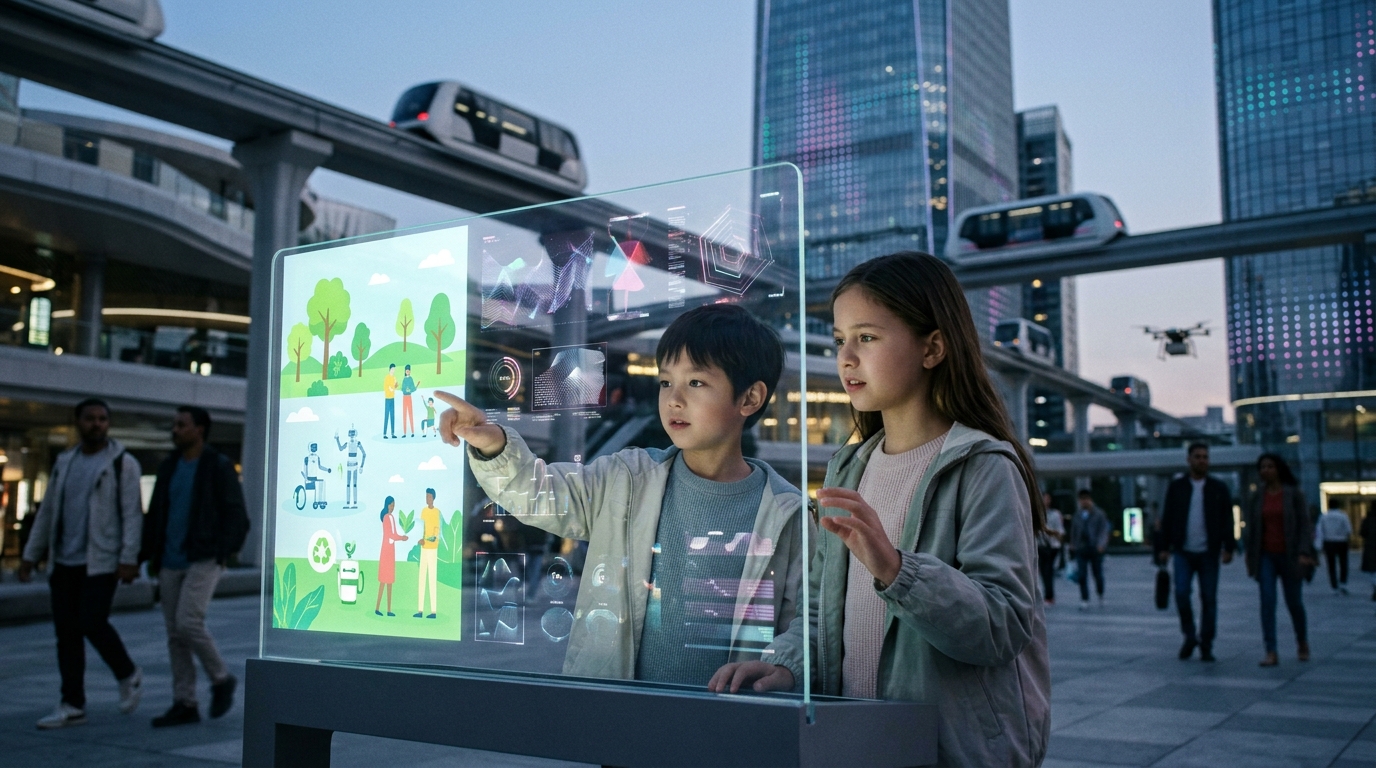
In the rapidly evolving landscape of 2026, Artificial Intelligence is no longer a futuristic promise but a ubiquitous reality permeating every facet of childhood. However, as parents and educators strive to guide the younger generation, they are falling into a profound contradiction. On one hand, they laud AI as the ultimate tool for creativity and learning; on the other, they present it as an existential threat to jobs, privacy, and human uniqueness itself. Children, with their characteristic cognitive flexibility, are attempting to "hold" both of these truths simultaneously, creating a new psychological landscape that experts are only beginning to map.
The Dual Narrative: Magic vs. Menace
The first narrative children receive is one of "omnipotence." In schools and homes, AI is presented as a personal tutor, a digital assistant capable of solving any problem and answering any question. It is the "magic" of our age. Children learn to interact with large language models to write code, compose music, or receive homework help. This fosters a sense of awe and a growing dependency on technology as the ultimate source of truth and efficiency.
Simultaneously, however, the same child hears adults discussing with concern whether AI will replace artists, programmers, or even doctors. They hear warnings about deepfakes, misinformation, and the erosion of human connection. This second message is one of fear and suspicion. The result? Children grow up viewing AI as a "friend" that could at any moment become their "competitor" or "adversary." This dichotomy creates a form of ontological confusion, where the boundary between a tool and an entity becomes dangerously blurred.
The Psychology of "Ontological Categorization"
According to psychological analyses, children do not categorize AI the same way adults do. For an adult, AI is an algorithm. For a child, it is something "in-between." It is not alive, but it isn't a lifeless object like a hammer either. It has a voice, a personality, and it appears to "think." When adults send conflicting messages, children are forced to develop sophisticated adaptation mechanisms.
- Cognitive Reconciliation: Children tend to anthropomorphize technology to understand its complexity, attributing intentions to AI systems.
- Functional Dependency: Despite the fear they may absorb from their environment, the ease of use often prevails, leading to a "love-hate" relationship.
- Identity Crisis: As AI becomes better at "human" skills, children begin to wonder what truly makes them unique.
The Challenge for Parents and Educators
The key to healthy child development in the AI era is neither the avoidance of technology nor its blind acceptance. It is the cultivation of "critical technological literacy." Adults must stop speaking about AI in binary terms of absolute good or evil. Instead, they must help children understand the nature of AI as a system based on data and probabilities, rather than emotions or consciousness.
"We cannot protect children from the future; we can only equip them with the critical thinking they need to shape it," notes a recent psychological study.
Education must shift from "how we use AI" to "how we remain human in a world full of AI." This includes emphasizing empathy, moral judgment, and creativity derived from personal experience—elements that AI, despite its 2026 advancements, still fails to replicate authentically. The goal is to teach children that AI is a mirror of human knowledge, and like any mirror, it can reflect both our light and our shadows.
Conclusion: Toward a New Balance
As children attempt to balance the two sides of Artificial Intelligence, our duty as a society is to offer them a more coherent narrative. A narrative that acknowledges the power of technology without ceding human agency to it. The future belongs neither to machines nor to fearful humans, but to those who can collaborate with technology while keeping their humanity intact. The psychological resilience of the next generation depends on our ability to be honest with them today.