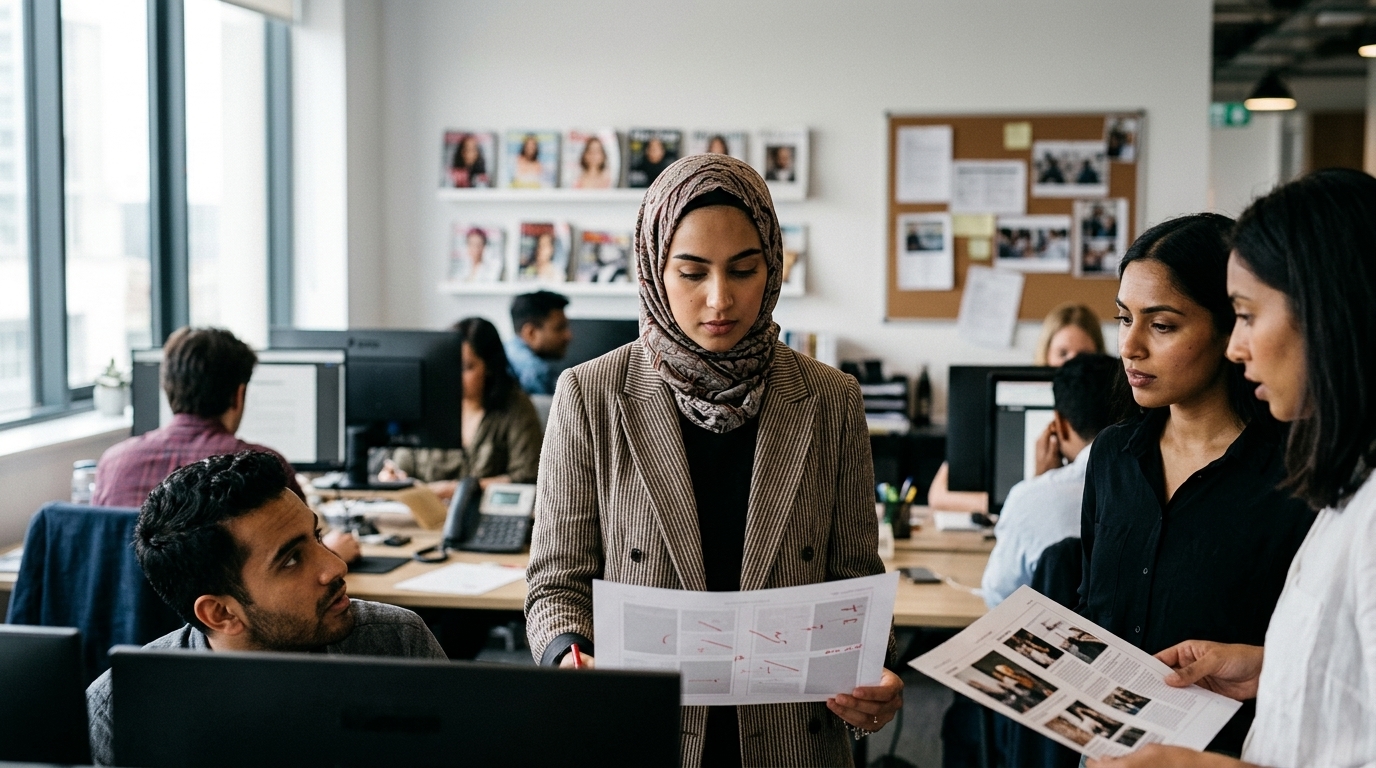
In the contemporary digital landscape, power no longer emanates exclusively from the glass towers of Manhattan or the newsrooms of London. It springs from the ability to recognize a vacuum in the marketplace of ideas and fill it with authenticity. The story of Ameer Al-Khatahtbeh, the founder of Muslim.co, epitomizes this shift. What began as a simple effort to document news relevant to the Muslim community has evolved into a social media behemoth that today influences more than 12 million people worldwide.
The Representation Gap and the Birth of an Idea
For decades, the coverage of Muslim issues in Western media was characterized by a one-dimensional approach: geopolitical conflicts, terrorism, or religious fundamentalism. Rarely was there space for the daily lives, culture, fashion, or social concerns of Gen Z Muslims. Al-Khatahtbeh, then a student at Rutgers University, realized that his community didn't just need more coverage; it needed a different narrative—one written by themselves.
The founding of Muslim.co in 2019 was not the result of a complex business plan, but a reaction to isolation. Utilizing Instagram and later TikTok, Al-Khatahtbeh began curating content that ranged from serious human rights news to humorous videos about the cultural quirks of the Muslim diaspora. The response was immediate and explosive, proving that there was a vast, hungry market that traditional media had conspicuously ignored.
The Power of the Algorithm and Identity Politics
The success of Muslim.co is not due solely to its content, but also to a masterly understanding of algorithmic psychology. In an era where attention is the most valuable currency, Al-Khatahtbeh managed to turn identity into a brand. Using the word "Muslim" as the name of the outlet was a bold move: he reclaimed a term often used with negative connotations and transformed it into a source of pride and community.
- Digital Sovereignty: The ability to control the narrative without the mediation of traditional gatekeepers.
- Community Building: Turning followers into an active community that participates in shaping the news agenda.
- Cultural Bridge: Presenting the Muslim experience in terms accessible to non-Muslim youth as well.
However, this rise has not come without challenges. Managing such a large and diverse community requires delicate balancing acts. From internal theological disagreements to allegations of "shadowbanning" by Big Tech platforms during Middle East crises, Al-Khatahtbeh has often found himself at the center of political storms. His position as an "accidental" editor-in-chief forced him to mature quickly, transforming him from an influencer into a strategic player in global information.
The Future of Identity-Driven Media
As we head into the second half of the 2020s, the Muslim.co model serves as a blueprint for the future of media. The trend toward identity-driven media reflects the fragmentation of society but also the need for specialized representation. The challenge for Al-Khatahtbeh is now sustainability: how do you turn a social media empire into an institution that will withstand the test of time, beyond algorithmic shifts?
"We aren't just trying to be an Instagram page. We are trying to be the reference point for an entire generation that felt invisible," he has stated.
His story reminds us that in the digital age, journalism is not just about transmitting information; it's about claiming space. Ameer Al-Khatahtbeh may have become an editor-in-chief by accident, but his impact on the global conversation is anything but accidental. Muslim.co is proof that when people don't find their place in the story, they build their own.