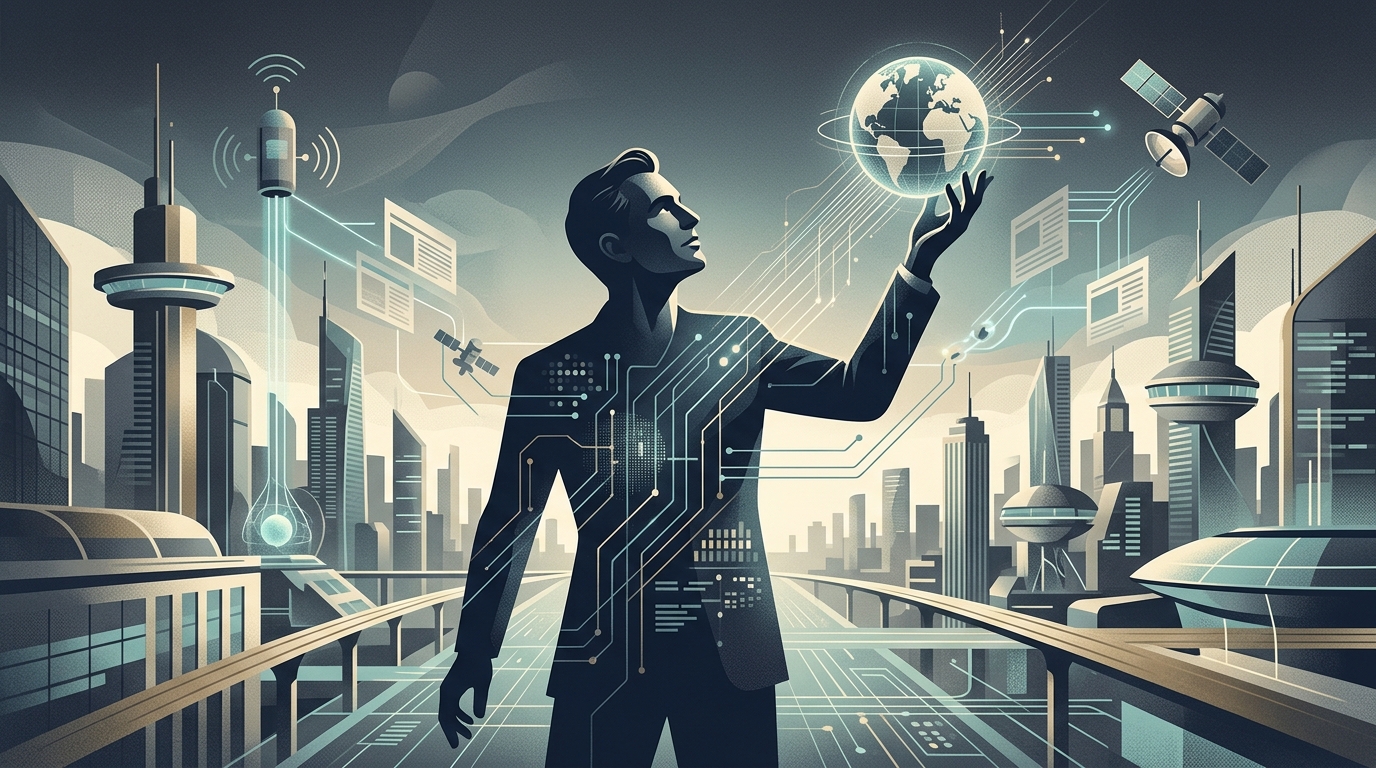
The news of the passing of Ted Turner, the man who reshaped the global media landscape, marks the end of an era. Turner was not merely a media entrepreneur; he was the architect of our modern perception of time and information. Before the founding of CNN in 1980, news was an appointment: a thirty-minute broadcast in the evening. After Turner, news became a river—a continuous, uninterrupted flow that never stops, influencing markets, governments, and public opinion in real-time.
The Birth of a Rebel
Born in 1938 in Cincinnati, Ohio, Robert Edward "Ted" Turner III inherited a billboard business following his father's tragic suicide. Instead of settling for the security of outdoor advertising, he used the profits to purchase struggling television stations on the brink of bankruptcy. His strategy was audacious: using satellite technology, he transformed a local Atlanta station into the first "Superstation," WTBS, beaming its content to every corner of the United States.
When he announced his plan for a 24-hour news network, industry experts mocked him. "Chicken Noodle News," as it was derisively called, was considered financial suicide. Who would want to watch news at 3 AM? But Turner understood something others ignored: globalization demanded a medium that never slept. On June 1, 1980, CNN went on the air, changing the history of journalism forever.
The "CNN Effect" and Global Politics
CNN's establishment as a global powerhouse came in 1991, during the First Gulf War. While traditional networks waited for official briefings, CNN broadcast the bombings of Baghdad live. It was the first time the world watched a war unfold in real-time from their living rooms. This gave birth to the term "The CNN Effect": the idea that continuous coverage of crises forces political leaders to act faster, often under the pressure of public opinion.
Turner believed in peace and global understanding. He founded the Goodwill Games in 1986 to ease Cold War tensions through sports. His approach was often controversial—critics accused him of narcissism and of providing a platform for dictators—but no one could deny his ability to place himself at the center of world events.
Beyond the Screen: Philanthropy and Environment
Turner's legacy is not confined to screens. In 1997, he shocked the business world by announcing a $1 billion donation to the United Nations, creating the UN Foundation. It was a move that predated the massive philanthropic efforts of Bill Gates and Warren Buffett, setting new standards for the responsibility of billionaires toward humanity.
As the largest private landowner in the US for many years, Turner dedicated vast resources to environmental protection. His effort to save the American bison from extinction was a resounding success, with his herds now numbering in the thousands. His love for the land was as intense as his passion for news, reflecting a deep belief that the planet is a single, fragile system.
The Challenge of the Digital Age and His Legacy
In his later years, Turner watched the rise of social media and the fragmentation of truth with skepticism. Although he created the 24-hour news cycle, he perhaps never imagined the speed and toxicity that the digital revolution would bring. Today, in the age of Artificial Intelligence, the question Turner posed remains relevant: How can we inform the world accurately when information never stops?
Ted Turner was a man of contradictions: a capitalist who loved the UN, a tycoon who warned about climate change, a visionary who lost control of his empire after the disastrous AOL-Time Warner merger. Yet, history will remember him as the man who made the world smaller, bringing every corner of the planet into every home. Without Turner, the global consciousness we have today, with all its advantages and flaws, simply would not exist.