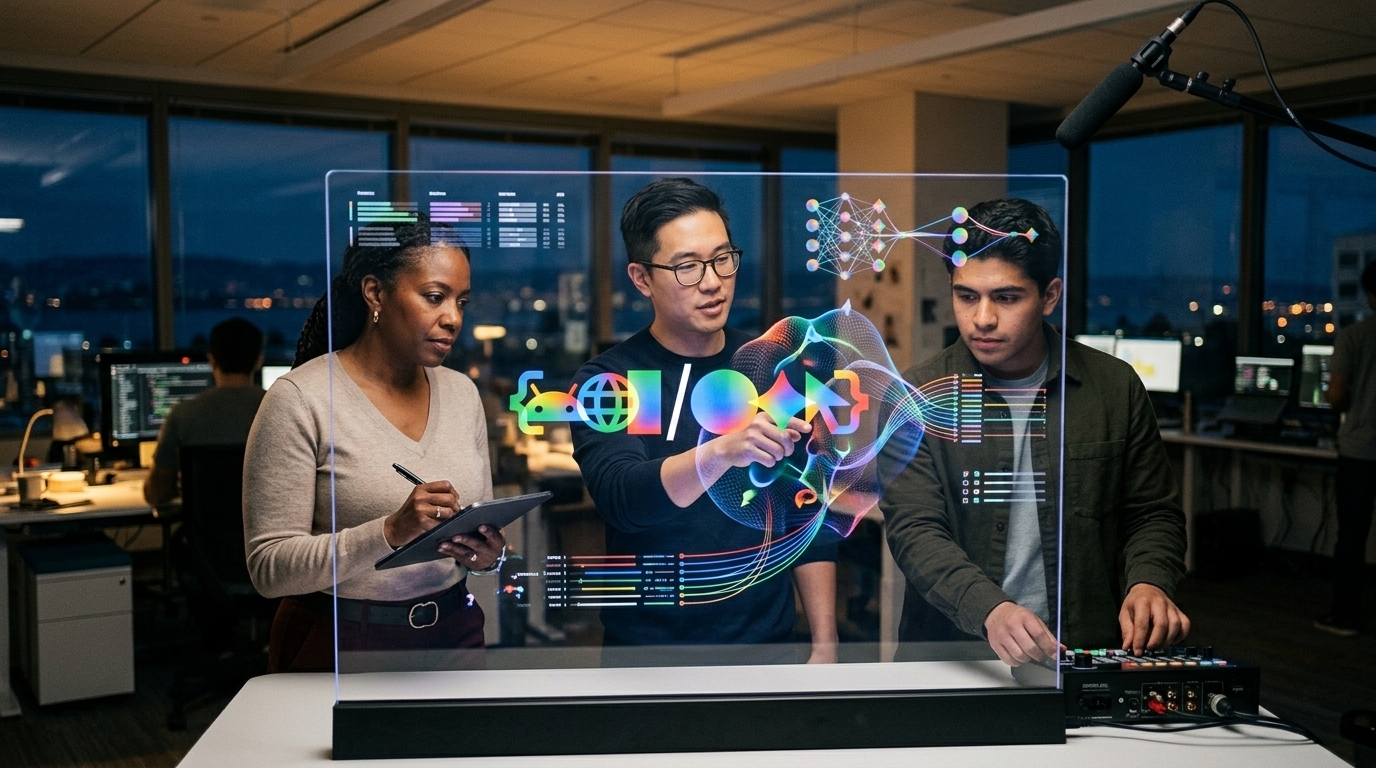
In the beating heart of Silicon Valley, a new and unsettling ambition is taking root among the tech elite: the desire for digital omnipresence. As generative AI evolves from a mere productivity tool into an extension of human persona, the industry’s most powerful figures—such as Meta’s Mark Zuckerberg and Block’s Jack Dorsey—are beginning to view this technology as the ultimate means to transcend the physical limitations of time and space.
The core concept is as simple as it is chilling: instead of a CEO being constrained by the twenty-four-hour day, they can deploy digital "agents" or "twins" that carry their vision, make decisions, and interact with employees at a scale previously unimaginable. This isn't just an upgrade to management software; it is a radical reimagining of leadership, where human touch is replaced by an algorithm trained to think and speak like the "boss."
The Zuckerberg Model: The Digital Clone as an Influence Tool
Mark Zuckerberg has been vocal about his excitement for "AI agents." In his recent vision for the Metaverse and Meta's broader ecosystem, AI is not just a helper for the user, but a way for creators—and by extension, himself—to be present everywhere. Imagine a version of Zuckerberg that can respond to thousands of employee messages simultaneously, provide direction to hundreds of product teams, or appear as a hologram in dozens of meetings at the same hour.
This approach aims to solve the "scaling problem." In a company with tens of thousands of employees, direct access to the leader is a structural impossibility. Zuckerberg believes AI can bridge this gap. However, the criticism is sharp: if an employee interacts with an AI version of the CEO, are they receiving genuine guidance or merely a sterilized, simulated command? Leadership, traditionally, relies on empathy and real-time judgment—elements that AI, despite its progress, struggles to replicate authentically.
The Dorsey Approach: Algorithmic Governance and Automated Control
On the other side of the spectrum, Jack Dorsey, the enigmatic co-founder of Twitter and current head of Block, is moving toward a more detached yet equally controlled direction. Dorsey has expressed interest in systems where decision-making can be automated through AI protocols. Rather than a "digital clone," Dorsey seems to prefer a system where he sets the parameters and the AI ensures the company moves in that direction without the need for constant human intervention.
This form of "algorithmic governance" promises efficiency but carries the risk of profound alienation. When decisions regarding hiring, firing, or strategic pivots are made by a system tuned by a distant leader, corporate culture risks turning into a mechanical nightmare. Dorsey, a proponent of the decentralized web (Web3), appears to believe that AI can act as the "invisible coordinator," allowing him to maintain control while he focuses on other projects or personal pursuits.
The Dangers of the Digital Panopticon
The idea of a CEO who is "omnipresent" via AI brings to mind Jeremy Bentham’s "Panopticon"—a prison design where a single watchman can observe all inmates without them knowing when they are being watched. In the modern corporate environment, AI acting as the eyes and ears of the CEO could create a climate of perpetual surveillance.
- Erosion of Trust: If employees know that every move is being analyzed by an AI reporting back to the CEO, creativity and initiative will likely give way to rigid compliance.
- Loss of Accountability: Who is responsible for a failed decision? The CEO or the algorithm representing him?
- The Ethics of Simulation: Is it ethical to communicate with a synthetic personality under the guise that you have your leader’s attention?
The stakes are not just about productivity; they are about the very nature of work. This trend reflects a deeper narcissistic impulse within Silicon Valley: the belief that certain individuals are so valuable that their presence must be artificially multiplied. Yet, history has taught us that leadership detached from human reality tends to become autocratic and, ultimately, ineffective.
Conclusion: The Need for Human Boundaries
As we move into this new era, it is clear that AI will transform how businesses are managed. However, the omnipresence dreamed of by Zuckerberg and Dorsey may prove to be a hollow victory. A leader’s power does not stem from their ability to be in a thousand places at once, but from their ability to inspire, listen, and understand—qualities that no line of code can fully achieve. The challenge for the future will be to use AI to enhance human capacity, not to replace it with a digital illusion of control. We must decide whether we want leaders who are everywhere, or leaders who are actually there when it matters.