In the heart of the digital age, the American education system faces an existential crisis that threatens to overturn centuries-old foundations. The image of a teacher standing in front of a blackboard, guiding a classroom full of curious eyes, is beginning to look like a relic of another era. Today, in 2026, in several US states, the experiment of "teacherless schools" is no longer a science fiction scenario, but a harsh reality born of necessity and technological hubris.
The Crisis That Birthed the Digital Pedagogue
The root of the problem is not technological, but deeply social and economic. For years, the United States has struggled with a growing teacher shortage, fueled by low wages, professional burnout, and political controversies surrounding the curriculum. When vacancies reached record levels, Silicon Valley offered a "magic" solution: Large Language Models (LLMs) tailored for education, capable of providing personalized instruction to thousands of students simultaneously.
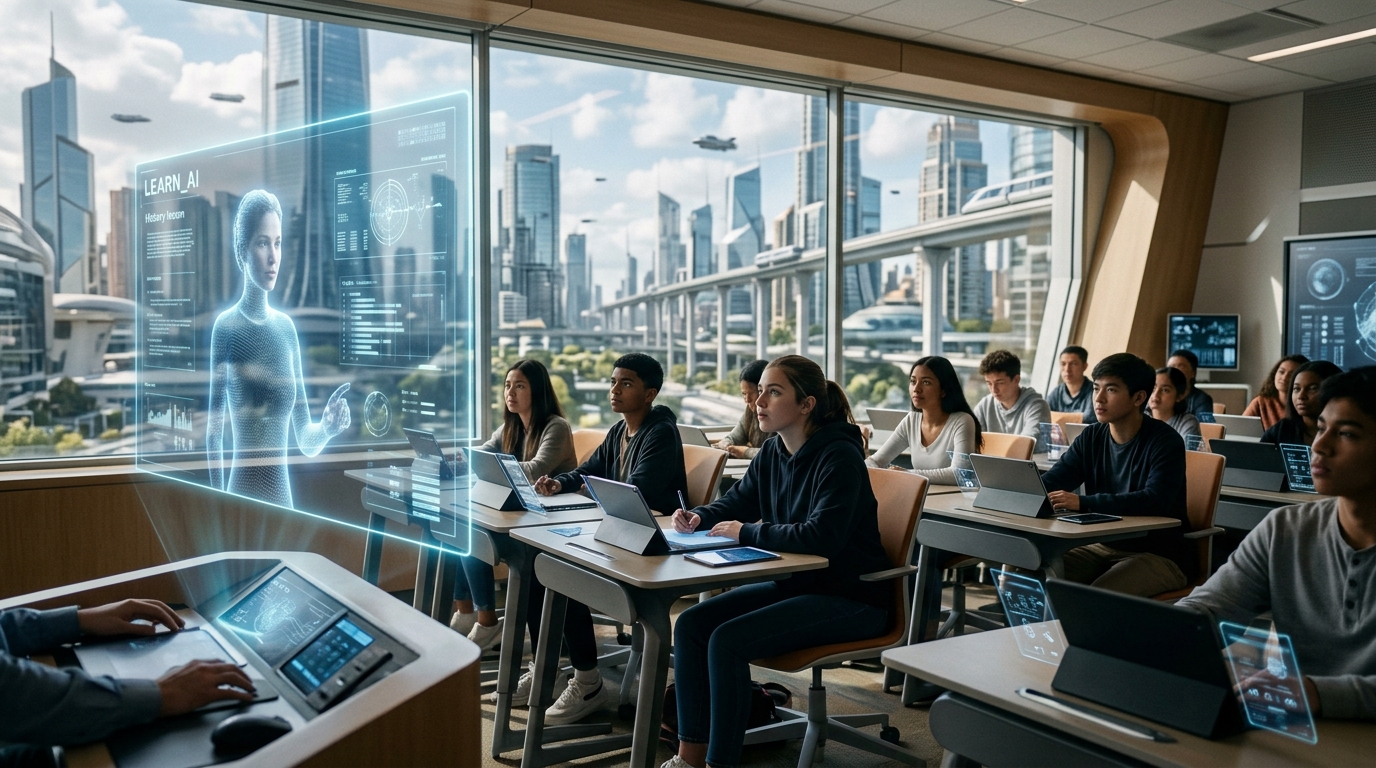
The model being implemented in schools like Khan World School and other similar initiatives replaces the traditional teacher with a "facilitator." This role does not require a degree in pedagogy, but rather the ability to manage the AI platform that takes on the main burden of knowledge transfer. Artificial Intelligence analyzes each student's weaknesses in real-time, adjusts the difficulty level, and provides immediate feedback—something a human with 30 students in a classroom is practically unable to do.
The Promise of Hyper-Personalization
Proponents of this approach argue that we are witnessing the democratization of excellent education. "Every child now has a personal Socrates in their pocket," say EdTech enthusiasts. AI doesn't get tired, has no biases, and can explain quantum physics in ten different ways until the student masters it. Furthermore, the data collected allows parents and school counselors to have a crystal-clear picture of a child's progress, identifying gaps before they become insurmountable.
- Adaptive learning that follows each student's unique pace.
- Reduction in the operational costs of school units.
- Elimination of geographical barriers to quality educational material.
- Availability of 24/7 support and guidance.
However, efficiency in information transfer is not necessarily synonymous with education. Education is a deeply social process. Interaction with the teacher, disagreement with classmates, and the development of empathy through human contact are elements that no algorithm, no matter how sophisticated, can accurately replicate.
The Risks of a Dangerous Experiment
Critics warn of a "screen-zombie generation." Without human guidance, students risk losing the ability for critical thinking, being limited to a question-and-answer relationship with a machine. There is also the issue of privacy: Who owns the data of a child's intellectual development? How do algorithmic biases influence the formation of young people's worldview?
"Education without the human soul is merely data transfer. If we remove the teacher, we remove the role model, the moral compass, and the human who will inspire the child to exceed their limits," says Dr. Eleni Papadaki, an educational policy analyst.
Furthermore, the gap between the rich and the poor may widen. While affluent families will continue to send their children to private schools with physical teachers and small classes, public education for the masses could turn into a series of digital boxes, where AI acts as a low-cost "babysitter" rather than an educator.
Conclusion: Toward a New Balance?
The question is not whether Artificial Intelligence will invade schools—that has already happened. The critical issue is whether we will allow technology to replace humans or if we will use it to empower them. The idea of teacherless schools in the US serves as a warning to the rest of the world. Technology must be the tool, not the architect of human consciousness. Education remains humanity's last line of defense against automation, and the loss of the teacher may be a price we cannot afford to pay.