The dawn of the third decade of the 21st century marks one of the most radical transformations in the history of human labor. As Artificial Intelligence (AI) transitions from the stage of experimentation to universal application, the question is no longer whether work will change, but how tomorrow's professionals—today's students—are preparing for an environment where traditional skills may become obsolete overnight. From Hanoi to Helsinki and from Silicon Valley to Athens, the educational community is in flux, trying to bridge the gap between classical learning and the demands of the 'Intelligence Economy.'
The Shift from Knowledge to Critical Synthesis
For decades, the educational system was built on memorization and information retrieval. Today, with Large Language Models (LLMs) providing instant access to virtually any piece of data, the value of mere knowledge is declining. Students are now required to become 'curators' of information rather than data repositories. The ability to ask the right questions—so-called prompt engineering—is emerging as a fundamental skill, but the essence lies deeper: in the critical thinking required to evaluate the validity of the answers provided by the machine.
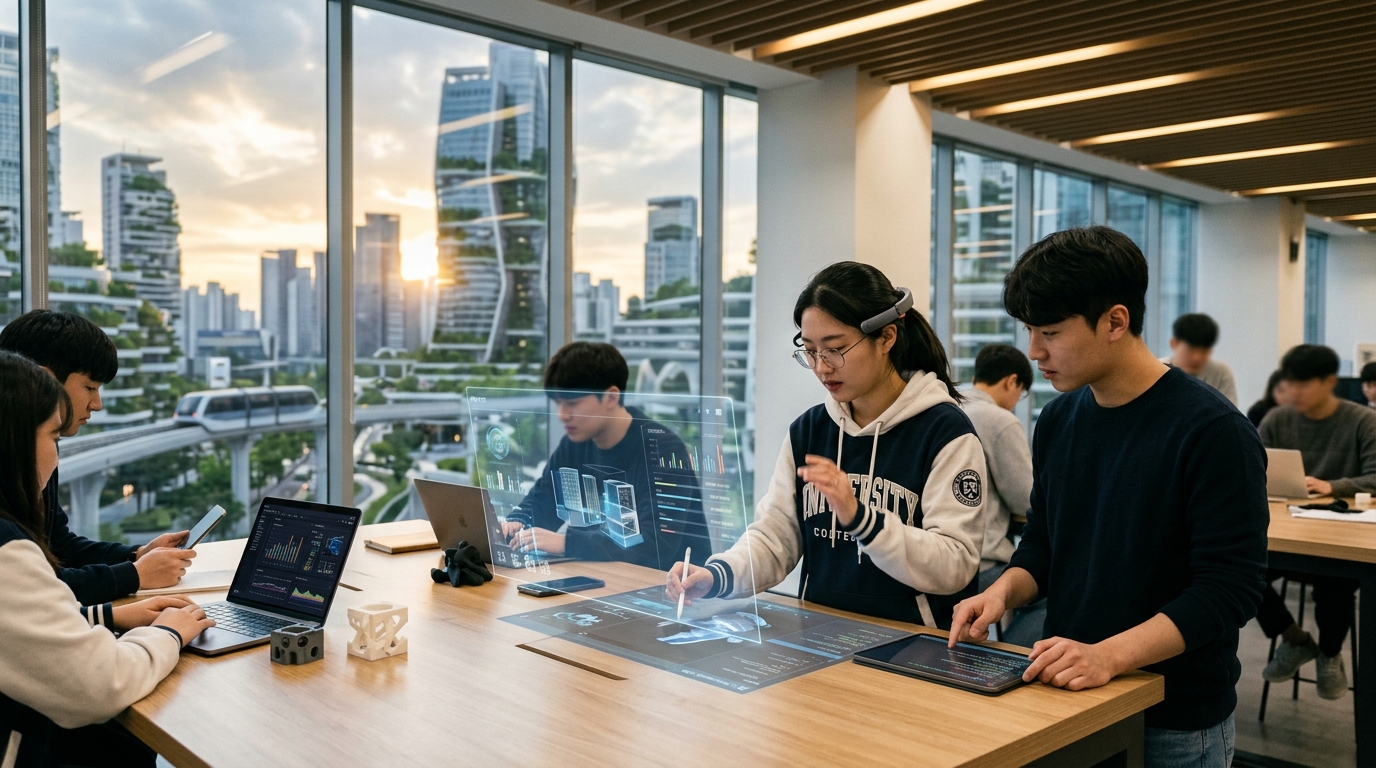
In Vietnam, a country rapidly evolving into a technological hub in Southeast Asia, students are encouraged to use AI not as a crutch for their assignments, but as a brainstorming partner. This paradigm shift transforms the teacher from an authority figure into a mentor, and the student from a passive recipient into an active researcher. This adaptation is vital, as employers now seek individuals who can combine technical proficiency with ethical judgment and creative problem-solving.
Soft Skills as the New Hard Currency
Paradoxically, the more work is automated, the more valuable the human traits that AI struggles to replicate become. Empathy, negotiation, leadership, and emotional intelligence are emerging as top priorities for young people entering the labor market. Students are realizing that while an algorithm can write code or analyze balance sheets, it cannot (yet) manage a crisis within a team of people or inspire trust in a client.
- Lifelong Learning: The notion that education ends with a degree is dead. Students are being trained to 'learn how to learn,' as AI tools will change every six months.
- Interdisciplinarity: Combining humanities with technology (STEAM) is considered the 'golden key.' A programmer who understands philosophy or a lawyer who understands algorithms is far more shielded against automation.
- Adaptability: Psychological resilience in the face of uncertainty is now part of the informal curriculum in many advanced countries.
The Challenge of Entry-Level Roles
One of the biggest concerns for today's students is the disappearance of entry-level jobs. Traditionally, young graduates learned the ropes by performing repetitive tasks that AI is now taking over. This creates a paradox: how will they gain the necessary experience to become senior executives if the 'ladder' of hierarchy has lost its first rungs? The answer seems to lie in early specialization and using AI to accelerate learning, allowing young people to take on more complex tasks much earlier than in the past.
Furthermore, the geography of work is changing. Students in developing economies, such as Vietnam, now have access to the same AI resources as their peers in London or Paris. This levels the playing field but simultaneously increases the pressure for excellence. The global labor market is becoming a single, digital arena where adaptability is the only means of survival.
Conclusion: The Human-Centric Renaissance
Adapting students to the AI era is not just about learning new software. It is a profound cultural shift that redefines what it means to be 'educated.' The education of the future must cultivate curiosity and critical spirit, arming young people not against machines, but alongside them. In a world where artificial intelligence is ubiquitous, human uniqueness—the ability to dream, to question, and to connect—will be the most sought-after asset in the labor market of 2026 and beyond.