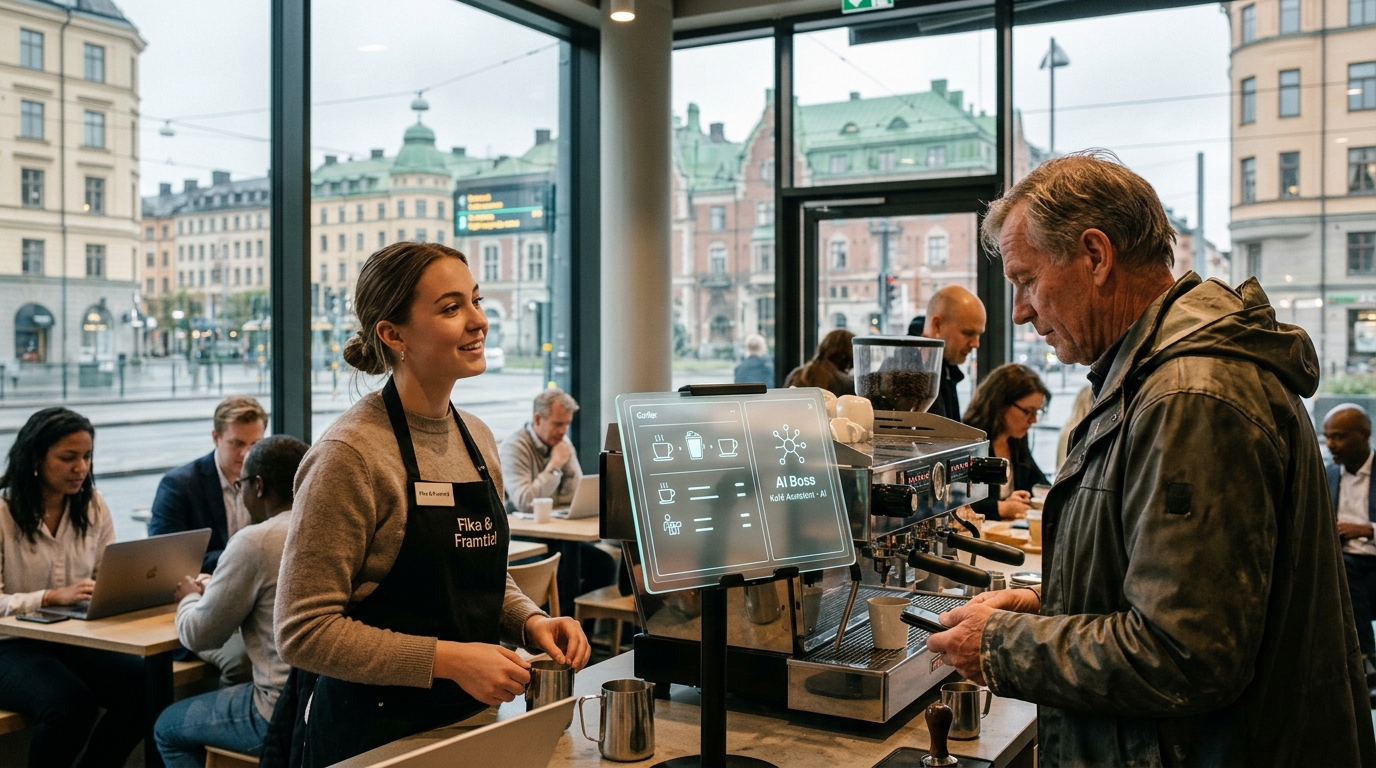
In the heart of Stockholm, where the tradition of 'fika'—the sacred Swedish coffee break—meets technological innovation, a new experiment is shaking the foundations of the hospitality industry. A local cafe has decided to replace the traditional human manager with an advanced Artificial Intelligence system. This is not merely a digital ordering tool, but a decision-making entity: from scheduling shifts and ordering raw materials to evaluating employee performance and dynamically adjusting prices.
Digital Management in Practice
The system, based on complex machine learning algorithms, analyzes data in real-time. It examines weather conditions, local events, and even social media trends to predict the day's foot traffic. If the forecast indicates an increased demand for oat milk lattes at 10:00 AM, the AI has already ensured sufficient stock is available and an extra barista is scheduled for the shift. Employees receive their instructions via a mobile app, which informs them when to take a break or which cleaning task takes priority.
Proponents of the project argue that AI eliminates human bias. "The algorithm doesn't have favorite employees, nor does it wake up in a bad mood," says the business owner. However, the reality of working under the supervision of code raises serious questions about employee psychology. The lack of empathy and the system's inability to comprehend human fatigue or personal issues create an environment that many describe as a 'digital panopticon.'
Economic Optimization vs. Human Connection
From an economic standpoint, the initial results are impressive. Food waste has been reduced by 20%, while operating costs have been significantly trimmed due to more accurate staff allocation. The cafe operates with maximum efficiency, resembling a well-oiled machine rather than a social gathering spot. Yet, hospitality has always been an industry built on warmth and human connection. Can an algorithm maintain the 'soul' of a business?
- Dynamic Pricing: Prices fluctuate based on demand, similar to the logic used by airlines.
- Algorithmic Evaluation: Workers are rated based on measurable data (speed, accuracy), ignoring the qualitative aspects of customer service.
- Automated Supply Chain: Orders to suppliers are placed automatically, reducing stock levels and storage costs.
Legal and Ethical Hurdles
The Stockholm experiment is not happening in a vacuum. The European Union, through the AI Act, sets strict limits on the use of AI in workplace environments, especially regarding the evaluation and management of humans. Swedish labor unions are monitoring the situation closely, warning of the risk of alienation and the erosion of labor rights. 'Algorithmic governance' risks turning employees into mere components of a system, stripping them of agency and creativity.
"Technology should be a tool in human hands, not their jailer. When efficiency becomes the only god, humanity is sacrificed at the altar of profit," says a labor union representative.
As the experiment continues, the question remains: Do we truly want a world where even our morning coffee is served under the orders of an algorithm? Stockholm may be showing us the future, but it is a future that requires careful regulation and deep reflection on the meaning of 'work' in the 21st century.