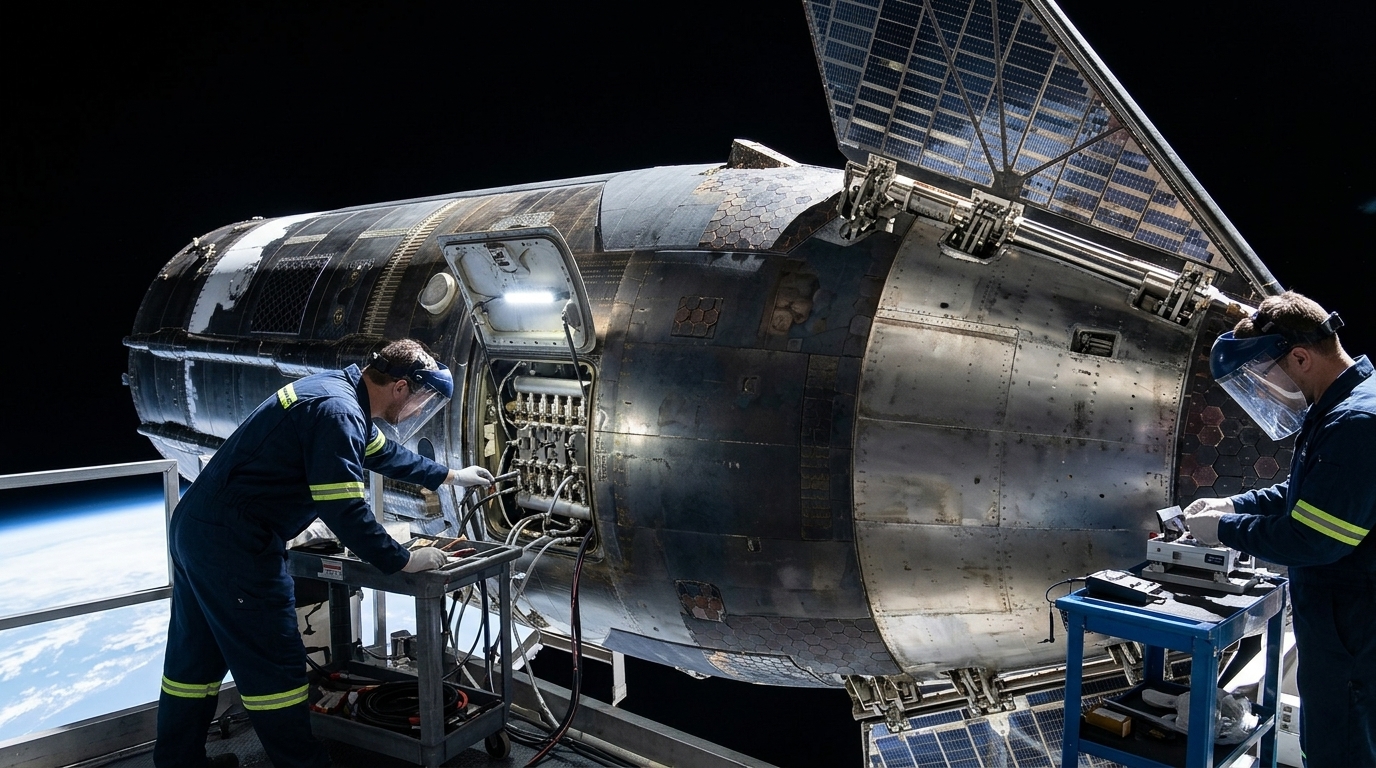
May 23, 2026, marks a pivotal moment in aerospace history. SpaceX’s Starship V3, the most advanced iteration of the world's largest launch vehicle, took to the skies in a mission that the company has characterized as a "mostly successful" step forward. While the flight did not achieve every single secondary objective, the raw data gathered from the performance of the new hardware suggests that the path to Mars is becoming clearer, albeit still fraught with engineering challenges.
The Technological Leap: Raptor 3 and Structural Refinement
The transition from Version 2 to Version 3 represents more than just incremental changes. It is a fundamental overhaul designed for mass production and extreme reliability. The centerpiece of V3 is the Raptor 3 engine. By eliminating complex external plumbing and utilizing advanced 3D printing for internal cooling channels, SpaceX has created an engine that is both more powerful and significantly lighter. During the ascent phase, all 33 engines on the Super Heavy booster fired with surgical precision, a feat that was once considered statistically improbable.
Furthermore, the V3 features a stretched propellant section. This increase in volume allows for a higher mass-to-orbit capability, crucial for the upcoming Artemis moon missions. The structural integrity of the stainless-steel hull was also put to the test. Changes in the welding techniques and the use of proprietary alloys allowed the vehicle to withstand higher dynamic pressures during its climb through the Max-Q phase of flight.
The Reentry Hurdle: Heat Shields and Precision
If launch is about power, reentry is about survival. The Starship's thermal protection system (TPS) has long been its most scrutinized component. For V3, SpaceX implemented a redesigned tile attachment system intended to prevent the "zipper effect," where the loss of one tile leads to the failure of many.
"Surviving the peak heating phase was our primary goal for this flight. While we observed some tile shedding, the underlying structure remained protected, proving the resilience of the new V3 design," a SpaceX engineer noted during the post-flight briefing.
However, the mission was not without its setbacks. The planned catch of the Super Heavy booster by the "Mechazilla" arms at the launch site was waved off due to a sensor anomaly in the landing burn sequence. Instead, the booster performed a controlled splashdown in the Gulf of Mexico. This decision highlights SpaceX's current philosophy: prioritize data collection and safety over high-stakes publicity stunts when the hardware is still in its experimental phase.
Strategic and Economic Implications
The success of Starship V3 is inextricably linked to the broader geopolitical landscape. NASA’s Artemis program is heavily reliant on a modified version of Starship to serve as the Human Landing System (HLS). Any delay in V3’s development directly impacts the timeline for returning American astronauts to the lunar surface. Meanwhile, the commercial sector is watching the plummeting costs of mass-to-orbit. If SpaceX achieves its goal of full reusability with V3, the price of launching satellites could drop by an order of magnitude, effectively monopolizing the heavy-lift market.
- Launch Cadence: SpaceX aims to utilize the simplified V3 design to reach a flight frequency of once per week by late 2027.
- Orbital Refueling: The next critical milestone for V3 will be the ship-to-ship propellant transfer test, a necessity for deep-space exploration.
- Payload Capacity: With V3, the target is 100+ tons of cargo to LEO in a fully reusable mode, dwarfing any current competitor.
In conclusion, Starship V3 remains a work in progress, but its first flight has silenced many skeptics. SpaceX's "fail fast, learn faster" methodology continues to disrupt the traditional aerospace model. While the V3 isn't yet the finished product that will ferry hundreds to the Red Planet, it is the most credible blueprint we have for a multi-planetary future. The lessons learned today in the upper atmosphere and the waters of the Indian Ocean are the building blocks of tomorrow’s interplanetary economy.