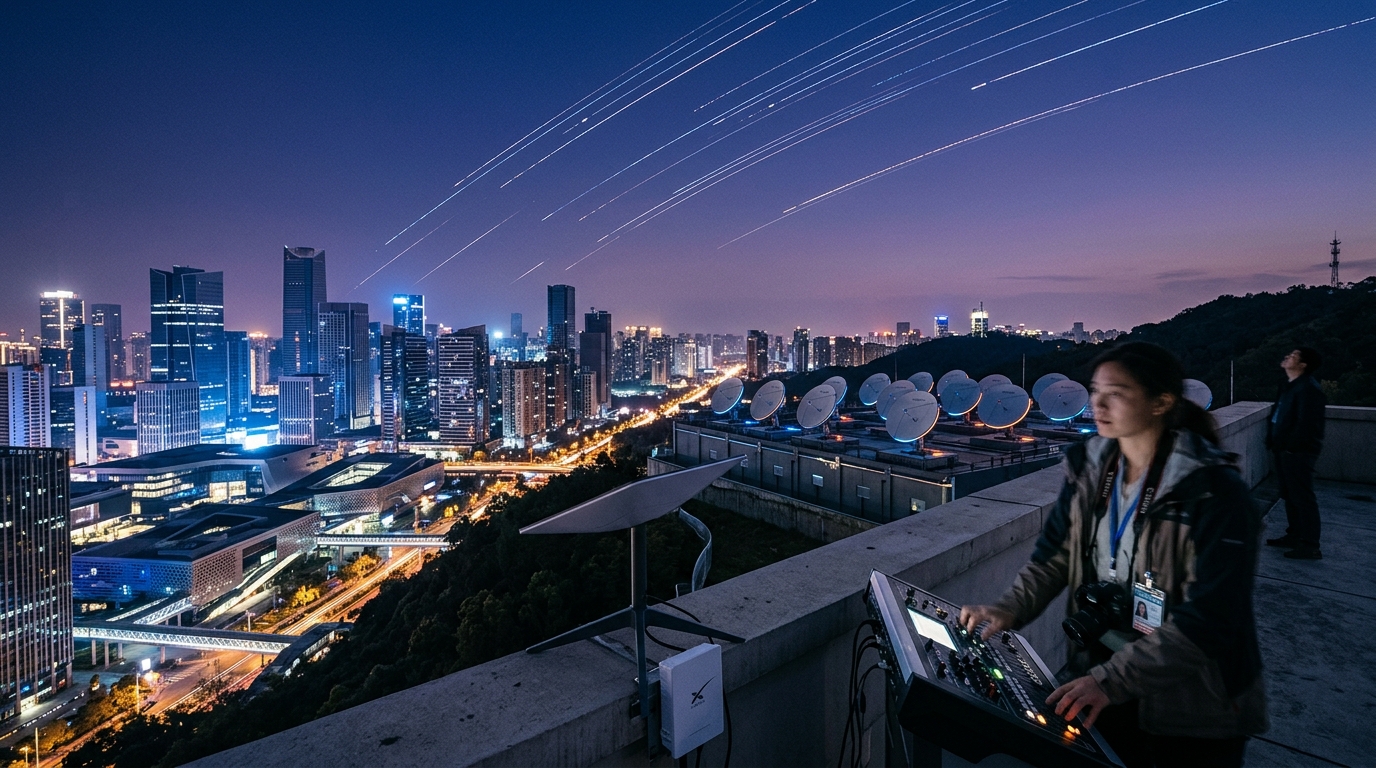
In the tech world, infrastructure often precedes innovation. Just as highways enabled suburban sprawl and fiber optics paved the way for the streaming wars, SpaceX’s Starlink satellite constellation appears to be the missing piece of the Artificial Intelligence puzzle. As we move through the second half of 2026, the conversation is shifting from "what AI can do" to "where AI can function." The answer, thanks to Elon Musk, is now "everywhere."
The Collapse of Geographical Constraints
Until recently, the most advanced AI applications were tethered to stable Wi-Fi connections or the limited reach of 5G towers. An autonomous tractor in rural Nebraska or a research drone in the depths of the Amazon faced the same hurdle: a lack of bandwidth and high latency. SpaceX, with over 6,000 satellites in Low Earth Orbit (LEO), has created a global connectivity blanket that eliminates these digital dead zones.
The importance of this network for AI devices is foundational. Large Language Models (LLMs) and computer vision algorithms require constant data exchange with the cloud to remain "intelligent." Without Starlink, a wearable AI device—like next-generation smart glasses or personal assistants—would lose most of its utility the moment a user stepped outside an urban center. Now, AI gains the mobility it lacked, turning the entire planet into a singular, intelligent field of operation.
Edge Computing and the Latency Battle
The big bet for 2026 is the reduction of latency. For an AI device to be useful, the response must be near-instantaneous. If you ask your digital assistant for a real-time translation, you cannot wait seconds for a round-trip to a data center. SpaceX’s LEO satellites offer latency below 30ms, directly competing with terrestrial fiber. This enables seamless "Edge AI," where processing is distributed between the local device and the cloud.
Furthermore, SpaceX is already experimenting with placing computational power directly onto the satellites themselves. Imagine a network where the satellite executes part of the AI code before sending the answer back to your device. This could lead to a new generation of hardware that doesn't need power-hungry processors, extending battery life and reducing manufacturing costs. The satellite becomes the processor in the sky.
Geopolitics and the Information Monopoly
However, this technological convergence brings serious questions. SpaceX is not just a telecommunications company; it is a geopolitical heavyweight. The reliance of AI devices on a private network controlled by a single individual is causing concern among governments worldwide. The European Union, for instance, is accelerating its IRIS² program to ensure its digital sovereignty and reduce dependence on American commercial infrastructure.
The question "Now What?" posed by PYMNTS.com refers exactly to this next step. Will we see a formal alliance between OpenAI or Anthropic and SpaceX? Or will Tesla be the first major player to fully integrate Starlink into every Optimus robot and vehicle, creating a closed ecosystem that competitors find impossible to breach? Dominance in infrastructure almost always translates to dominance in the market.
Conclusion: Toward Universal Intelligence
SpaceX building the network was the difficult architectural challenge. The challenge we face now is social and economic integration. Future AI devices will be judged not just by their IQ, but by their ability to stay connected under any conditions. Starlink provides the stage, and AI is the protagonist that was waiting for the right theater to perform. The era of "disconnected" technology is coming to a definitive end, replaced by a continuous, global flow of information that will redefine how we work, communicate, and perceive the world.