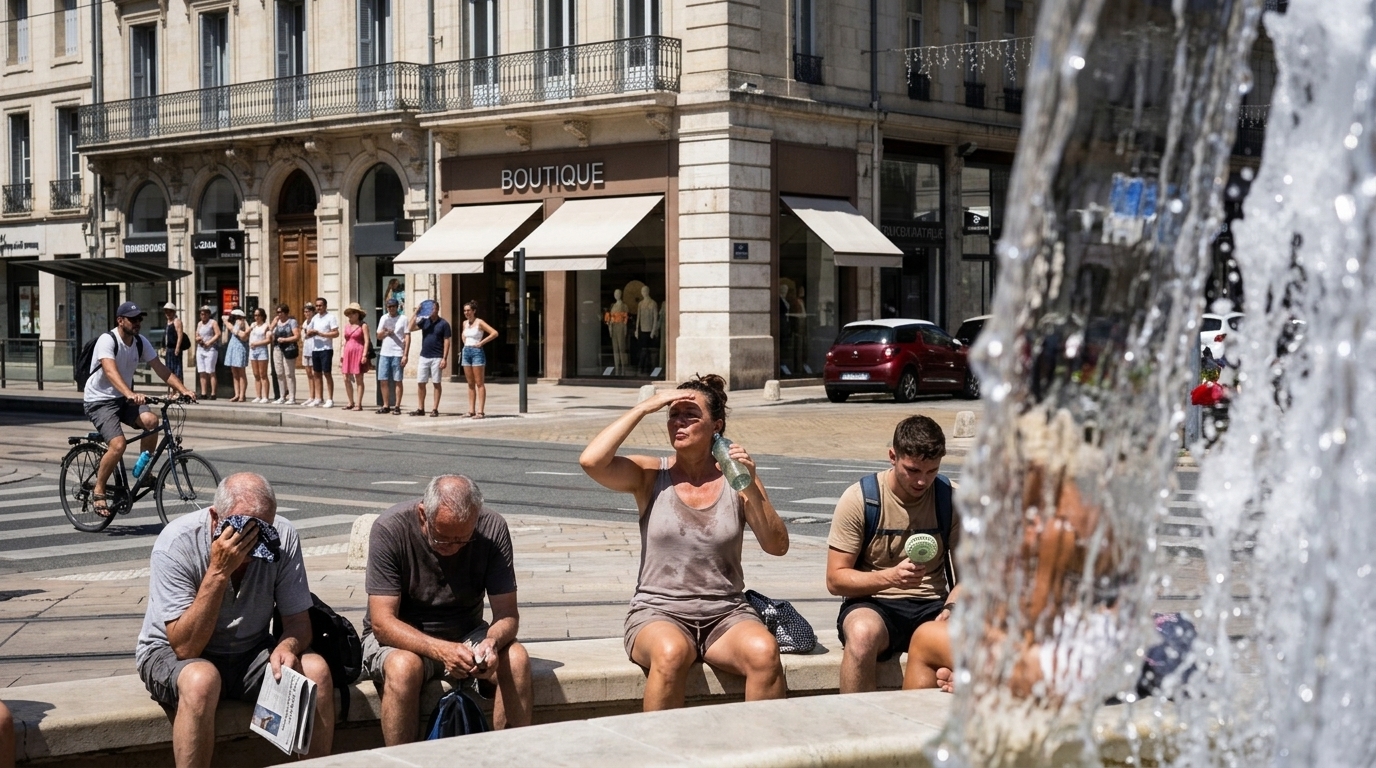
Europe is confronting a harsh new reality. The June that just passed was not merely a warm month; it was a clarion call for a future that has already arrived. According to the latest data from the Copernicus Climate Change Service and the World Meteorological Organization, temperatures recorded across the continent significantly surpassed the levels of 2003—a year previously considered the ultimate benchmark for the climate crisis in Europe.
Comparing 2026 to 2003: A New Scale of Extremes
In 2003, the heatwave caused thousands of deaths, primarily in France and Italy, catching healthcare systems off guard. Today, while preparedness has improved, the intensity of the phenomenon is unprecedented. While the 2003 extremes were localized in specific regions, June 2026 saw over two-thirds of the European population experience conditions of "extreme heat stress." From the Iberian Peninsula to Scandinavia, mercury levels climbed to heights traditionally reserved for the peak of August.
The primary difference lies in the persistence of atmospheric systems. A "heat dome" formed over central Europe, trapping hot air masses for weeks and blocking the entry of cooler Atlantic currents. This phenomenon, amplified by the weakening of the jet stream, is a direct consequence of Arctic warming, creating a domino effect that devastates mid-latitude regions.
Infrastructure Under Pressure and the Technological Response
The strain on infrastructure was immediate and multifaceted. Energy grids reached their limits due to widespread air conditioning use, while nuclear power production in France was curtailed because river waters were too warm to cool reactors. This is where Artificial Intelligence began to play a pivotal role. AI-driven "smart grids" managed to redistribute loads in real-time, preventing widespread blackouts that would have been fatal for vulnerable populations.
- Predictive Models: The use of neural networks allowed for predicting heatwave peaks with 95% accuracy ten days in advance.
- Urban Heat Islands: Many European cities utilized AI to map heat islands and deploy mobile cooling units to high-risk areas.
- Agriculture: Farmers in Spain and Greece used precision sensors to optimize irrigation, saving crops from total destruction.
The Social and Political Dimension
The June heatwave is not just a meteorological event; it is a political crisis. The conversation around "climate adaptation" has now replaced the discourse on mere "mitigation." European governments are being called upon to invest billions in redesigning cities, incorporating more green spaces and materials that reflect solar radiation. However, the cost is staggering, particularly for Southern European nations that bear the brunt of the impact.
"We are no longer experiencing an anomaly, but the new normal. The question is not if it will happen again, but how prepared we are to live on a continent that is changing dramatically," state experts from the European Environment Agency.
In conclusion, June 2026 stands as a milestone. It demonstrated that the records of the past are now the minimum values of the future. The need for a coordinated European response, combining technological innovation with social justice, is more urgent than ever. Europe is ablaze, and the solution lies not just in fire extinguishers, but in the radical transformation of our way of life.