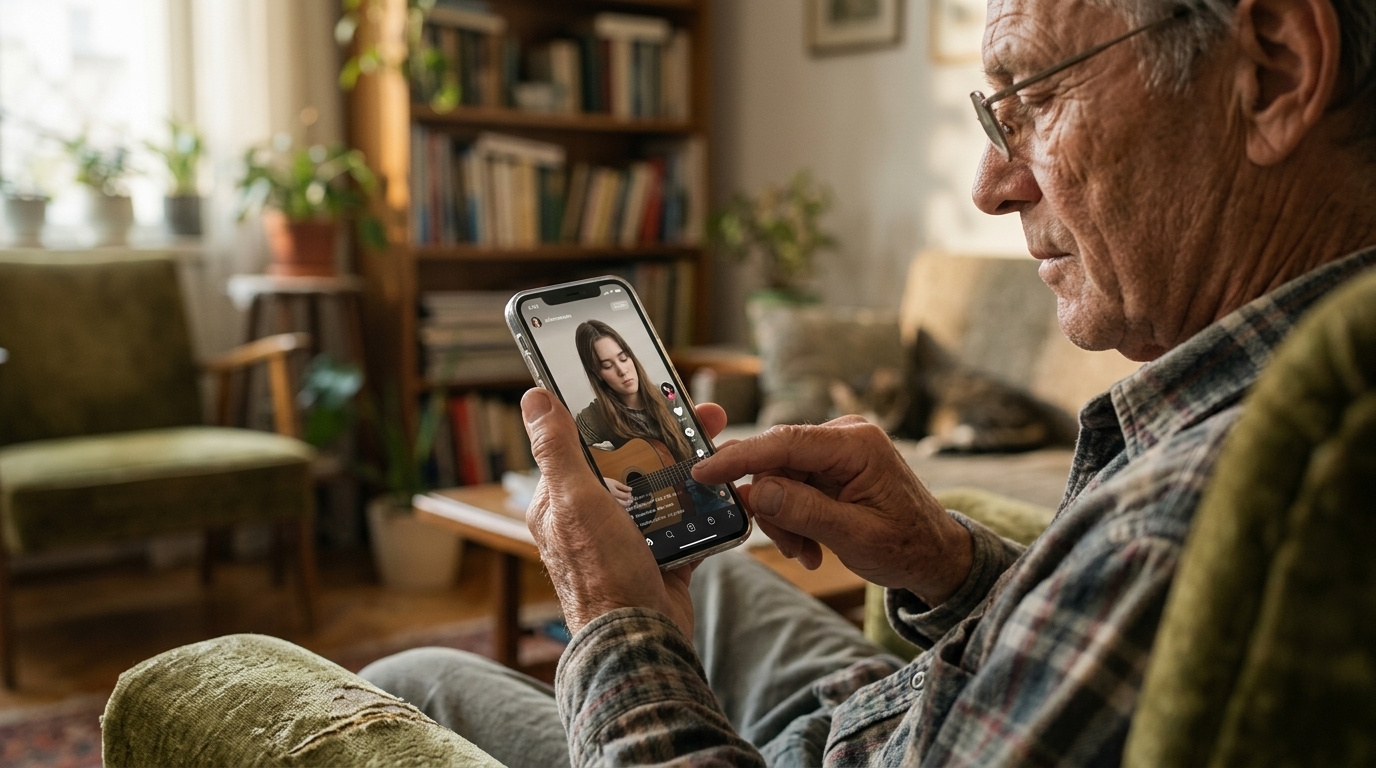
The image is now familiar in every corner of the modern urban landscape: people hunched over their smartphone screens in subways, buses, cafes, and even at family dinner tables. If one leans in closer, they will notice something paradoxical. Despite the explosion of short-form video (Shorts, Reels, TikTok), sound is conspicuously absent. The era of "Silent Scrolling" is not just a passing habit; it is a structural shift in how we consume digital information in 2026.
According to recent market research, over 80% of social media users watch videos with the sound turned off. This trend, which began as a necessity for discretion in public spaces, has evolved into a conscious preference that is forcing tech giants and content creators to reinvent the rules of visual communication. Silence, it seems, has its own powerful voice.
The Psychology of Silent Consumption
But why do we choose silence? The answer lies in the concept of "cognitive overload." We live in an environment where our attention is the most valuable currency. Sound is intrusive; it demands a commitment that the user is not always willing to offer. Silent browsing allows the user to maintain control over their environment, choosing when and where to allow digital noise to invade their physical space.
Furthermore, silence acts as a filter. In a content stream moving at breakneck speed, the absence of sound reduces the stress of constant auditory stimuli switching. Users report that silent consumption allows them to "scan" information more effectively, focusing on visual elements and subtitles, which have become the new standard in digital storytelling.
The Caption Revolution and Artificial Intelligence
If silence is king, then captions are its crown. The rise of silent usage has led to the universal adoption of captions. A few years ago, adding subtitles was a laborious process requiring specialized software. Today, Artificial Intelligence handles this task in real-time. Auto-captioning tools are no longer a convenience; they are a necessity for any video's survival in the algorithm.
This development has had an unexpected but welcome side effect: the enhancement of accessibility. Content that was previously inaccessible to people with hearing impairments is now available to everyone. The "silent trend" has made the internet more inclusive, proving that the needs of a minority can become the norm for the majority when technology permits.
Economic Implications and Advertising
For advertisers, silent usage presents a massive challenge. Traditional TV spots, relying on a loud jingle or a persuasive narrator, fail miserably in the Instagram or TikTok environment if not adapted. The new strategy is called "Design for Sound Off, Delight with Sound On."
- The first three seconds must convey the message exclusively through imagery.
- The use of bold typography and graphics replaces narration.
- The action must be understandable even if the phone is on "mute."
Companies investing in visual storytelling without the need for sound are seeing retention rates soar. Conversely, those clinging to older production models see their budgets wasted on users who simply skip a video that "says nothing" to them without headphones.
The Future: A New Aesthetic of Silence
As we head into the second half of the 2020s, the aesthetic of silence will continue to evolve. We are already seeing the rise of "cinematic silence" on social media, where the imagery is so powerful that sound is considered redundant. Silence is no longer a void; it is a space for thought, for interpretation, and for a more personal connection with the content.
In a world that never stops shouting, our choice to turn down the volume is perhaps the most revolutionary act of digital self-care. The "silent" use of social media is proof that technology can adapt to the human need for tranquility, rather than the other way around.