In the heart of Yunnan province, the ancient city of Dali is undergoing a transformation driven not by government decrees or traditional ad campaigns, but by an algorithm. RedNote —known in China as Xiaohongshu or 'Little Red Book'— has evolved from a simple lifestyle-sharing platform into a powerful mechanism that dictates the tourism infrastructure of entire regions. While Instagram struggles to find its identity between Reels and TikTok, RedNote has achieved something far deeper: it has become the operating system for the modern travel experience.
The Rise of Xiaohongshu: From Shopping Guide to Lifestyle Oracle
Xiaohongshu launched in 2013 as a shopping guide for Chinese travelers seeking luxury goods abroad. Today, it boasts over 300 million monthly active users, the majority of whom are Gen Z and Millennials from urban centers. Its key differentiator from Instagram lies in utility. While Instagram is often a showcase for vanity, RedNote functions as a hybrid search engine that combines Pinterest's aesthetics with TripAdvisor's information base and the immediacy of e-commerce.
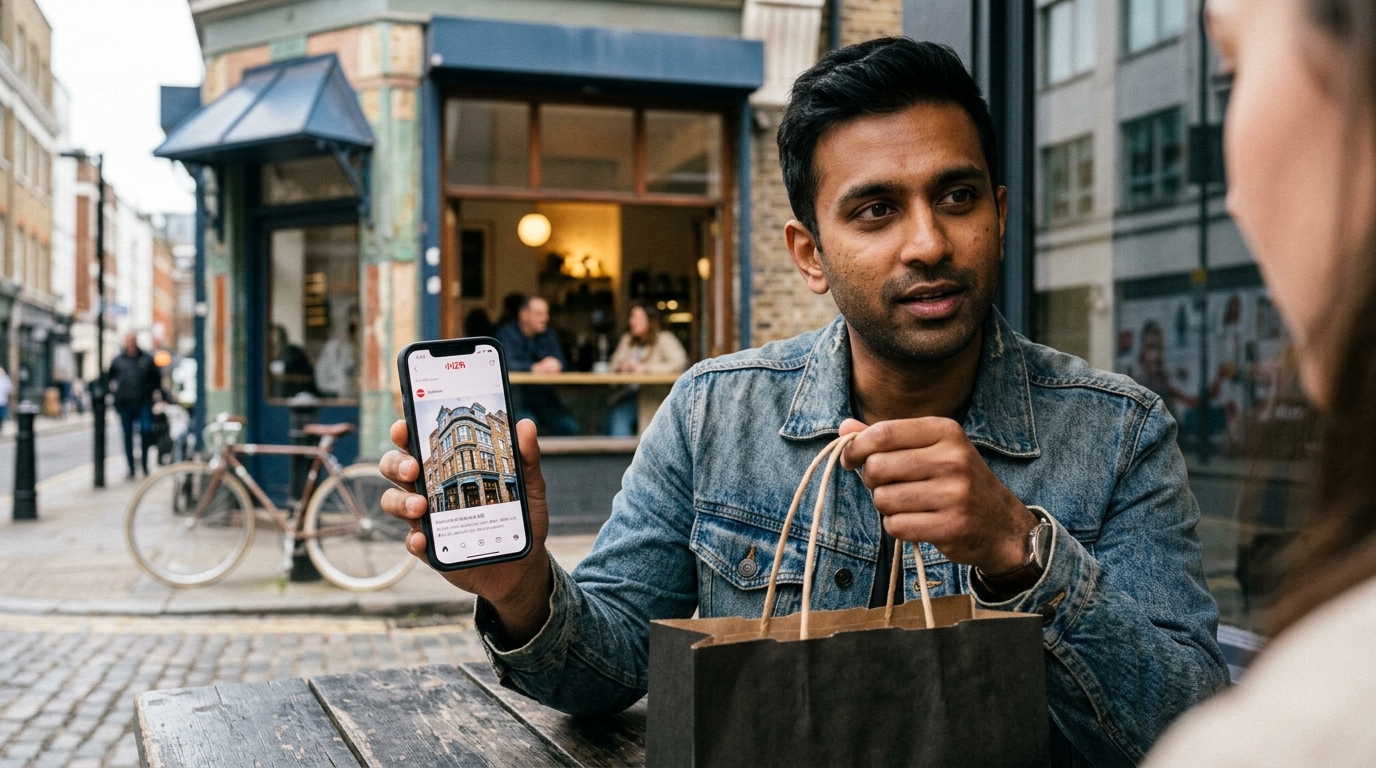
In Dali, the app's impact is visible on every corner. Cafes are designed with specific lighting and 'photo spots' suggested by the algorithm. The 'da-ka' phenomenon (check-in culture) is no longer just about visiting a place, but about faithfully reproducing a specific aesthetic experience that has already gone viral. The app provides detailed guides: from exactly where to stand for the perfect shot, to which filter to use and which outfit matches the scenery.
The 'Vibe' Infrastructure: When Tech Builds Cities
RedNote doesn't just record tourism; it creates it. In China, an entire industry of 'aesthetic infrastructure' has emerged. Entrepreneurs transform abandoned villages into 'Instagrammable' destinations, based solely on Xiaohongshu's trend data. If the algorithm shows that luxury camping (glamping) is on the rise, dozens of such accommodations pop up within weeks, equipped with the exact accessories that will ensure high engagement on the platform.
- Community vs. Influencers: Unlike Instagram, dominated by mega-accounts, RedNote favors the 'KOC' (Key Opinion Consumer) model — everyday users providing authentic, detailed reviews.
- Algorithmic Recommendation: The algorithm isn't just based on who you follow, but on what truly interests you, functioning more as a discovery tool than a social network.
- Integrated Commerce: The transition from viewing a photo to booking a hotel or buying a product happens with just a few clicks within the same app.
This tight link between digital content and physical infrastructure creates a feedback loop. Places that 'work' on the app receive more investment, while those that aren't 'photogenic' risk disappearing. This is a form of algorithmic urban planning that turns the real world into a stage for digital consumption.
The Western Lag and the Future of Experience
Why does Instagram seem 'poor' compared to RedNote? The answer lies in Meta's strategy to chase TikTok, emphasizing short-form video and entertainment. In doing so, Instagram lost its utility as a planning and inspiration tool. Users now struggle to find information within Reels, while RedNote remains a treasure trove of lifestyle knowledge.
"RedNote doesn't just show you where others went; it gives you the roadmap to go there yourself, ensuring your own experience will be just as aesthetic," notes a tech market analyst.
However, this evolution raises serious questions. The homogenization of travel experiences is evident. When everyone follows the same 'algorithmic guide,' authenticity is lost. Travelers no longer discover Dali or Paris; they discover the version of these cities approved by Xiaohongshu. Furthermore, the pressure on local entrepreneurs to constantly adapt to digital trends creates a fragile economy based on fleeting attention.
In conclusion, RedNote represents the blueprint for how all social platforms will look in the future: an indivisible blend of information, aesthetics, and commerce. As the app begins to expand outside China, the question isn't whether it will replace Instagram, but whether we are ready for a world where reality is designed to fit our screens.