

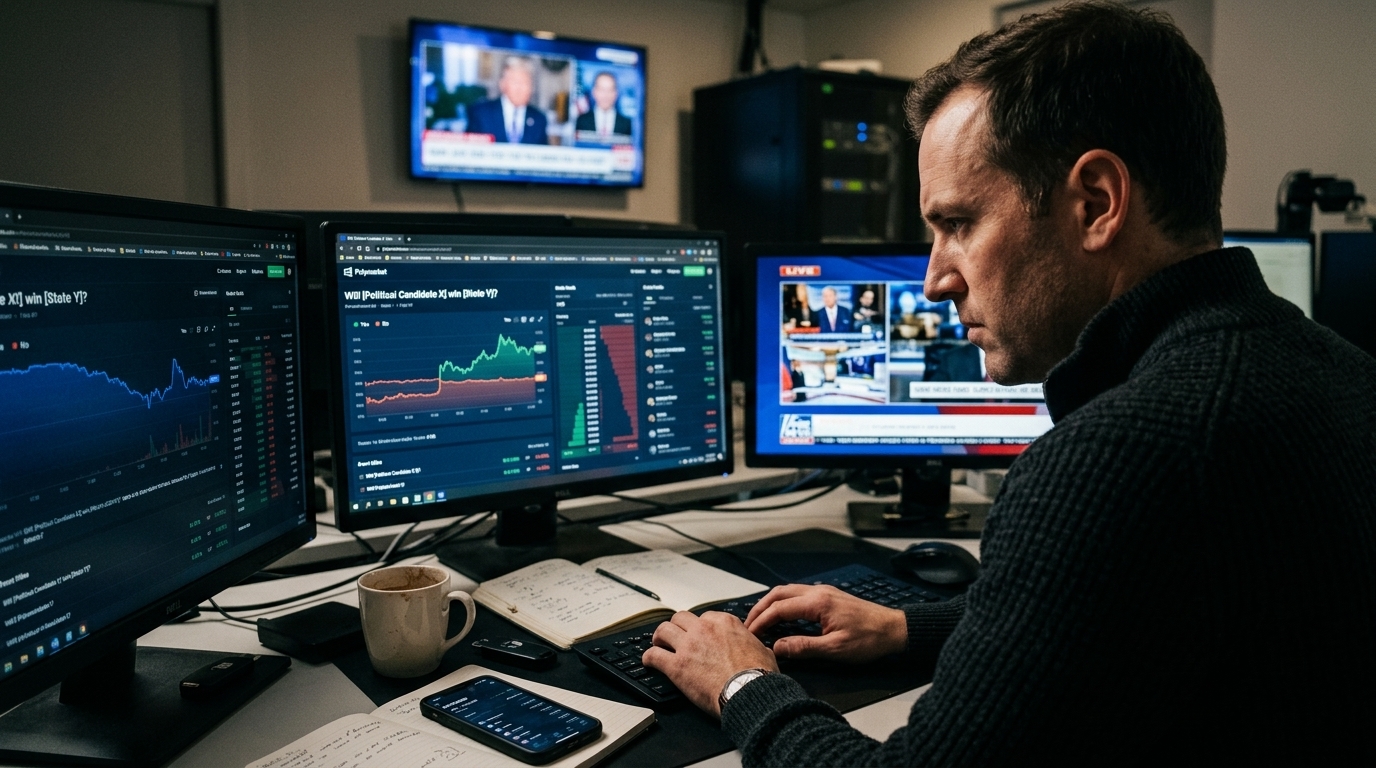
In today's financial landscape, where information is the most precious currency, prediction markets have evolved from a niche internet corner into a dominant mechanism for shaping public opinion and economic speculation. Platforms like the blockchain-based Polymarket and the regulated Kalshi are experiencing a golden age. However, this explosive growth is accompanied by a darker side: a surge in suspicious transactions that threaten the credibility of the 'wisdom of the crowd.'
Legal Validation and Institutional Adoption
The recent history of prediction markets was marked by Kalshi's landmark legal victory against the U.S. Commodity Futures Trading Commission (CFTC). This decision allowed legal betting on political events on U.S. soil for the first time, opening the floodgates of liquidity. On the other hand, Polymarket, despite restricting U.S. users, has managed to amass billions in trading volume by leveraging the decentralized nature of cryptocurrencies.
These platforms are no longer viewed merely as 'betting sites.' Wall Street analysts and political scientists monitor them closely, believing that contract prices reflect a more realistic probability of outcomes than traditional polling. When someone risks their own money, their forecast tends to be more honest than a response given to a pollster. This is the core theory behind the efficiency of these markets.
The Ghost of Wash Trading and Manipulation
Despite the optimism, recent reports from data researchers and regulatory watchdogs suggest that a significant portion of the trading volume on Polymarket may be 'wash trading.' This is a practice where the same user (or collaborating users) buys and sells the same contract simultaneously to create the illusion of high activity and liquidity. The goal is often to attract new users or artificially inflate the perceived importance of a specific event.
Furthermore, the emergence of 'whales'—investors with massive capital—has caused tremors. A notable example was the French trader who in 2024 bet tens of millions of dollars on Donald Trump's election, moving the odds to levels significantly different from the polls. While he claimed it was a purely mathematical approach, many wonder if such moves are attempts to influence voter psychology by creating an aura of 'inevitable victory.'
The Challenge for Regulators and the Future
Kalshi, being under CFTC oversight, implements stricter KYC (Know Your Customer) controls and monitors transactions for suspicious patterns. However, the nature of global events makes policing difficult. How can one distinguish an 'informed trade' from a 'manipulated trade' when the information concerns geopolitical developments or internal government decisions?
- Transparency: The need for public access to transaction data is imperative for restoring trust.
- Artificial Intelligence: Platforms are beginning to use AI algorithms to identify accounts exhibiting wash trading behavior.
- Ethical Dilemmas: Turning the democratic process or natural disasters into speculative products remains a thorny issue for society.
As we head into the second half of 2026, prediction markets will be challenged to prove whether they can function as true 'oracles' of truth or if they will end up being just another mirror of economic inequality, where the voice of the one with the biggest wallet sounds louder than reality.
"Prediction markets are not just casinos; they are the laboratories where the resilience of truth is tested in the post-information age."
In conclusion, Kalshi and Polymarket stand at a crossroads. Their ability to self-regulate and purge toxic practices will determine whether they will be integrated into the global financial system or remain a controversial experiment that collapsed under the weight of its own ambition.





