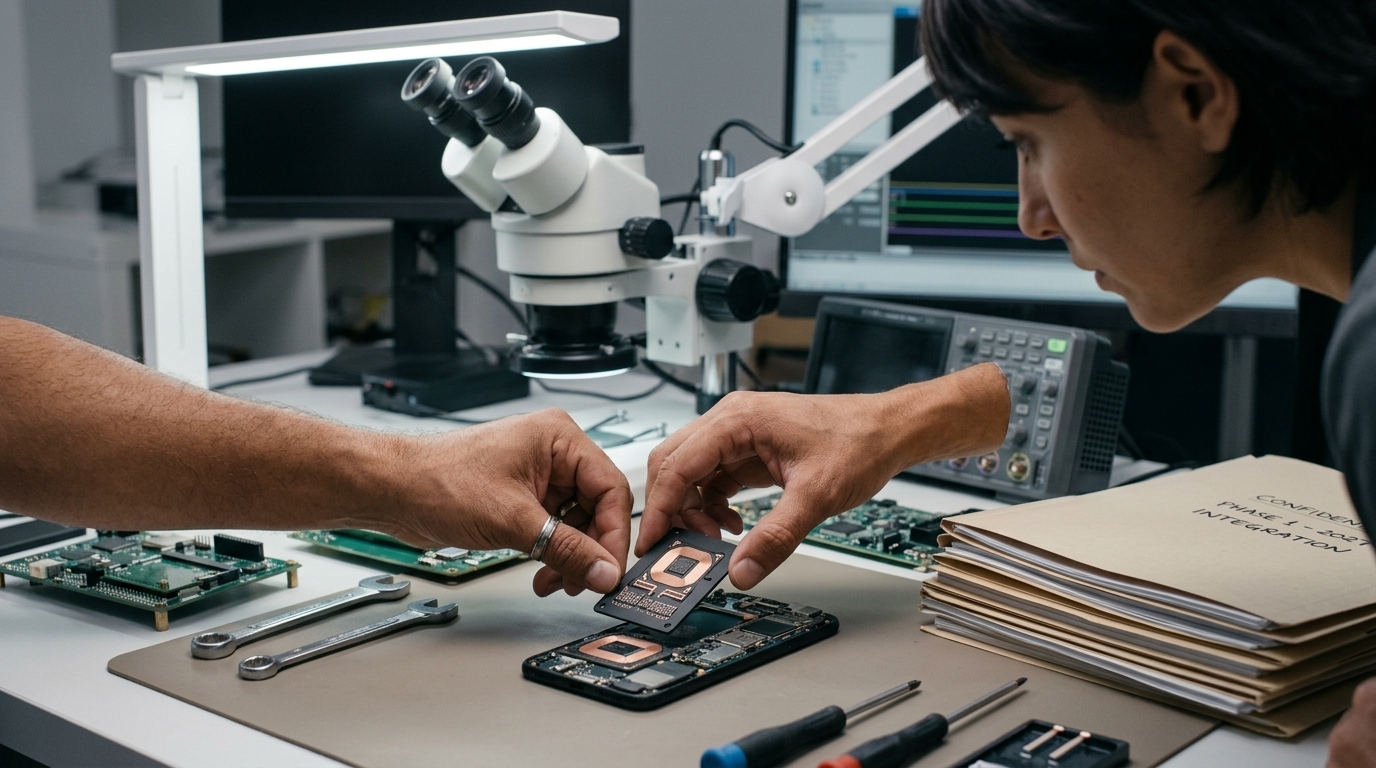
The history of technology is punctuated by moments when software outgrows its existing vessels, forcing creators to build their own hardware. OpenAI, the company that ignited the generative AI revolution, appears to have reached this exact tipping point. According to recent disclosures from renowned supply chain analyst Ming-Chi Kuo, Sam Altman’s firm is accelerating plans for its own handset, aiming for mass production in early 2027.
The Pivot from Mystery to Smartphone Familiarity
For months, rumors swirled about a high-profile collaboration between Sam Altman, legendary former Apple designer Jony Ive, and SoftBank’s Masayoshi Son. Speculation pointed toward a radical device that would reinvent human-computer interaction, moving away from traditional screens. However, new intelligence suggests a more pragmatic, though equally ambitious, approach: a smartphone. This decision is no accident. Following the high-profile failures of devices like the Humane AI Pin and the Rabbit R1, it became clear that consumers are not ready to abandon the familiar smartphone form factor for futuristic trinkets.
"OpenAI realized that for ChatGPT to become the central interface of our lives, it must control the operating system and the hardware, not just exist as an app on someone else's iPhone," market analysts observe.
This move mirrors the strategy Google employed with Android and the Pixel line. If OpenAI remains trapped within the Apple and Google ecosystems, it will always be subject to app store commissions and restricted system-level data access. An "OpenAI Phone" would allow for AI integration at the kernel level, offering a user experience that no third-party app could ever match.
Technical Challenges and the Jony Ive Legacy
Building a smartphone in 2027 is a Herculean task. The market is saturated, and consumer expectations for build quality, battery life, and camera performance are at an all-time high. OpenAI’s advantage will not be the hardware itself, but the "brain" within. It is expected that the phone will feature specialized AI processors (NPUs) capable of running models like GPT-5 or Sora locally (on-device), drastically reducing latency and enhancing privacy.
Jony Ive’s involvement through his firm, LoveFrom, lends the project an aura of luxury and minimalism. Ive, the man behind the iPhone, iMac, and iPad, is known for his obsession with detail and the removal of unnecessary noise. If the OpenAI phone follows this philosophy, we might see a device that relies more on voice interaction and proactive AI actions rather than the endless scrolling of app grids.
- Operating System: Likely development of an AI-first OS that eliminates the traditional app grid.
- Service Integration: Direct links to SearchGPT and the Microsoft ecosystem.
- Privacy: Local data processing for training personal assistants without cloud leaks.
Geopolitical and Economic Implications
The decision to target mass production for 2027 suggests OpenAI is preparing for a long-term campaign. The supply chain, according to Kuo, will rely on partners in Asia, but the design and software will remain quintessentially American. In an era where technological sovereignty is synonymous with national power, a phone from the world’s leading AI company could shift the balance in the $500 billion smartphone market.
However, the risk is monumental. Even giants like Microsoft (with Windows Phone) and Amazon (with the Fire Phone) failed spectacularly to break the Apple-Google duopoly. OpenAI is betting that AI is such a fundamental paradigm shift that it will render today's smartphones "dumb" and obsolete. If the gamble pays off, 2027 will be remembered as the year the smartphone died to give birth to the personal digital companion.